Dai Ethnic Garden Xishuangbanna: Water Splashing Times, Tickets & Staying in Ganlanba
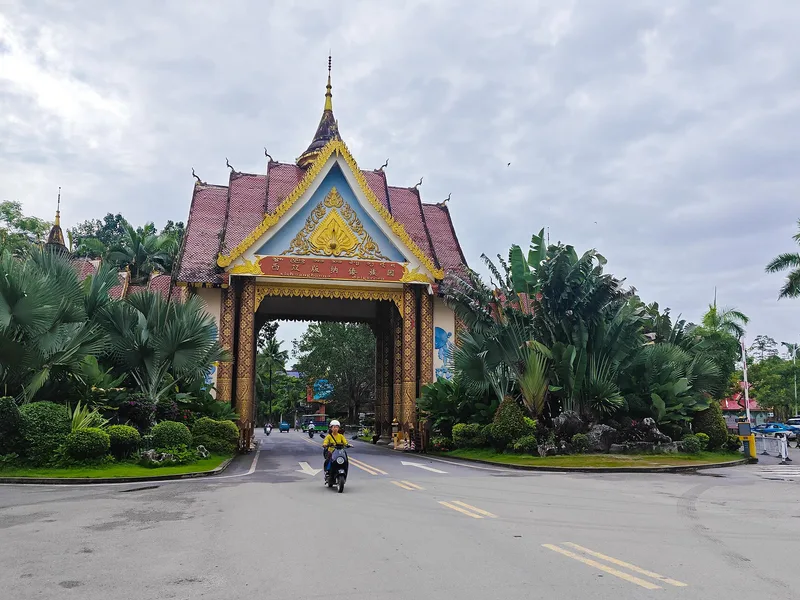
If you ask me which place in Banna has the most human life in it, I'd vote for the Dai Ethnic Garden. It sits in Ganlanba on the Lancang River, and it isn't a rebuilt faux-ancient street — it's five Dai villages where people still live: Manjiang, Manchunman, Manting, Manzha and Manga. Residents go about their day, the bamboo houses are still bamboo houses, the temples are still temples, and the people you pass on the path are on their way to work, not acting.
It's best known, of course, for water splashing, with two sessions every day — you don't have to wait for the mid-April festival. That alone makes it work for travellers whose dates don't line up.
Which is also where the trap lies: many people come for the splashing, get soaked, and leave without ever really seeing the villages. This guide covers tickets and the shuttle, the splashing schedule, whether to stay overnight in Ganlanba, and how to get there.
One more thing up front: do the splashing last. Once you're drenched you can't go anywhere except back to the hotel, so see the villages first, eat, splash, and finish.
🏘️ What the Dai Ethnic Garden actually is
- Location: Ganlanba, Jinghong, right on the Lancang River
- Structure: five well-preserved Dai villages where residents still live
- Main content: Dai bamboo houses, temples, water splashing, Dai food, handicrafts and weaving
- How it differs from Manting Park: Manting is a Dai royal garden (historic landscape); the Dai Ethnic Garden is a living Dai village (everyday life). They don't overlap — both are worth seeing
🎫 Tickets and opening (confirm on official channels for the current year)
- Admission: typically in the tens of yuan (check the park's posted price; different platforms sell combinations and activity tickets)
- Shuttle: the villages are spread out, so the internal shuttle is worth buying
- Recommended time: half a day (more if you stay overnight)
- Splashing sessions: two per day, usually in the afternoon (commonly around 14:00 and 15:40, but times shift — check the notice board on the day)
💦 How to do the splashing properly
- Bring: a change of clothes, sandals, and a waterproof phone pouch (the most important item; every year someone gets soaked and then finds their phone dead)
- Don't wear: white shirts or thin light-coloured clothes — once wet, they're unwearable — or an expensive watch
- How to join: there's a dedicated splashing square; joining and watching are both fine. Stand forward if you want to be completely drenched, stay at the edge if you just want a blessing
- Children: watch them constantly. Water bowls and water guns fly in all directions and small children get knocked over
- Respect: splashing is a blessing, not a prank. Don't splash elderly people or monks, and never use dirty water
My sequencing is: villages first, Dai lunch, then splash, then done. Wet clothes and a two-hour drive back don't mix.
🗺️ A half-day route
- Arrive before 14:00, shuttle to the farthest village first
- Work back on foot through the bamboo houses, temples and weaving
- Eat a Dai meal somewhere in the middle
- Join the second splashing session (so you're wet at the end of the day, not the start)
- Change, then head back or go on to Gaozhuang
🏨 Is staying overnight in Ganlanba worth it
My answer: yes, in the right circumstances.
- Worth it if: you have a car, you want to photograph the village and the river at dawn, you don't want to drive back in the dark, or you like quiet
- Skip it if: you only have two or three days in Banna, your schedule is packed, or you want the night market in the evening
The real prize of staying is early morning. Before the tour buses arrive there's only cooking smoke and roosters, and the light comes up over the Lancang — a scene you cannot see during the day. The trade-off is that evenings are quiet with few dining options.
🚗 Getting there
- Self-drive: Jinghong → Ganlanba, about 30–40 km, roughly an hour on good road
- Private car / day tour: the most common choice; many products pair the botanical garden with the Dai garden in one day
- Public bus: services run from Jinghong but departures are limited — confirm the return timetable before you go
⚠️ Common mistakes
- No waterproof phone pouch, then a dead phone
- No change of clothes, so you sit wet all the way back to Jinghong
- Coming only for the splashing and skipping the villages, which are the actual point
- Wearing thin light-coloured clothing
- Turning up after the first session has finished
- Not checking the return bus times and waiting at the roadside after dark
- Confusing this with Manting Park — they're completely different places
🧭 How the Banna pieces fit together
- Dai royal garden and Theravada Buddhism: Manting Park and the Grand Buddha Temple. See Manting Park & Grand Buddha Temple
- Botanical spectacle: Xishuangbanna Tropical Botanical Garden
- Real wild elephants: Wild Elephant Valley
- Evenings: Gaozhuang Xishuangjing Starlight Night Market
- Overall plan: Xishuangbanna Tropical Rainforest Guide
A few closing thoughts
What I like about the Dai Ethnic Garden is that it's still alive. Elsewhere you look at something arranged for display; here you look at a day being lived — laundry hanging under a bamboo house, someone praying at the temple, a stall selling fruit picked that morning. Rebuilt old streets can't produce that.
Do the splashing, by all means, but let it come last and don't let it eat the whole visit. The five villages are the thing worth slowing down for: walk the lanes between the houses, look up at the temple eaves, sit down for a Dai meal. When you scroll back through your photos, the ones that mean something are rarely the splashing shots — they're an empty lane, or a courtyard where a family is eating lunch.
If time is genuinely tight, my ranking is botanical garden > Dai Ethnic Garden > Manting > Wild Elephant Valley (in the rainy season). If you happen to be there in mid-April, throw all of that out — the whole of Banna operates differently, and you should read Xishuangbanna Water Splashing Festival Guide first.
Craving a worry-free yet free-spirited journey?
Don't want to build the itinerary yourself? Talk to our senior travel designers and get a route and quote built for you.
Get your free route plan and quote
Last updated: October 2026 Author: RoamFun Senior Travel Consultant Questions welcome at: vip@roamfun.net

RoamFun Senior Travel Consultant
Travel DesignerProfessional travel consultant, curating the most practical travel guides for you.