Napa Lake Circuit Guide: Shangri-La's Mirror of the Sky — Black-Necked Cranes & Grassland Wetlands
Bottom line: Napa Lake is a highland wetland that "changes face" — a shimmering lake in the rainy season and a wind-blown pasture in the dry season. The circuit road runs about 30–40 km, and a half-day drive or ride fits perfectly, with Songzanlin Monastery and snow-mountain reflections in view along the way. In winter (November–March) you can also see black-necked cranes, a Class-I protected species.
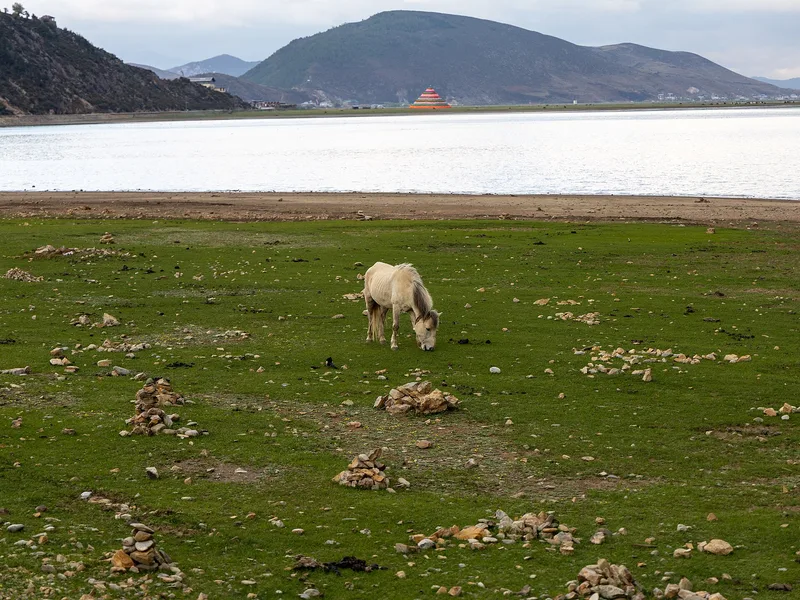
Most Shangri-La visitors beeline for Songzanlin Monastery and Potatso Park and miss this tender wetland on the city's edge — Napa Lake. It nestles at the foot of Shika Snow Mountain, where lake, grass, herds and villages rotate through the four seasons; on clear days the blue sky and clouds mirror on the water, earning it the name "highland mirror of the sky." This guide lays out how to do the circuit and when it's loveliest.
1. What exactly is Napa Lake?
- Location: about 8–10 km northwest of downtown Shangri-La, at about 3,260 m;
- Nature: an internationally important wetland and a seasonal lake — in the rainy season (June–October) the water spreads wide as a "sea"; in the dry season (November–May) the water retreats into grassland wetlands;
- Ecological role: an important wintering ground for rare migrants like the black-necked crane;
- Access: self-driving or cycling the circuit is the freest option; one-day circuit groups also exist.
💡 Want to "see a lake"? Come in the rainy-season high-water period. Want "grassland + birds"? Come in the autumn-winter dry season. Napa Lake in the two seasons is two different landscapes.
2. How to do the circuit?
Drive the circuit (recommended)
- From downtown Shangri-La, navigate to "Napa Lake / circuit road"; most of the lake road is asphalt or concrete — no problem for sedans;
- Total about 30–40 km, 2–3 hours with stops;
- Viewpoints along the way: Yila grassland pastures (herds in numbers), the water-reflection stretch (high-water season), and snow-backdrop viewpoints (facing Shika Snow Mountain).
Cycle the circuit
Cyclists with fitness and time can ride it; the route is mostly gentle with local climbs. At altitude, pace yourself and dress warmly.
Horse riding / wetland experiences
Horse riding and wetland experience points line the shore — agree prices on site (by route and duration) and mount only after clear pricing.
3. Best times: choosing among the four seasons
| Period | What to see |
|---|---|
| June–October | High-water season: broad lake, best "mirror of the sky" reflections |
| July–August | Wildflowers blooming along the shore; lush water and grass |
| September–October | Crisp autumn air; clearest lake water |
| November–March | Black-necked cranes and other migrants wintering; best birding and photography at dawn and dusk |
Birding notes: observe from afar, don't disturb, and use a telephoto lens. Winter mornings and evenings at the wetland are cold — dress warmly.
4. A half-day combo with Songzanlin Monastery
- Songzanlin Monastery (Yunnan's largest Tibetan Buddhist monastery) sits between the city and Napa Lake, so the flow works perfectly:
- Morning: in-depth Songzanlin visit (about 2–3 hours);
- Afternoon: one circuit of Napa Lake — pastures, lake light and snow mountains;
- Evening: back to town, with luck catching a lakeside sunset.
- Catching sunrise from the Songzanlin viewing platform first, then continuing to Napa Lake, is a route locals call a "godsend."
5. Things to note
- 3,260 m altitude: acclimatize first in Shangri-La, avoid strenuous activity on the circuit, and bring sun protection and sunglasses;
- Don't force the high-water wetland: lake levels change fast — never drive into unopened wetland areas (getting stuck and damaging the ecology);
- Wear non-slip shoes: meadow and boardwalk sections can be muddy in the dry season;
- Bring binoculars/a telephoto lens: for enjoying the cranes and wild ducks.
6. FAQ
Q1: Does Napa Lake require a ticket? A: The circuit road and public areas are usually free; horse riding and wetland experiences are charged separately per on-site notices. Be careful to tell whether a "ticketed entrance" is an experience project.
Q2: Can I see black-necked cranes at Napa Lake in winter? A: Yes. November–March is the main wintering period, with the birds most active at dawn and dusk; December–February raises your odds.
Q3: Napa Lake or Potatso — which should I choose? A: With time, do both. Potatso is a mature national park (Shudu Lake, Bita Lake, tickets and shuttle); Napa Lake is more pristine and drivable. Picking one: Potatso for convenience, Napa Lake for freedom.
Q4: How long does a Napa Lake circuit take? A: By car with stops, 2–3 hours; cycling or deep photography can take half a day, with a lakeside picnic making it very pleasant.
7. What travelers say
"Napa Lake in October's high-water season was breathtakingly beautiful — the whole blue sky and clouds poured into the water, and every photo was wallpaper-grade. The circuit drive was scenery all the way, far bigger than I imagined." — self-drive user
"Went in January for the cranes: distant snow peaks, near birds, mist over the lake — so quiet I could hear the wingbeats. Shangri-La's winter is worth it." — birder
8. Summary
Napa Lake's beauty lies in "not rushing": no ticket-gate noise, just the lake's breathing and the beating of migrant wings. Choose the season right, slow the car down, and one lap around the lake shows you Shangri-La at its most relaxed — clouds in the water, mountains above the clouds. Remember, it's this plateau's gentle reminder to hurried travelers: slow down, and the scenery can keep up with you.
Craving a worry-free yet free-spirited journey?
Don't want to plan it yourself? Contact our senior trip designer now for a route and quote tailored to you.
Updated: September 2026 Author: RoamFun Senior Travel Consultant Questions? Contact us: vip@roamfun.net

RoamFun Senior Travel Consultant
Travel DesignerProfessional travel consultant, curating the most practical travel guides for you.