Tibet Monastery Pilgrimage Guide: From Jokhang Temple to Tashilhunpo—More Than Tourist Photo Stops
Online guides about Tibetan monasteries are basically copies of Baidu Baike—founding date, building area, which Buddha is enshrined. After reading, you only remember a bunch of numbers.
This article doesn't write an encyclopedia. It captures the single most striking moment from each monastery: the first ray of morning light entering the Jokhang Temple hall, the echo of clapping hands during Sera's monastic debate, the instant when a sea of clouds lifts Ganden Monastery into the sky. These are what you should truly go to see.
🚙 Veteran's Straight Talk: Transportation to Lhasa and Surrounding Monasteries
Lhasa's three major urban monasteries (Jokhang Temple, Sera Monastery, Drepung Monastery) are all in or near the city—accessible by taxi or bus. But Ganden Monastery, Tashilhunpo Monastery, and Sakya Monastery are far out in suburbs and Shigatse, where public transport is inconvenient—a bus to Shigatse takes 5 hours and only gets you to the city center, then you still need to find your own ride to Tashilhunpo.
Chartering a Prado for monastery routes is the most efficient way—depart Lhasa at 7 AM for Ganden sunrise, come down at 9 AM and swing by Sera for debates, return to Lhasa's Jokhang Temple in the afternoon. Three monasteries in one day—impossible without a car.
🗺️ Hard-Earned Itinerary: Six Great Monasteries In-Depth Route
Ganden Monastery (50km east of Lhasa, altitude 4300m) — Sea of Clouds Sunrise
The ancestral monastery of the Gelug (Yellow Hat) sect, founded personally by Je Tsongkhapa. Built on the ridge of Wangbori Mountain, from a distance it looks like a sky city suspended in the air.
- Itinerary tip: Ganden's most beautiful moment is sunrise—a sea of clouds surges up from the Lhasa River Valley, lifting the monastery on its shoulders. You must depart Lhasa at 5:30 AM and reach the hillside opposite Ganden by 6:30 AM. Sunrise is roughly 7:00-7:30.
- Veteran's advice: After sunrise, enter the monastery. Focus on the Tsochen Assembly Hall (main hall) and Je Tsongkhapa's stupa hall. Inside are Tsongkhapa's dharma seat and hat—successive Dalai Lamas all come here to pay homage. Ganden has few tourists and is quiet; you can take your time.
Sera Monastery (Northern suburb of Lhasa, altitude 3700m) — Monastic Debate
Sera's 3-5 PM monastic debate is Tibet's most famous—red-robed monks pair up in the debate courtyard. The standing questioner raises his right arm high and claps forcefully with each question, the crisp clapping echoing through the courtyard.
- Itinerary tip: The debate starts at 3 PM. In peak season, it's packed with tourists by 2:30. For a good spot, arrive by 1:30. Stand along the courtyard wall—don't stand in the middle, you'll block the monks' movement.
- Veteran's advice: The debate isn't just "watching"—the sound is the most powerful part. Close your eyes and listen for a few minutes. Claps, the rhythm of Tibetan questioning, the wind from whipping robes—together, these are more powerful than any visual impact.
Drepung Monastery (Western suburb of Lhasa, altitude 3800m) — Buddha Unfolding Festival
Drepung is the world's largest monastery (at its peak, over 10,000 monks). The annual "Shoton Festival" (Buddha Unfolding Festival) on the 30th day of the 6th Tibetan month is Drepung's most stunning moment—a giant thangka of Shakyamuni Buddha is slowly unfurled on the mountainside, drawing tens of thousands of devotees.
- Itinerary tip: On Shoton day, it's a sea of people—some arrive at 3 AM to claim spots. If you're not specifically here for Shoton, avoid the unfurling day. Visiting Drepung on regular days means fewer people, more quiet, and a better feel for the grandeur of the world's largest monastery.
- Veteran's advice: Drepung's Tsochen Assembly Hall can hold 7,000+ monks chanting simultaneously—stand in the middle and look up. The spatial awe will instinctively make you go quiet.
Jokhang Temple (Central Lhasa, altitude 3650m) — 12-Year-Old Shakyamuni Life-Size Statue
Jokhang Temple has the most incense of all Tibetan monasteries—it houses a life-size statue of 12-year-old Shakyamuni Buddha (the Jowo Buddha), brought to Tibet 1,300 years ago by the Chinese Tang Dynasty princess. In Tibetan hearts, this statue is the Buddha himself.
- Itinerary tip: Jokhang's two must-sees—the 12-year-old Shakyamuni life-size statue (innermost hall, 1-2 hour queue) and the second-floor rooftop view (panoramic view of Potala Palace and Barkhor Street).
- Veteran's advice: Arrive at Barkhor Street before 7 AM, walk clockwise with the pilgrims. At 7:30, Jokhang opens—be the first wave in. Fewest people, softest light, butter lamps especially bright. Inside the hall: no photos, don't step on thresholds, remove hats and sunglasses.
Tashilhunpo Monastery (Shigatse, altitude 3900m) — Maitreya Buddha
Tashilhunpo is the seat of the Panchen Lama, equal in status to the Potala Palace in Tibetan Buddhism. It has only one-fifth the tourists of the Potala.
- Itinerary tip: Tashilhunpo's Maitreya Buddha Hall is a must-see—a 26.2m gilded copper statue of Maitreya (the Future Buddha), one of the world's largest indoor gilded copper Buddhas. Standing at its feet, you feel like an ant.
- Veteran's advice: Tashilhunpo has a small hillside behind it. Climb up at 4 PM for a shot combining monastery panorama + Shigatse city + distant snow mountains. Almost no tourists know this angle.
Sakya Monastery (Sakya County, altitude 4300m) — Second Dunhuang
Sakya's gray walls look like a castle from afar—the monastery's outer walls are painted in three colors: red, white, and gray, striking against the desolate highland backdrop.
- Itinerary tip: Sakya is about 150km from Shigatse—good roads but remote. The monastery houses over 10,000 palm-leaf scriptures written in gold, silver, and cinnabar ink, but these aren't fully open to the public. Seeing a few displayed ones is already lucky.
- Veteran's advice: Before entering Sakya Monastery, stroll through Sakya County town outside—completely different from Lhasa. More grassroots, more agricultural-pastoral, more real.
🎒 Practical List: Monastery Etiquette
⚠️ Don't say I didn't warn you: When entering a monastery, left foot first; when exiting, right foot first (some monasteries have this custom—just follow the Tibetans). Strictly forbidden: stepping on thresholds (the threshold is the Buddha's shoulder), pointing at Buddha statues with a finger (use your whole palm), loud noise, wearing shorts or tank tops.
- Small change (1 yuan, 5 yuan bills for lamp offerings and donations. Coins not accepted)
- Shawl or jacket (women should cover shoulders inside halls)
- No flash photography of Buddha statues—mineral pigments on murals and thangkas fade under UV light
💡 Heart-to-Heart Truths
Don't enter a monastery with a museum mentality: For you it might be an "attraction," but for those inside, it's faith. If you're discussing "how much is this Buddha worth" or "which dynasty is this mural from," the person next to you might be praying for their sick mother. Be quiet, be respectful, look more, ask less.
Every monastery has its quietest moment: Jokhang is right after 7 AM opening, Ganden is the half hour after sunrise, Tashilhunpo is near closing time. Avoid the 10:00-15:00 tour group rush to feel the monastery's true character.
Not everyone needs a guide: Some monasteries' info is enough from display boards. But for Ganden and Sakya, I recommend hiring a Mandarin-speaking monastery guide (50-100 yuan)—they can tell you who's in the murals and the stories behind the stupas. The knowledge is worth more than the ticket.
📸 Don't Shoot Blindly—These Spots Are Stunning
- Ganden sunrise: Shoot from the hillside opposite the monastery—sea of clouds + monastery + first ray of light. One of Tibet's most magical sunrises.
- Sera debate: Low angle from the debate courtyard corner, capturing the clap moment and monks' red robes. Shutter speed 1/500s or faster to freeze the clap.
- Jokhang second-floor rooftop: 4-5 PM, golden roof reflection + blue sky + Barkhor Street crowds. Wide-angle panorama.
- Tashilhunpo back hill: 4 PM has the softest light—monastery panorama + city + snow mountains. Telephoto compression creates layered depth.
💬 What RoamFun Travelers Say
"Sera's monastic debate was one of my most stunning Tibet experiences. Standing in the debate courtyard corner, eyes closed—the claps, Tibetan chanting, the wind from flying robes—with eyes closed I felt more than with them open." — Beijing, Xiaofang ⭐⭐⭐⭐⭐
"Ganden's sunrise changed my understanding of monasteries. Sea of clouds churning below, prayer flags snapping in the wind, the monastery floating in the sky—that kind of silence and sacredness isn't about how many places you've been, it's about being in the right place at the right time." — Chengdu, Asen ⭐⭐⭐⭐⭐
Monasteries Aren't Attractions—They're Hearts Still Beating After 1,300 Years
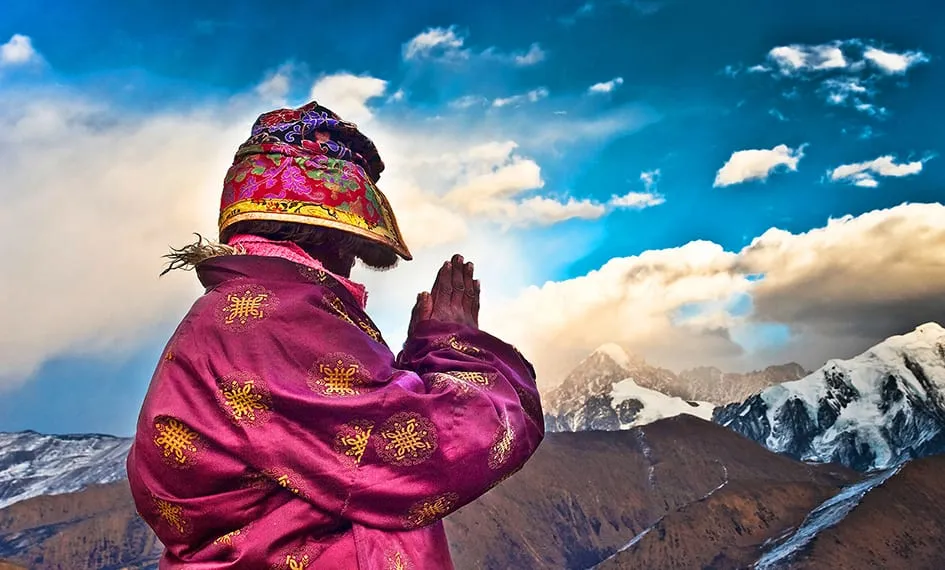
When you visit a monastery, you spend not money on tickets, but time. The stories on the murals, the people resting in stupas, the hands praying before butter lamps—these aren't seen with eyes, they're absorbed through time.
Stand a while longer. Say a little less. The monastery will tell you more.
Want a worry-free yet free travel experience?
Don't want to plan? Contact our senior customizers now for your exclusive route and quote.
Updated: June 2026 Author: RoamFun Senior Travel Consultant Questions welcome: vip@roamfun.net
Craving a worry-free yet free-spirited journey?
Don't want to plan it yourself? Contact our senior trip designer now for a route and quote tailored to you.

RoamFun Senior Travel Consultant
Travel DesignerProfessional travel consultant, curating the most practical travel guides for you.