
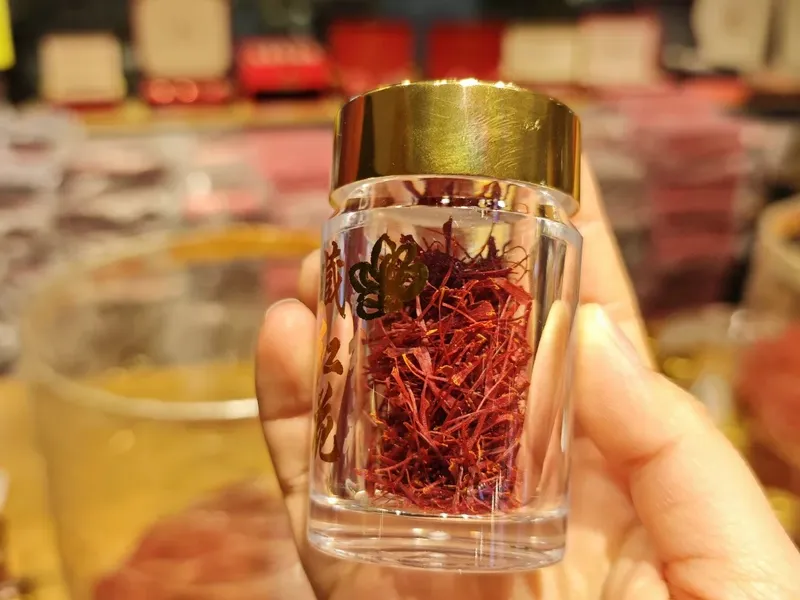
How to Identify Real Saffron? (Features + Methods)
Saffron (also called Crocus sativus) is a precious medicinal material, and its high price invites fakes, adulteration, and dyeing. As a common souvenir from Tibet and Qinghai, knowing how to identify it is essential.
This guide teaches you via key features.
🌸 About Real Saffron
- Source: the stigmas of the crocus flower; only a little is harvested per flower — low yield, high price
- Form: dark red long, thin threads, thicker at top, tapering, with a funnel-shaped end
- Use: invigorating circulation; brewed in water or used in cooking
Note: Tibet doesn't mass-produce saffron (main producers are Iran and some Chinese provinces). Judge quality, not "origin" hype.
🔍 Four-Step Test
1. Check color
- Genuine: dark red/deep red, dry and natural
- Fake: overly bright/uniform — possibly dyed; or pale/yellowish
2. Check form
- Genuine: fine, curled threads with a funnel-shaped stigma end
- Fake: safflower, corn silk, paper shreds — rough, no funnel stigma
3. Water test (important)
- Soak a few threads in warm water: genuine turns water golden yellow, threads don't lose color (stay red)
- Fake: water quickly turns red (dyed), or threads fade
4. Smell
- Real saffron has a special, fresh aroma
- Fakes have weak or odd smells
⚠️ Common Fakes & Traps
- Safflower posing as saffron: safflower is cheap and similar but lacks the funnel stigma; water test differs
- Dyed threads: low-grade product dyed to look premium
- Weight adulteration: water, oil, or impurities added to add weight
- "Wild Tibetan" hype: exaggerates source and effect; beware of price scams
💰 Price Reference
- Real saffron is not cheap; a gram ranges from a few to tens of CNY (quality varies)
- Prices far below market are basically fake or adulterated
📌 Buying & Carrying Tips
- Buy from reputable channels: pharmacies, trusted sellers; get receipts
- Test before buying: use the methods above on-site
- Don't chase bargains; "cheap is no good"
- Carry: keep dry and sealed, avoid moisture
Saffron is a precious but "trap-prone" souvenir. Learn to check color, form, and water test, and you'll pick genuine saffron to bring home safely.
Craving a worry-free yet free-spirited journey?
Don't want to plan it yourself? Contact our senior trip designer now for a route and quote tailored to you.
Updated: August 2026 Author: RoamFun Senior Travel Consultant Questions? Contact us: vip@roamfun.net

RoamFun Senior Travel Consultant
Travel DesignerProfessional travel consultant, curating the most practical travel guides for you.