Tibet Food Guide: From Tibetan Noodles to Barley Wine—What You Should Really Eat in Lhasa
Many people's knowledge of Tibetan cuisine doesn't exceed three things—butter tea, tsampa, and dried yak jerky. A veteran who's been to Lhasa dozens of times tells you: Tibetan food is far richer than you imagine.
But that doesn't mean you'll be used to everything. Butter tea is salty, tsampa is coarse, wind-dried yak jerky chews like wood. So this guide doesn't say "you must eat XX"—I'll tell you what each thing tastes like, what the texture is, and where to eat the most authentic version. Whether you can handle it, you try and judge for yourself.
🚙 Veteran's Straight Talk: At High Altitude, Eating Is More Than "Eating"
In a place like Lhasa at 3650m, your digestive system operates at about 30% lower efficiency than at sea level. Overeating causes bloating that presses against your diaphragm, making breathing harder—that's why "small, frequent meals" work best at high altitude.
A hidden perk of traveling by Prado in Tibet is—the driver knows where the reliable restaurants are. They'll take you to places tucked in alleys with no Chinese signage that have been open for twenty years. You can't find these places alone—that's why following an experienced driver completely transforms your food experience.
🗺️ Hard-Earned Itinerary: Eating Through Lhasa Morning to Night
Breakfast (8:00-10:00): Tibetan Noodles + Sweet Tea
A Lhasa day starts with a bowl of Tibetan noodles and a cup of sweet tea.
Tibetan noodles aren't what you think of as "ramen." The noodles are made from highland barley flour—firmer, chewier, with a strong alkaline taste. The broth is simmered from yak bones, topped with a layer of yak butter and chopped scallions. A bowl of Tibetan noodles with a side of pickled radish (to cut the richness), plus a cup of sweet tea—this is the most Lhasa breakfast there is.
Where to eat: Guangming Gangqiong Sweet Tea House. Lhasa's most famous sweet tea house—Tibetan noodles 6-8 yuan per bowl, sweet tea 1 yuan per cup. Walk in at 8 AM and the long wooden tables are already full of Tibetan elders back from morning kora and office workers. Bustling, noisy, authentic.
Lunch (12:00-14:00): Tibetan Buns + Yak Meat Pies
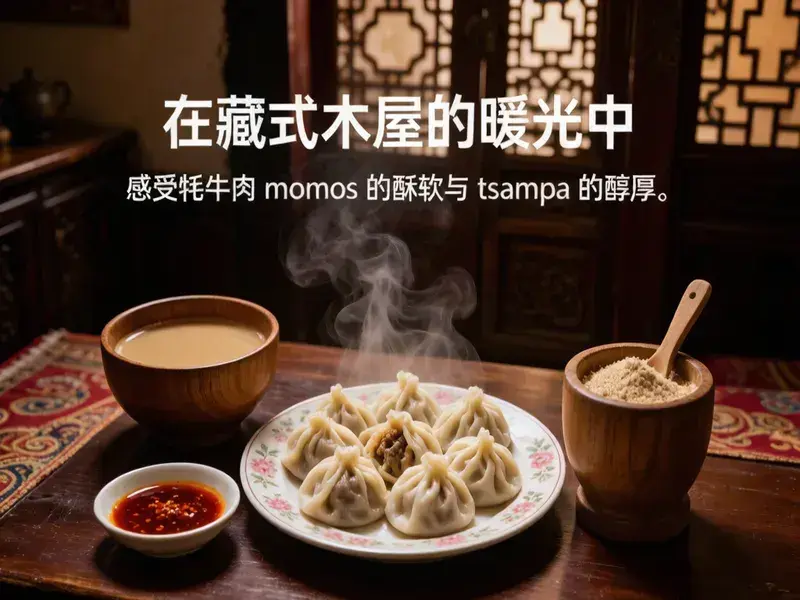
Tibetan buns (momo): Different from Chinese steamed buns—the wrapper is made from unleavened dough (not fermented), thin and chewy. The filling is yak meat + onions + a dash of Sichuan pepper powder, pure meat with no vegetables. Dip in Tibetan chili sauce and bite—mouth full of juicy meat.
Where to eat: Small alleys around Barkhor Street. Look for any restaurant with steam constantly rising from bamboo steamers outside, full of Tibetan women inside—go in, order Tibetan buns (about 20-25 yuan for 10), and a bowl of yak meat soup (10 yuan). Lunch sorted.
Afternoon Tea (15:00-17:00): Ginseng Fruit Yogurt + Sweet Tea
"Ginseng fruit" isn't ginseng's fruit—it's the root of a highland plant called "juema," boiled soft until it's sweet and starchy like sweet potato. Sprinkle it on yak yogurt—the yogurt's tartness + ginseng fruit's sweetness + the dry highland air—this bowl moistens the lungs and replenishes energy.
Where to eat: Xueyu Restaurant or Makye Ame on Barkhor Street. Xueyu's yogurt is an old Lhasa memory, open for twenty years. Makye Ame is more touristy but the third-floor rooftop view of Barkhor Street is unbeatable—pricier but the view is worth it.
Dinner (18:00-20:00): Yak Meat Hot Pot
For dinner, I recommend a yak meat soup pot. Different from Sichuan hot pot—yak meat soup pot isn't for dipping. It's a large pot of bone-in yak meat pre-stewed for 4-5 hours with radish, potatoes, and wide noodles already inside. Served ready to eat—white broth, tender meat.
Where to eat: Several old yak meat soup pot restaurants on Deji Road in Lhasa, about 60-80 yuan per person. When you enter, check how many locals are eating—lots of locals means it's the right place.
Late Night Snack (Optional): Barley Wine
Barley wine isn't baijiu—it's a low-alcohol fermented drink (similar to rice wine), about 3-5% ABV. Slightly sweet, slightly sour, with a grain aroma. Tibetans drink barley wine from bowls—one bowl per gulp, don't sip.
Where to drink: Small barley wine shops tucked in Lhasa's alleys—a wooden sign saying "Barley Wine" at the door, just a few tables inside. After you enter, the owner brings a large pot, sold by the pot (about 20-30 yuan/pot). Don't drink alone—barley wine is about sharing.
🎒 Practical List: Tibetan Dining Anti-Scam Guide
⚠️ Don't say I didn't warn you: Tibetan restaurants have two types of "butter tea"—freshly churned (butter + brick tea + salt churned in a wooden churn) and powdered (mixed from powder). Freshly churned has a layer of pale yellow butter cream on top, rich flavor; powdered is watery and bland. Before ordering, ask "churned or powdered?"
- Must-try: Tibetan noodles, Tibetan buns, yak meat soup pot, ginseng fruit yogurt, sweet tea
- Try if you dare (depends on taste): Butter tea (salty), tsampa (coarse grain paste), wind-dried yak jerky (extremely hard, tough on teeth)
- Order with caution: Raw yak meat sauce (raw minced meat with seasonings—sensitive stomachs may have issues)
- Don't eat at attraction entrances: Restaurants flanking Potala Palace and Barkhor Street main road are 40%+ more expensive than those in alleys
💡 Heart-to-Heart Truths
Not being used to it is normal, but don't say it's "bad": Butter tea is salty and you might not like it, tsampa is coarse and might be hard to swallow, but that doesn't mean they're "bad"—these are the energy solutions of plateau people developed over centuries. Try asking "How do you usually eat this? Can you show me?"—most Tibetan women will enthusiastically demonstrate.
Sweet tea is a product of Han-Tibetan fusion: Many people don't know that Lhasa's sweet tea actually came from British milk tea culture introduced through India, completely different from traditional Tibetan butter tea. So if you find sweet tea delicious, that's normal—it's essentially "Tibet's version of milk tea."
The pressure cooker is the soul of Tibetan cuisine: At high altitude, water boils before 90°C, so ordinary pots can't cook meat thoroughly. All Tibetan stews and soup pots are made with pressure cookers—yak meat needs 30-40 minutes under pressure to become tender. Behind that bowl of tender yak meat is a pressure cooker hissing at 3650m altitude.
📸 Don't Shoot Blindly—These Spots Are Stunning
- Guangming Gangqiong Sweet Tea House: Long wooden tables + enamel cups + tea pourers + sunlight slanting through windows—the most Lhasa documentary shot. No flash, no shoving camera in faces.
- Tibetan noodles + sweet tea combo: 45-degree overhead shot, wooden table texture as background, no filter needed—the warm tones of Tibetan noodles and creamy white of sweet tea are beautiful enough.
- Tibetan restaurant in Barkhor Street alley: Evening lights on, shoot from the doorway looking in—steam, Tibetan decor, diners—cinematic feel.
💬 What RoamFun Travelers Say
"First day, I almost threw up drinking butter tea—why is it salty? Second day, I sat in the sweet tea house all morning watching a Tibetan uncle drink bowl after bowl, and I wanted to try too. Third time, I suddenly thought—actually, it's quite fragrant. Now back in the lowlands, I occasionally crave that butter flavor." — Chengdu, Xiao Zhang ⭐⭐⭐⭐⭐
"Tibetan buns are the best thing I ate in Tibet, hands down. Thin wrapper, generous filling, bite open and full of meat juice. Found an old shop in an alley behind Barkhor Street, ate there two days straight. The owner didn't speak Chinese, I gave a thumbs up for 'delicious,' and he smiled and gave me two extra buns." — Guangzhou, A Min ⭐⭐⭐⭐⭐
What You Eat Isn't Just Food—It's This Plateau's Way of Life
Above 4500m, food isn't about being tasty—it's about survival. Butter tea's calories withstand minus 30°C cold, tsampa's density sustains a full day of physical exertion. Every bite of Tibetan food carries the plateau's survival wisdom and human warmth.
Want a worry-free yet free travel experience?
Don't want to plan? Contact our senior customizers now for your exclusive route and quote.
Updated: June 2026 Author: RoamFun Senior Travel Consultant Questions welcome: vip@roamfun.net
Craving a worry-free yet free-spirited journey?
Don't want to plan it yourself? Contact our senior trip designer now for a route and quote tailored to you.

RoamFun Senior Travel Consultant
Travel DesignerProfessional travel consultant, curating the most practical travel guides for you.