Basum Tso Travel Guide: Nyingchi's Emerald Sacred Lake (with Lake Loop)
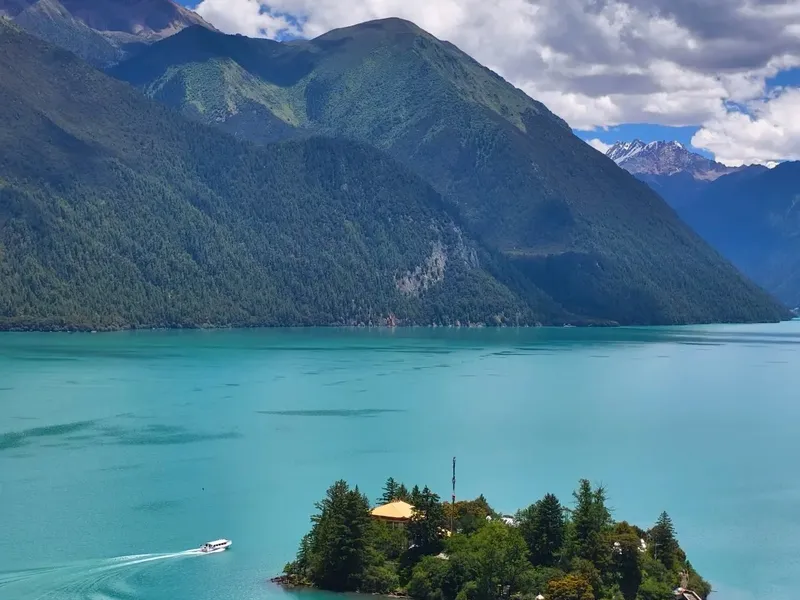
Basum Tso is the clearest and most enchanting sacred lake in the Nyingchi region. Its water is a deep, clear green, like a great emerald lying quietly between snow mountains and forest, which is why many call it the "emerald sacred lake." Unlike the highland lakes of Ali and Nagqu, Basum Tso sits at a relatively lower elevation, is surrounded by forest, and has a more humid climate with comparatively abundant oxygen. That makes it an ideal, friendly introduction to the beauty of Tibetan lakes for first-time visitors or travelers who are sensitive to altitude sickness.
An islet sits at the heart of the lake, topped with an ancient temple and white stupas. Seen by boat or from the shore, it carries a certain poetic charm of "a temple in the heart of the lake, a reflection in the water." The scenic area also has a lakeside loop trail for hiking, where you can soak in the quiet clarity of a highland lake. This guide lays out how to get to Basum Tso, what's a must-see, how to walk the loop route, the best time to visit, ticket and cost details, and practical tips—so you can easily enjoy this "emerald" of Nyingchi.
🏞️ Getting to Know Basum Tso
- Location: Kongpo Gyada County, Nyingchi region, about 100+ km from Nyingchi city
- Elevation: about 3,400–3,700 m, relatively low, good for first-time visitors to Tibet
- Character: clear emerald-green water, surrounded by forest, with an ancient temple and white stupas on the islet
- Highlights: the islet, the lakeside loop trail, snow-mountain reflections, and lakeside forest and villages
- Access: about 330+ km from Lhasa, often a stop along the Lhasa–Nyingchi route
🚗 How to Get There
- Self-drive: from Lhasa, take the Lhasa–Nyingchi expressway/highway, about 5–6 hours; from Nyingchi city, about 2 hours
- Chartered/shared car: available from Lhasa or Nyingchi, arranging Basum Tso as a half-to-full-day trip
- Ticket: an entrance ticket is required, about 120 RMB in peak season (including shuttle bus; subject to on-site rates)
- Documents: your ID is usually enough to enter Tibet; no border permit is needed unless you go into border areas
- Timing: plan half a day to a full day, including the islet and the loop hike
🏝️ The Islet & Lake Loop
- The islet: ancient temple, white stupas, and mani stone piles; atmospheric by boat or from afar
- Loop trail: hike along the lake, watch the water change color, and breathe the fresh air
- Lakeside villages: Tibetan villages and pastoral scenery, giving a sense of Nyingchi's warmth and calm
- Viewpoints: higher spots overlook the lake and snow mountains for great photos
- Tip: if time allows, take the lake loop hike—slowing down is the only way to truly appreciate the sacred lake
📷 Best Timing & Viewpoints
- Season: spring and autumn are best, with stable weather and the clearest water; summer is rainy, winter colder
- Time: morning or evening light is softest, showing the water's color layers best
- Viewpoints: the islet, the loop trail, and elevated overlooks are all classic spots
- How to shoot: wide-angle for the islet panorama, telephoto for snow-mountain reflections and details
📌 Practical Tips
- The elevation is still notable (above 3,400 m): move slowly and pace yourself
- The forest lake area has many mosquitoes in summer; use repellent
- There are many paths in the area: wear comfortable hiking shoes
- Respect Tibetan Buddhist beliefs: don't climb the temple or stupas, and keep quiet
- Lakeside wind is cool: bring a jacket, as day-night temperature differences are large
- Tickets and shuttle costs follow on-site rates; book ahead in peak season
❓ FAQ
Q: Is Basum Tso suitable for first-time visitors to Tibet? A: Yes. The elevation is relatively low, it's forested, and oxygen is more plentiful—a friendly way to experience the beauty of Tibetan lakes.
Q: Basum Tso or Namtso? A: Basum Tso is more relaxing, lower, and greener; Namtso is higher with a vaster, more magnificent surface. First-timers or those wary of altitude prefer Basum Tso; those seeking grand scale can go to Namtso.
Q: Do I need a border permit? A: Usually not—your ID is enough to enter Tibet; a permit is only needed if you later go to border areas.
Why Basum Tso feels different from other Tibetan lakes
What sets Basum Tso apart is its gentle setting. Instead of a stark, windswept highland, you find a lake framed by lush forest and soft, rolling terrain, which gives it an almost alpine character. The lower elevation and extra oxygen make a real difference: you can walk the loop trail, visit the islet temple, and linger over the views without the heavy altitude strain common at other lakes. This accessibility, combined with the strikingly clear emerald water, makes it an especially rewarding stop for families, older travelers, and anyone easing into high-altitude travel. It's a place that rewards a slow pace and a quiet eye.
A closer look at the islet temple
The islet at the heart of Basum Tso holds a temple that gives the lake much of its character. Believed to have a history stretching back centuries, it's a working place of worship where prayer flags flutter over the water and incense mingles with the mountain air. The temple is small but full of atmosphere, with its whitewashed walls, gold-trimmed roof, and the surrounding stupas and mani piles. Reaching the islet usually involves a short boat ride, which is itself part of the charm—gliding across the clear emerald water with the forested slopes rising around you. Visitors are asked to be respectful: speak softly, avoid climbing sacred structures, and follow the local customs. Even for travelers who don't usually linger at religious sites, the quiet beauty of the islet makes it a memorable stop.
Making the most of the lake loop
The loop trail around Basum Tso rewards those who take their time. Walking the path, you'll watch the water shift from deep green to lighter turquoise as clouds pass overhead, and the surrounding forest and snow peaks create a constantly changing frame. The trail is generally gentle, though the elevation still calls for a steady, unhurried pace. Look for spots where you can sit and simply watch the water; these quiet moments are often the most memorable part of the visit. If you're short on time, focusing on the islet and one or two viewpoints along the trail is enough to capture the lake's essence. Either way, letting yourself slow down is the key to enjoying Basum Tso's particular brand of peace.
What the seasons look like at the lake
Each season brings a different face to Basum Tso. In spring, the surrounding forest is fresh and green, and the weather is generally clear and mild. Summer is lush and vibrant, but frequent showers can interrupt the views, so a flexible plan helps. Autumn is arguably the finest time, with crisp air, stable skies, and warm golden light that brings out the lake's color. Winter is quieter and colder, with fewer visitors and, on clear days, a serene stillness over the water and snow-dusted peaks. Whichever season you choose, checking the forecast and planning for a clear day will give you the best chance of seeing the lake at its brilliant best. Because the region is greener and more sheltered than the western highlands, it's a comfortable destination across much of the year.
Pairing Basum Tso with the Lhasa–Nyingchi route
Because Basum Tso sits conveniently between Lhasa and Nyingchi, it fits naturally into a two- or three-day itinerary. Many travelers drive from Lhasa, stopping at Basum Tso for the lake loop, and then continue to Nyingchi to explore its forests, valleys, and the Yarlung Tsangpo Grand Canyon. Alternatively, you can make the lake a day trip from Nyingchi. Along the way, the Lhasa–Nyingchi road itself offers pleasant scenery through the Tsangpo valley. Arranging Basum Tso as part of this corridor lets you see one of Tibet's most beautiful regions without adding excessive travel time, making the whole journey both efficient and memorable.
What to pack for a comfortable visit
A little preparation makes your Basum Tso day far more comfortable. Because the elevation still matters, bring a light oxygen canister if you're prone to altitude discomfort, and plenty of water to stay hydrated. Comfortable hiking shoes are essential for the loop trail, and a light rain jacket is wise given the humid, forested climate. Sunscreen and sunglasses are important even in the shade of the trees. Snacks help bridge the gap between meals, since dining options in the area are limited. If you plan to walk the full loop, allow extra time and keep your pace gentle. With these essentials packed, you can fully enjoy the lake's calm and beauty.
The clear water, forest, and islet temple of Basum Tso are among Nyingchi's most gentle and moving scenes. Setting out from Lhasa or Nyingchi, spending half a day to a full day, you can slow down by this "emerald" and watch the water shift in the sunlight, listening to the prayer flags whisper in the breeze. May this lake and mountain scenery become one of the softest memories of your snow-plateau journey.
Want a worry-free Nyingchi and Basum Tso itinerary?
From Lhasa–Nyingchi route planning to charters and ticket booking, our senior consultants can arrange everything for you. Contact our trip designer now for a route and quote made for you.
Updated: August 2026 Author: RoamFun Senior Travel Consultant Questions? Contact us: vip@roamfun.net

RoamFun Senior Travel Consultant
Travel DesignerProfessional travel consultant, curating the most practical travel guides for you.