
Wolong Shenshuping Panda Base: How to Visit, Tickets, Route & How It Differs from Chengdu
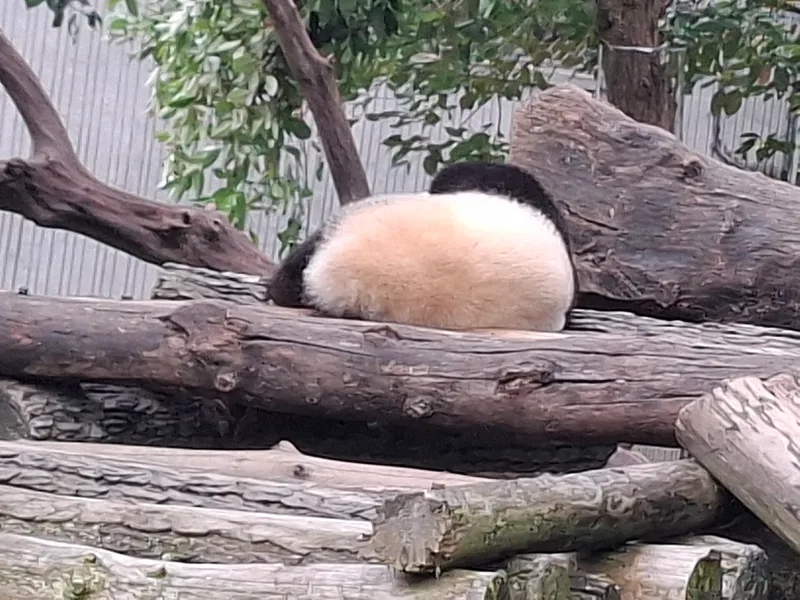
The complaint I hear most often from travellers I take to see pandas is this: they queued for forty minutes, got to the front, and the panda had its back turned and was asleep. The Chengdu base is genuinely good — lots of pandas, a polished visitor route — but at peak season the crowds make it hard to stand quietly and watch one animal chew bamboo for five minutes. Wolong exists for exactly that kind of visitor. It sits in a valley in Gengda Town, Wenchuan County, at roughly 1,700 metres above sea level, with a fraction of Chengdu's visitor numbers. The enclosures are spread along a hillside, and the hills and trees around them are the real thing, not landscaping.
Now the honest part, up front. Wolong is not a convenient substitute for the Chengdu base. It is much further: about 130–150 km from downtown Chengdu, two and a half to three hours each way, and once you pass Yingxiu the road is nothing but mountain bends. Carsick passengers in the back seat will regret breakfast. In winter, that stretch can ice over. So my rule of thumb has stayed the same for years: if you are short on time, travelling with very small children, or just want one look at a panda, go to Chengdu. If you can give up a day, want to see pandas in a setting closer to the wild, and are heading into western Sichuan anyway, come to Wolong.
This guide breaks down what kind of facility it actually is, how tickets and booking work, the most reliable way to drive there, what time of day the pandas are active, and the mistakes people repeat every single year.
🐼 First, understand what this base is
The Wolong China Giant Panda Garden Shenshuping Base belongs to the China Conservation and Research Center for the Giant Panda, and it sits inside the Wolong National Nature Reserve in Gengda Town. This is not purely a visitor attraction. It carries real work in panda husbandry, breeding and rewilding research, which is why the place feels like a semi-wild valley station rather than an urban science park.
The basics:
- Location: Gengda Town, Wolong Special Administrative Region, Wenchuan County, Aba Prefecture, Sichuan (administratively confusing — search "China Giant Panda Garden Shenshuping Base" in your map app and you'll be fine)
- Altitude: about 1,700 m
- Nature: one of the China Conservation and Research Center for the Giant Panda's bases, combining research with public visiting
- Recommended visit length: 2–3 hours
- Opening hours: roughly 09:00–17:00 (check the official WeChat account for the current year)
That altitude figure matters more than people expect. At 1,700 m almost nobody gets altitude sickness, but it does mean this place is much colder than Chengdu. It is natural air conditioning in summer and genuinely cold in winter. When Chengdu is in T-shirts in June, you will still want a light jacket in the Wolong valley; from December to February, bring the down jacket.
🎫 Tickets and booking: don't remember at the gate
- Admission: around ¥85 for adults, with concessions for students and seniors (confirm on the official channel for the current year; prices shift with season and package)
- Shuttle: there is a paid shuttle/buggy inside the park. It is hillside terrain, walking is tiring, and if you have elderly or children with you, buy it
- Booking: real-name reservation through the official WeChat account, bookable in advance. Reserve early for holidays
- Entry: swipe your ID card at the gate, so bring your passport or ID
My practical advice: during holidays and summer, book ahead. This base handles far fewer visitors than Chengdu, and turning up hoping to buy at the door during a capped day means a three-hour drive for nothing.
One more common misunderstanding: a standard ticket does not include close contact with pandas. Those photos online of people holding cubs or cleaning enclosures come from a separate "panda volunteer / caring experience" programme that requires its own booking, its own fee, and has age and group-size limits. With a regular ticket you watch from the visitor route behind barriers, exactly as at any other base.
🚗 Driving from Chengdu: two and a half hours is the optimistic number
Route: Chengdu → Chengdu-Guanxian / Duwen Expressway → Yingxiu → Gengda → Shenshuping Base, about 130–150 km.
- Typical drive: 2.5–3 hours
- Road: the expressway section is easy; after Yingxiu it becomes mountain road with dense bends and some cliffside sections. Anyone prone to carsickness should take medicine before departure
- Winter: ice is possible after snow. If you rent a car, ask whether snow chains are included; local drivers slow down noticeably on this stretch
- Fuel and supplies: Yingxiu and Gengda both work, but fill up in Chengdu before you leave
Without a car: a day tour or private car from Chengdu is the least stressful option. Public transport exists but involves transfers, infrequent departures and a long day — not recommended with luggage or small children.
What to combine it with: west of Wolong, the road crosses Balang Mountain toward Siguniangshan; east of Yingxiu you can drop to Dujiangyan and Mount Qingcheng. Many travellers treat Wolong as the first stop on a western Sichuan loop: pandas first, then into the mountains. For route ideas, see Classic Self-Drive Routes in Sichuan.
🗺️ How to structure the day
Option 1: Day trip from Chengdu (most common)
- 07:30 depart Chengdu
- 10:00 arrive, catch the active morning window
- 12:30 leave, lunch in Gengda or Yingxiu
- 14:00 drive back, reach Chengdu around 17:00
Option 2: Wolong + Siguniangshan, two days
- Day 1: Chengdu → Wolong pandas → over Balang Mountain → overnight in Siguniangshan Town
- Day 2: Shuangqiao Valley or Changping Valley, then back to Chengdu or onward to Danba
Option 3: Wolong + Dujiangyan / Mount Qingcheng
- Pandas in the morning, Qingcheng in the afternoon, back in Chengdu by evening. Good for families who don't want altitude.
⏰ What time to go, if you want pandas that actually move
This matters more than the ticket. Giant pandas are most active early in the morning and during feeding times. Once it warms up they find a spot and lie down. Arrive at noon and you will be looking at a pile of fur.
- Best window: right at opening (around 09:00) until 11:00
- Second best: after 15:00, when keepers feed again
- Worst window: midday to 14:00
- Weather: pandas move more on cool overcast days than under strong sun, and surprisingly, light rain often makes them more active
So the advice is blunt: leave an hour earlier rather than arriving two hours later. At Wolong there is no crowd to fight — if you get the timing right, the experience is dramatically better.
⚠️ Mistakes people make every year
- Arriving in the afternoon and only seeing sleeping pandas (by far the most common regret)
- Assuming the ticket includes close contact, then discovering it needs a separate booking
- Wearing a T-shirt — the valley runs 8–10°C cooler than Chengdu, even in summer
- Leaving without checking the weather — winter road ice means reassessing the plan
- Feeding animals, tapping on glass or using flash — hard rules, staff will stop you
- Treating it as a twenty-minute stop — a proper visit takes two to three hours
One more note for parents: the park is on a hillside, so a carrier beats a stroller, and there are plenty of steps and slopes. Wear trainers.
🧭 Choosing between the four panda bases
- Chengdu Research Base: easiest to reach, most pandas, best facilities, biggest crowds. If you only have time for one and are travelling with elderly relatives, choose it. See Chengdu Panda Base Guide
- Wolong Shenshuping: wildest setting, fewest people, fits a western Sichuan loop, but a long drive. Choose it if you want quiet and are heading into the mountains
- Dujiangyan Panda Center: closest to Chengdu, fewer crowds, and offers bookable experience programmes. See Dujiangyan Panda Center Guide
- Bifengxia (Ya'an): panda base bundled with a gorge and a zoo, a full day's worth. See Bifengxia Guide
I never recommend doing all four. Panda fatigue is real. Pick one or two and spend the time you save on western Sichuan's scenery instead.
A few closing thoughts
What stays with me about Wolong is that it doesn't feel like an attraction. It feels like a path laid across a hillside, with real forest and streams on both sides, wind coming up the valley, and pandas slowly working through bamboo below you. You can stand and watch for ten minutes and nobody asks you to move along. That kind of luxury is close to impossible at the famous bases.
If you only plan to see pandas once, do the arithmetic honestly: two extra hours of mountain road buys you quiet, cool air, and a place that looks like where a panda ought to be. Whether that trade is worth it depends on whether you want to tick off "saw a panda" or actually watch one. Among my travellers, the ones who came with children and took their time rated it highly; the ones who raced in for two photos mostly thought the road was too long.
If you come in winter, this works beautifully as the first stop on a "pandas + snow + hot springs" route: pandas at Wolong in the morning, then drive toward Li County for skiing or a hot spring in the afternoon. If you hate cold or hate mountain roads, stretch the schedule instead of cramming three stops into one day — the roads of western Sichuan will teach you how to plan an itinerary, usually via a traffic jam.
Craving a worry-free yet free-spirited journey?
Don't want to build the itinerary yourself? Talk to our senior travel designers and get a route and quote built for you.
Get your free route plan and quote
Last updated: October 2026 Author: RoamFun Senior Travel Consultant Questions welcome at: vip@roamfun.net

RoamFun Senior Travel Consultant
Travel DesignerProfessional travel consultant, curating the most practical travel guides for you.