Driving the G318 Sichuan-Tibet Highway in Winter: Road Conditions, Snow Chains & Itinerary Tips (Dec-Mar)
Bottom line: From December to March, the Sichuan-Tibet Highway is open — but it is only for drivers with real snow-and-ice experience, a capable vehicle and a flexible schedule. The biggest variable is snow-related traffic control at passes such as Zheduo Mountain. First-timers, seniors and families should instead "fly to Lhasa + winter Lhasa & Nyingchi" or only drive as far as Kangding/Xinduqiao and turn back.
Many people assume the 318 Sichuan-Tibet Highway is closed in winter, or that it is an icy ghost road. In reality, G318 is open all year. Winter simply means: fewer cars, purer scenery and lower prices — plus three extra variables: snowfall, black ice and traffic control. This guide walks you through whether to go, which sections are hardest, what vehicle you need, what gear to carry and how to leave buffer days in your plan.
1. First, the key question: can you actually drive it in winter?
| Factor | Winter reality (Dec-Mar) |
|---|---|
| National highway | Open, no "winter ban" on the whole line |
| Main risks | Short traffic controls after snow, black ice, blowing snow |
| Vehicle advice | 4WD preferred + snow chains + verified spare tire |
| Traffic volume | Clearly lower; proportion of trucks rises |
| Lodging along route | Town hotels mostly open; some guesthouses close |
| Tickets & crowds | Off-season pricing, very few visitors |
Conclusion: It is doable, but the bar is raised. A road any ordinary SUV can handle in summer can leave your car stranded on a slope in winter over a patch of black ice.
2. The sections that cause the most trouble (ranked by risk)
The following sections are high-altitude, shaded and winding — the winter hotspots for snow and ice:
- Zheduo Mountain Pass (4,298 m, Kangding–Xinduqiao): winter's "first gate". When snow falls, passenger vans and trucks are often restricted, and cars may be turned back or released in convoys. In bad weather, detour via the Ya'an–Kangding expressway toward Xinduqiao instead of forcing the pass.
- Ga'ershi (Gao'ersi) Mountain Tunnel to Yajiang: tunnel built, risk greatly reduced — but watch for black ice at both tunnel mouths in winter.
- Jianziwan–Kazila Mountain section (around Litang, 4,000–4,700 m): a long stretch at extreme altitude with poor visibility in snowstorms.
- Dongda Mountain Pass (5,130 m, between Zuogong and Mangkam): the highest pass on the highway; winter lows can hit −20°C with many icy patches.
- Yela Mountain & the 72 Bends of the Nujiang (Bangda–Basu): sharp bends and steep slopes; shaded sides tend to freeze in winter.
- Anjiula Mountain to Rawok (Ranwu): strong valley winds, roadside ice falls, and "black ice" (roads that look dry but are frozen) around bends.
- Sela Mountain (Lulang–Nyingchi): 4,728 m, frequent winter cloud and snow, though tunnels and roadwork have improved things in recent years.
🚨 Winter rule of thumb: never rush a pass in snowfall, fog or at night. Better to spend the night in a lower town and wait for clear weather than to gamble on "just one more pass".
3. Vehicle & gear: snow chains are a lifeline, not decoration
Vehicle advice
- A 4WD SUV is the first choice, with a full-size spare, jack, tow strap and jumper cables.
- Pre-departure checks: coolant rated to at least −25°C, winter windshield fluid, and a healthy battery — a weak battery is the most common winter breakdown.
- A sedan can technically make it, but with poor clearance and a higher risk of slipping, winter is not the time for a first attempt in a car.
Gear checklist
| Item | Why |
|---|---|
| Snow chains (metal; 2 sets is safer) | essential on snowy passes, cheap insurance |
| Tow strap + shovel | self-recovery from snowbanks |
| −20°C sleeping bag or heavy down jacket | emergency warmth if stuck overnight |
| Thermos + energy bars | high-altitude wait fuel |
| Headlamp + power bank | traffic-control waiting at night |
| Small medical oxygen canister | emergency relief at high passes |
Chain-fitting tip: practice mounting your chains on flat ground before you leave. On the pass, control points usually sit at both ends — fit chains there before climbing, not halfway up an icy slope.
4. How to structure a winter itinerary safely
Tip 1 — Stretch the route and acclimatize in steps. Chengdu → Luding (1,330 m) → Xinduqiao or Yajiang → Batang → Zuogong or Basu → Rawok (Ranwu) or Bomi → Nyingchi → Lhasa. Plan 8–10 days instead of the summer 6–7.
Tip 2 — Sleep low every night. Cold makes altitude sickness worse. Follow the rule "under 3,000 m whenever possible, never overnight above 4,000 m" (see our Lodging Altitude Guide for the 318 on this site).
Tip 3 — Keep 1–2 buffer days. A controlled pass can shift the whole plan back a day. People on tight deadlines should not attempt a winter drive into Tibet.
Tip 4 — Check two-point weather every morning. Look at pass forecasts, not just town forecasts. Monitor snow and lows around Kangding, Xinduqiao, Batang, Zuogong, Rawok, Bomi and Nyingchi, and never cross a pass on the day snow is forecast.
5. What winter on the 318 is actually good for
Winter rewards the patient:
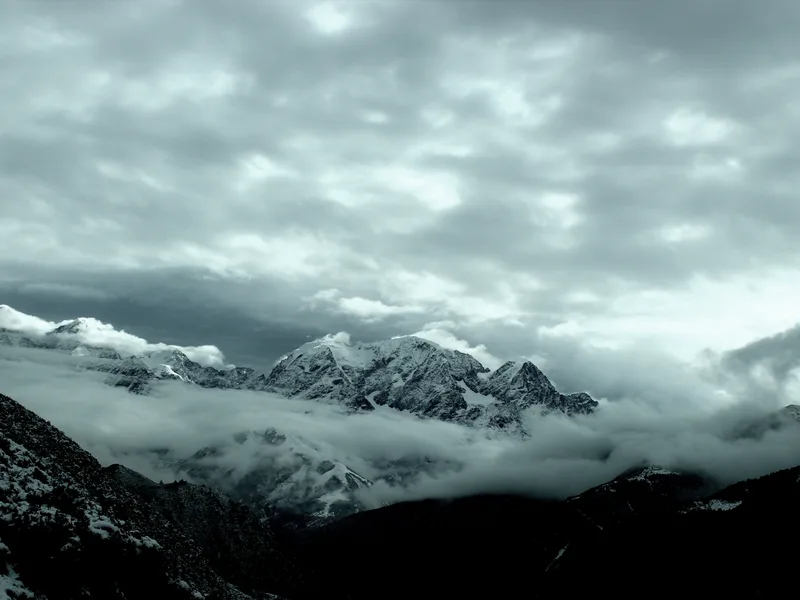
- Snow-crowned ranges: after fresh snow, Zheduo and Dongda mountains look immense — and winter's low humidity and clear days mean the best year-round odds of seeing Gongga and Namjagbarwa (Namcha Barwa).
- Rawok (Ranwu) Lake's blue ice & ice falls: winter's low water turns the lake mirror-still, with frozen falls along the shore; when the surface partially freezes, pre-dawn blues and greys are stunning.
- Laigu Glacier, closer than ever: with the lake frozen you can approach further than in summer — always follow a local guide's route, never walk on thin ice.
- Fewer people, lower prices: off-season tickets and lodging at roughly half the peak cost, no queueing.
⚠️ Do not walk out onto any frozen lake surface. Every year there are reports of people breaking through ice on Ranwu, Namtso and elsewhere. Viewing beats risking.
6. Three winter alternatives that suit most travelers
- Fly to Lhasa + winter Lhasa & Nyingchi: daytime temperatures reach above 10°C in sunshine, and Nyingchi's peach blossoms start by mid-to-late March. Great for cold-sensitive travelers.
- A "taster" Chengdu–Kangding–Xinduqiao run: mature roads and expressway access mean you can retreat anytime if Zheduo turns ugly.
- Join an experienced local convoy: they know the controls, the road and repair points. Safer than going it alone (we can connect you with reliable local teams).
7. Cost & preparation reference
- Winter fuel and lodging run 30–50% below peak; an 8–10 day trip totals roughly 3,000–4,500 RMB per person (fuel, tolls, food, lodging, tickets).
- Border permits: entering Tibet normally requires a border pass if you leave the main corridor — for a straight Chengdu-to-Lhasa winter run, standard permits usually suffice (see our Tibet Document & Permit Guide).
- Insurance: take a self-drive policy that covers altitude rescue and vehicle recovery.
8. FAQ
Q1: Does the 318 close in heavy snow in winter, and for how long? A: Full closures are rare. Passes usually see 2–8 hour controls, then one-way release; extreme blizzards may close a pass 1–2 days. That is exactly why you need buffer days.
Q2: I've never driven on snow. Can I still self-drive into Tibet in winter? A: Strongly advised against. Fly to Lhasa for a winter trip instead, or wait until the season opens properly (mid-to-late April) — the scenery is just as superb.
Q3: Will rental companies in Chengdu let me drive to Tibet in winter? A: Most Chengdu rentals prohibit driving into Tibet in winter (insurance terms). Confirm the cross-border clause before renting, or your coverage may be void.
Q4: Is the winter 318 okay for seniors and kids? A: Not really. Cold plus altitude is hard on them; winter is better spent flying to Lhasa and taking short private tours.
9. What travelers say
"I drove the 318 in January. We waited three hours at Zheduo for a release, drove straight into a snow squall, and over the top it was pure blue sky — the ice on Ranwu Lake was unreal. But honestly, this is not a road for beginners in winter." — self-drive blogger
"Before Chinese New Year I hired a local driver with his own vehicle — far safer than I expected. He read every pass forecast ahead. Few people, beautiful scenery, cheap rooms." — Xiaohongshu user
10. Summary
Winter on the 318 offers superb scenery and experience — but it is a judgment call. Only go if you tick all three boxes: snow-driving experience, a capable vehicle, and schedule slack. If any box is unchecked, swap the route for "fly to Lhasa + Nyingchi" and leave the highway for a kinder season. If you do go: check weather before every pass, wait when you should, carry your gear, and sleep low. Do that, and winter will repay you with an unforgettable, silent snowbound journey.
Craving a worry-free yet free-spirited journey?
Don't want to plan it yourself? Contact our senior trip designer now for a route and quote tailored to you.
Updated: September 2026 Author: RoamFun Senior Travel Consultant Questions? Contact us: vip@roamfun.net

RoamFun Senior Travel Consultant
Travel DesignerProfessional travel consultant, curating the most practical travel guides for you.