Sichuan-Tibet Highway Tibetan Culture Deep Experience: Not Just Photos — Step Into Their Lives
Photographed prayer flags and you understand Tibetan culture? Entered a temple and you know Tibetan Buddhism?
Not at all. After over a decade on the Sichuan-Tibet Highway, the hardest thing for me to watch is tourists in temples raising cameras at Tibetans doing full-body prostrations — someone is performing a deeply devout act, and you're consuming it as "exotic flavor."
This guide doesn't cover the attraction introductions you can find with a quick search. I want to talk about the moments along the way where you can truly step into Tibetan life — things that cost nothing, have no entrance fee, but stay with you long after you leave.
The Real Talk: Cultural Experience Isn't About "Attractions" — It's About Meeting "People"
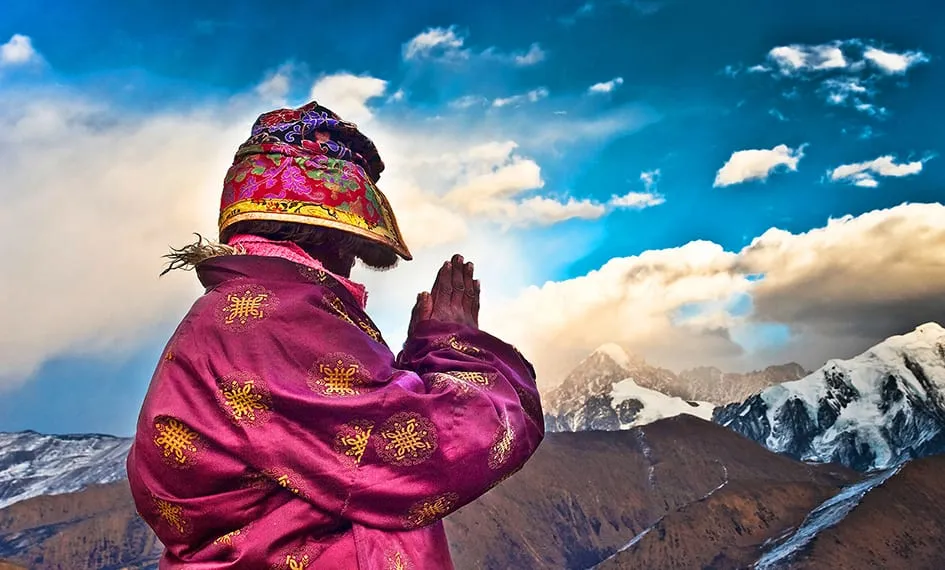
Culture on the Sichuan-Tibet Highway isn't inside the Potala Palace — that's all tourists. It's in the backpacks of roadside pilgrims, in the eyes of Tibetan elders across long wooden tables in sweet tea houses, in the golden light of sunrise hitting prayer wheels at temples in the early morning.
But finding these moments alone is hard — you don't know which temple holds morning chanting at what time, which village has the most authentic butter tea, or whether to step into a Tibetan home with your left or right foot first.
This is where a local driver's value shows. He's driven G318 for half his life, knows the lamas at roadside temples, knows the ajia (elder sister) at the sweet tea house, knows the Tibetan brother who's run a roadside shop at a junction for twenty years. The places he takes you aren't attractions — they're people's lives.
Traveling by Prado also means you can stop anytime — see a Tibetan grandmother weaving pulu (Tibetan woolen cloth) by the road, pull over to say hello; see horse racing festival flags fluttering on a hillside, turn in to take a look. Buses can't do this, and self-drivers don't know where these things are.
One Cultural Anchor Point Per Day
Day 1: Kangding — Prayer Wheels on Paoma Mountain
Kangding's Paoma Mountain is the birthplace of the Kangding Love Song. The temple on the mountain isn't large but has thriving incense offerings. Between 7 and 8 AM, you can see local Tibetan elders coming for kora — walking clockwise around the temple three times while turning hand prayer wheels.
What you can do: Quietly follow behind for one circuit. Don't take photos, don't talk, don't suddenly stop. After completing the circuit, you can smile and nod to the elders — most will return your smile.
Day 2: Tagong Temple — Millennium-Old Sakya Sect Monastery
From the Xinduqiao junction to Tagong Grassland, Tagong Temple is one of the ancestral monasteries of the Sakya sect (Flower School) of Tibetan Buddhism. The temple isn't large but houses a replica of the 12-year-old Shakyamuni Buddha life-size statue — legend says it was left when a Tang Dynasty princess passed through en route to Tibet.
What you can do: Remove shoes and hat before entering the main hall, and visit clockwise. The murals inside are over a thousand years old with still-vivid colors — non-flash photography is allowed but ask the lama's permission first. After exiting, you can light a butter lamp (donation 10-20 RMB) — the most basic Buddhist worship practice in Tibetan Buddhism.
Day 3: Batang — Birthplace of Xianzi Dance
Batang isn't just low-altitude and good for sleeping — it's the birthplace of "Batang Xianzi." Xianzi is a folk song and dance popular in the Khampa Tibetan region — a buffalo-horn fiddle leads, and men, women, and children form a circle singing and dancing.
What you can do: Stroll through Batang's town square in the evening. If you're lucky enough to catch locals dancing xianzi, just watch from the side — first circle to observe, second circle you can try joining. Even if your movements are clumsy, Tibetan elders will enthusiastically pull you in to dance. This experience is more authentic than any performance.
Day 4: Bangda — Pilgrims on the Road
On the road from Bangda to Baxoi, you'll see pilgrims doing full-body prostrations toward Lhasa. They prostrate every three steps — full body to ground, forehead touching earth — journeying from their homeland to Lhasa, taking months or even a year or two.
What you can do: If you see a prostrating group by the road, ask the driver to pull over. Bring food and water (crackers, bread, bottled water) and place it where they rest — don't ask where they're from or going, don't give money, don't take photos. Place the items, smile in acknowledgment, and leave. This is the best respect for pilgrims.
Day 5: Ranwu — Tibetan Family Dinner in Laigu Village
Laigu Village is a small settlement south of Ranwu town, with about 30 households and almost no tourists. The Tibetan ajia (elder sisters) in the village are warm — they smile and greet outsiders when they see them.
What you can do: If time permits, find a Tibetan family to stay overnight. Dinner is tsampa (roasted barley flour mixed with butter tea and shaped into balls), butter tea, and stories from the male host about his youthful pilgrimage to Lhasa. You don't need to understand Tibetan — eye contact and smiles are universal.
Day 6: Lulang — Zhaxigang Village of Gongbu Tibetans
Lulang's Zhaxigang Village is a settlement of Gongbu Tibetans (a Tibetan subgroup). Gongbu Tibetan clothing differs from the Lhasa region — women wear a distinctive pointed cap called a "Gongbu hat."
What you can do: Take a morning walk through the village. See Tibetans milking yaks, weaving in courtyards, drying barley on rooftops — you can stop and watch from a meter away. Most will smile at you and continue working. This daily life is far more vivid than museum exhibits.
Day 7: Lhasa — Morning Kora at Jokhang Temple
In Lhasa, of course visit the Potala Palace. But I strongly recommend setting your alarm for 6:30 AM — go to Jokhang Temple for the morning kora.
Before full daylight, people are already doing full-body prostrations on Barkhor Street. There are Khampa men wrapped in thick sheepskin coats, Tibetan ajia with braided hair, and children carried on mothers' backs. The sound of prayer wheels and chanting mingles and drifts through the morning mist.
What you can do: Follow the crowd clockwise around Jokhang Temple. Don't walk against the flow, don't spit on the ground, don't jump ahead of others for photos. After one circuit, sit in a sweet tea house on Barkhor Street — make eye contact and smile at the Tibetan elder sharing your table, and he'll raise his cup to you. You don't need Tibetan — a smile in return is enough.
Essential Checklist for Cultural Experiences
Don't say I didn't warn you: Entering temples and Tibetan homes has red-line rules — stepping on thresholds (the threshold is the Buddha's shoulder, don't step on it), pointing at Buddha statues with a single finger (extremely disrespectful, use your whole palm), and wearing shorts or tank tops into temples.
- Small change (1 and 5 RMB bills for temple lamp offerings — coins not accepted)
- Scarf/shawl (for women to cover shoulders in temples)
- Candy/stationery (give to Tibetan children you meet, but don't give money)
- Tibetan phrase cards ("Tashi Delek" = auspicious blessings, "Thu che che" = thank you, "Kong kham sang" = hello)
Honest Advice From the Heart
Don't view Tibetan culture with a novelty-seeking mindset: Full-body prostrations aren't for your photographs, kora isn't for your videos. Before pulling out your camera, ask yourself: if someone photographed me visiting a gravesite, would I be comfortable? Do unto others — this is the most basic respect.
Ask if you don't understand, but don't make careless comments: Butter tea is salty and you might not like it, tsampa is coarse and might be hard to swallow — these aren't "bad," they're "unfamiliar to you." Don't say "how can this taste so bad" — try saying "this flavor is very unique, can you tell me how it's made?"
Give children gifts, not money: When meeting Tibetan children by the road, don't give money (it fosters a habit of asking for handouts). Give a pen, a notebook, or some candy — they'll be delighted.
No flash in temples: Murals, thangkas, and Buddha paintings use mineral pigments — flash UV accelerates fading. No flash isn't just polite — it protects cultural artifacts.
Don't Just Snap Randomly — These Spots Are Incredible
- Jokhang kora path: 7 AM, morning light slanting across Barkhor Street's stone pavement, pilgrims rimmed with golden backlight. Use telephoto for person + light, capturing serenity.
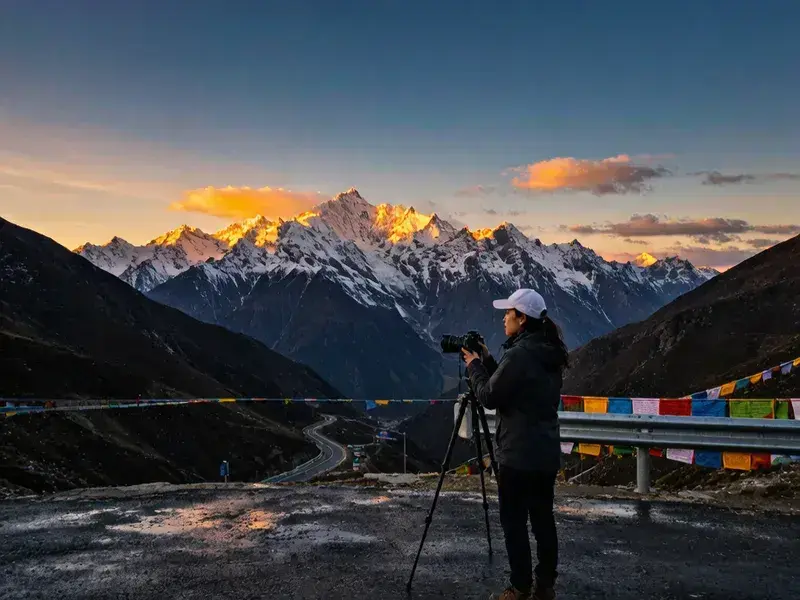
- Tagong Muya Golden Stupa + Yala Snow Mountain: 4 PM sunset side-light, stupa reflection + snow mountain cool tones — warm-cool contrast.
- Zhaxigang Village sunset: Evening cooking smoke rising, Tibetan stone houses + yaks + meadow — use large aperture for detail, avoid making it a landscape shot.
- Pilgrim silhouettes from behind: If you must photograph pilgrims, only shoot from behind. Don't photograph faces, don't shoot from the front, don't let them sense being photographed.
What RoamFun Travelers Say
"At Jokhang Temple, I sat with a Tibetan grandmother drinking sweet tea. She didn't speak Chinese, I didn't speak Tibetan, but we smiled at each other several times. She pointed at my nearly empty cup of sweet tea and refilled it for me. That cup of sweet tea was the best thing I've ever tasted in my life." — Abing, Shenzhen ⭐⭐⭐⭐⭐
"Before departure, I read lots of Tibetan customs guides and got increasingly nervous — afraid of offending people by not knowing the rules. Turns out Tibetans are incredibly welcoming to outsiders — as long as you respect them, they're warmer than you'd expect. In Laigu Village, the ajia saw I couldn't handle butter tea and specially cut me some yak jerky to try." — Xiao Zhou, Guangzhou ⭐⭐⭐⭐⭐
The Most Beautiful Scenery Is People
The photos you take on the Sichuan-Tibet Highway may lie forgotten in your phone after six months. But you'll remember the Tibetan child who smiled at you, the grandmother who poured you sweet tea, the pilgrim who said "Tashi Delek" while resting at a mountain pass.
Scenery is in your eyes; culture is in your heart.
Want a hassle-free yet flexible trip?
Don't want to plan? Contact our senior travel designers now for your personalized route and quote.
Updated: June 2026 Author: RoamFun Senior Travel Consultant Questions? Contact: vip@roamfun.net
Craving a worry-free yet free-spirited journey?
Don't want to plan it yourself? Contact our senior trip designer now for a route and quote tailored to you.

RoamFun Senior Travel Consultant
Travel DesignerProfessional travel consultant, curating the most practical travel guides for you.