G318 Stargazing & Camping Guide: Pitch a Tent at 4,000 Meters and Watch the Milky Way Rise Behind Snow-Capped Peaks
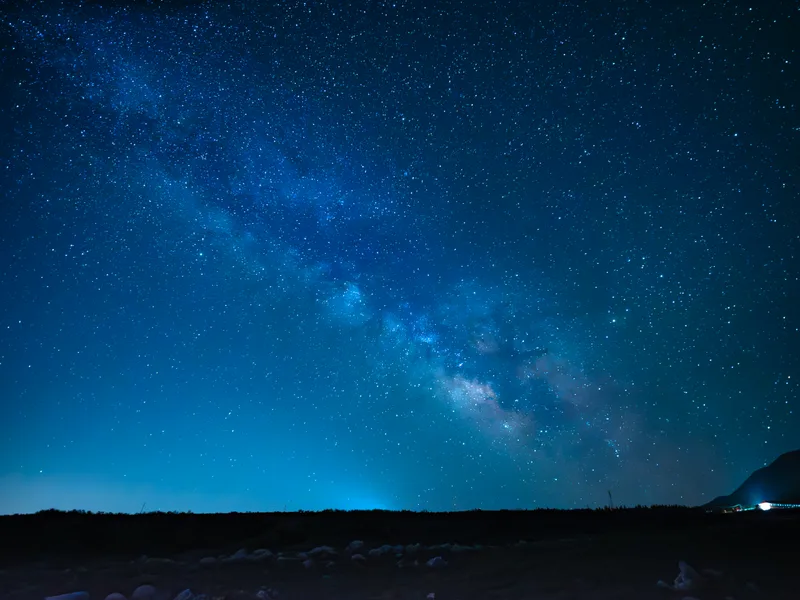
The Sichuan-Tibet Highway belongs to snow peaks and grasslands by day — and to the stars by night. Above 3,500 meters, far from urban light pollution, with extremely low airborne dust — the night sky you see under these conditions and the astronomy photos you scroll past on your phone are two entirely different universes. The Milky Way isn't a faint blurry band — it's a sharp, layered, brilliantly structured river of light where you can see the dark nebulae woven through it.
This guide is for those willing to spend one extra night along the G318 — not to save money, but to witness the most spectacular night sky you'll ever see in your life.
⛺ Insider Advice: High-Altitude Camping Has a Higher Bar Than You Think
Camping near a city, all you need is a tent, a sleeping bag, and a desire to "connect with nature." But camping at 4,000 meters on the Sichuan-Tibet Highway — you need experience, gear, and genuine respect for the weather.
Temperatures can drop to -15°C — even in July. A 20°C day-night temperature swing on the plateau is normal. A regular sleeping bag at sub-zero temperatures is useless — the person inside isn't asleep, they're hypothermic.
Plateau wind is another invisible killer. Valley winds can go from a breeze to tent-flipping gale-force in under a minute. Tent stakes in soft alpine meadow soil lose their grip, and when the wind hits, you and your tent can literally "take off" together.
If you have zero high-altitude camping experience, my advice: start with a commercial campsite. Don't jump straight into wild camping. That cinematic image of a lone figure by a campfire with a guitar,雪山 in the background — it's beautiful, but you need at least three high-altitude camping trips under your belt before you can handle both the environment and the solitude.
🗺️ Best G318 Campsites
Safe Campgrounds (For First-Time High-Altitude Campers)
Xinduqiao Tibetan-Style Campground
Xinduqiao is known as "Photographer's Paradise," and the surrounding area has several proper campgrounds. The advantages of commercial sites are obvious: bathrooms, hot water, fences keeping out stray dogs, nighttime patrol staff. Camping here gives you a "high-altitude nightscape experience" rather than a "wilderness survival simulation."
- Altitude: 3,460m
- Best season: May - October
- Facilities: Restrooms, showers, charging stations
- Night sky: Much less light pollution than any city, though nearby village lights mean the Milky Way is clearly visible but not at its most pristine
Lulang Alpine Pasture Campground
Lulang sits at the foot of Sejila Mountain at under 3,000 meters — higher oxygen levels make this an entry-level choice for plateau camping. The pasture campground has horse riding and a restaurant — ride horses and practice archery by day, retreat to your tent for stargazing at night. Comfort and scenery in one package.
- Altitude: 2,900m
- Best season: June - September
- Facilities: Restrooms, restaurant, horse riding, archery
- Night sky: Namcha Barwa Peak directly ahead — night sky + snow peak is a top-tier composition
Advanced Wild Camping Spots (For Experienced Campers)
Maoya Grassland (Litang - Batang Section)
The single best grassland for astrophotography on the entire G318, no contest. A flat meadow at 4,200 meters, zero obstructions in any direction, 360 degrees of pure starry sky. In summer, the Milky Way core rises from the southeast and spans the entire zenith — with a wide-angle lens, you can capture the complete Milky Way arch in a single frame.
- Altitude: 4,200m
- Best season: July - August (grassland at its greenest + Milky Way season)
- Infrastructure: None — pure wild camping. Nearest resupply point: Litang (about 60 km away)
- Risks: Altitude sickness, stray dogs, strong nighttime winds
- Recommendation: Minimum 3 people. Bring a satellite phone or satellite communication device. Inform your next stop's guesthouse of your location and estimated arrival time in advance.
Sisters' Lake Viewpoint (Haizi Mountain)
Two glacial lakes + Haizi Mountain glacial remnants + starry sky — this combination makes you hold your breath. On a windless night, stars reflect in the lake surface so perfectly that there are galaxies both above and below you.
- Altitude: 4,500m
- Best season: July - September (lake not frozen over)
- Infrastructure: None — nearest town, Batang, is about 80 km away
- Risks: Extreme altitude, sub-zero nighttime temperatures, possible wildlife encounters
- Recommendation: Only for veterans with multiple high-altitude camping trips. Never go alone. Bring a pulse oximeter and monitor continuously.
Ranwu Lakeshore
Ranwu Lake is the largest lake in the middle section, with broad waters. On a windless night — the stars reflected in the lake seem to double the real sky above. You can stargaze from a lakeside guesthouse, but if your tent is pitched right by the water — that feeling of lying in your sleeping bag, unzipping the tent flap, and the Milky Way being right there — no hotel can ever give you that.
- Altitude: 3,960m
- Best season: June - September
- Infrastructure: Nearby guesthouses serve as emergency fallback points
- Risks: Altitude sickness, lakeside humidity
- Recommendation: Choose a lakeshore spot within 2 km of a guesthouse — quick retreat indoors if conditions deteriorate
🎒 High-Altitude Camping Gear Checklist
⚠️ Don't say I didn't warn you: Regular camping gear becomes useless junk on the plateau. Buy a sleeping bag rated 10°C lower than the actual minimum temperature you'll face — a bag rated to -5°C can only handle about 5°C on the plateau, because the human body generates less heat in low-oxygen environments.
- Tent: 4-season tent (windproof + snow-ready), aluminum alloy stakes (plastic ones won't penetrate frozen ground), guy lines ×8
- Sleep system: Down sleeping bag (comfort rating -15°C or lower), extra-thick sleeping pad (R-value ≥5), inflatable pillow
- Warm clothing: Down jacket, fleece pants, wool socks ×2 pairs, insulated beanie (50% of body heat escapes through your head)
- Lighting: Headlamp + spare batteries, camp lantern
- Safety: Portable pulse oximeter, first-aid kit, satellite communication device, bear spray (for deterring stray dogs)
- Food & drink: Thermos, high-calorie snacks (chocolate, nuts, energy bars), portable stove + gas canisters (high-altitude-specific canisters)
- Other: Trash bags (pack out everything), folding shovel, power bank ×2
💡 Honest Advice From Years on the Road
High-altitude camping rule number one: always have an exit strategy: Never pitch a tent 50 km from the nearest sign of human life. Choose a campsite you can retreat from at any moment during the night — nearby guesthouses, phone signal, a road you can walk. This determines whether you wake up safely at dawn.
Milky Way season and timing are non-negotiable: Seeing the Milky Way on the G318 requires two conditions — right season, no bright moon. April through September is Milky Way season (the galactic core is visible), with June to August being optimal. The days around the new moon (lunar calendar 1st) have the cleanest skies — during a full moon, the moonlight is too bright and drowns out the Milky Way. Check a moon phase calendar before departure.
Never camp alone: Two people is the minimum. Three or more is the ideal. One person alone in a tent at high altitude — worsening altitude sickness goes unnoticed, dropping body temperature has no one to wake you, stray dogs show up with no one to help chase them off. This isn't cowardice — it's basic respect for nature.
Never light a fire inside your tent for warmth: Plateau tents seal well and oxygen is already scarce — light a gas stove or charcoal inside, and carbon monoxide poisoning happens three times faster than at sea level. If you're cold, wear more layers, pile on more covers, stuff your down jacket into your sleeping bag — don't warm yourself to death.
The best Milky Way window isn't the whole night: The most beautiful Milky Way moment is the hour after it first rises above the horizon — you get landscape foreground, and the galaxy's color transitions from orange to blue-white. In the small hours, the Milky Way climbs too high overhead and loses its dramatic scale. The sweet spot is roughly 1 AM to 3 AM.
📸 Crash Course in Milky Way Photography
- Gear: Full-frame camera, wide-aperture wide-angle lens (14-24mm f/2.8 or equivalent), sturdy tripod, remote shutter release
- Settings: Manual focus to infinity (fine-tune on the brightest star), ISO 3200-6400, f/2.8, exposure 20-25 seconds (beyond 30 seconds, stars begin to trail)
- Composition: Foreground matters more than the stars — a tree, a tent, a person, a snow peak — astrophotography without earthly context looks no different from an observatory image
- Human element: Have someone stand in front of the tent, light the tent from behind with a flashlight (warm light), and have them stand still for 20 seconds — you become the protagonist under the stars
💬 What RoamFun Campers Say
"That night camping on the Maoya Grassland was the most extreme and unforgettable experience of my life. Frozen solid in my sleeping bag with just my eyes peeking out — and then the Milky Way arched up from behind the snow peaks to the east. In that moment, the cold suddenly didn't matter anymore. The most beautiful thing I've ever seen, bar none." — Qiang, Hangzhou (photographer) ⭐⭐⭐⭐⭐
"Before departure, I thought I was a hardcore camper — then on the first night at Xinduqiao Campground, the wind woke me up and nearly blew the tent away. Next day, I immediately downgraded my wild camping plans to campground-only. Thank you, that gust of wind, for showing me the gap between myself and nature." — Xiao Ma, Guangzhou ⭐⭐⭐⭐
The Stars Won't Go Anywhere — But You Have to Chase Them
The starry sky above the G318 is one of the cleanest things I've ever seen. No urban orange glow, no smog-filter gray — just pure, ancient light that traveled millions of years to reach your eyes.
But remember: the cold is real, altitude sickness is real, the danger is real. Prepare thoroughly before you chase the stars — because the stars will always be there, but your safety only gets one chance.
Want a safe yet awe-inspiring stargazing adventure?
Skip the planning. Contact our senior travel consultants for your personalized camping route and safety support package.
Get Your Free Roadbook & Quote
Last updated: July 2026 Author: RoamFun Senior Travel Consultant Questions? Contact: vip@roamfun.net
Craving a worry-free yet free-spirited journey?
Don't want to plan it yourself? Contact our senior trip designer now for a route and quote tailored to you.

RoamFun Senior Travel Consultant
Travel DesignerProfessional travel consultant, curating the most practical travel guides for you.