Hot Springs Along the Sichuan-Tibet Highway: From Hailuogou to Yangbajing — You Haven't Really Done the G318 Without a Soak
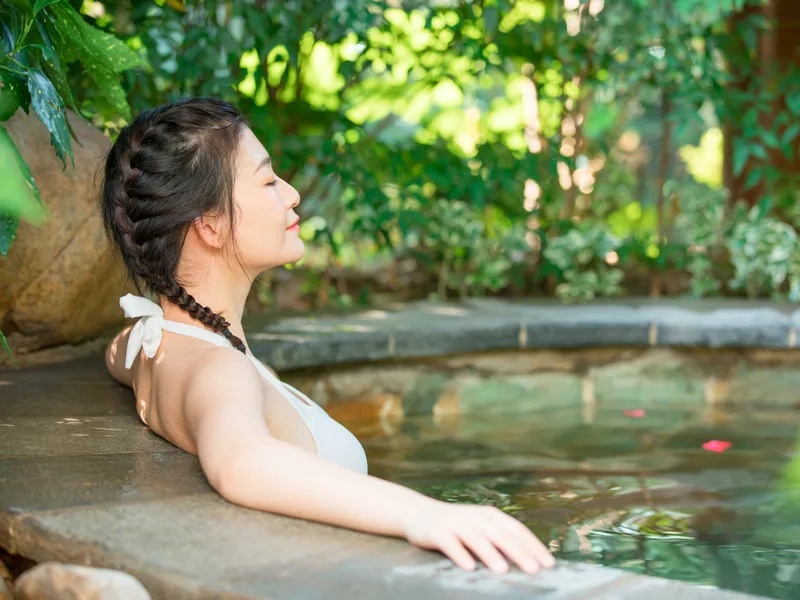
After seven or eight hours of mountain driving — high altitude, endless curves — you arrive at your destination feeling like every bone in your body has been shaken loose. Now imagine sinking into a pool of natural geothermal water, hot mineral springs wrapping around your aching muscles, the pristine high-altitude starry sky above you, and snow-capped peaks silhouetted in the distance. Suddenly, every bump in the road was worth it.
The Sichuan-Tibet Highway is essentially a "geothermal corridor." From the edge of the Sichuan Basin to the heart of the Tibetan Plateau, dense fault lines run underground, and natural hot springs dot the route far more abundantly than most travelers realize. But most are either hidden at the end of unmarked dirt turnoffs, or have been turned into local bathing pools where outsiders aren't sure if they're welcome. This guide maps every hot spring I've personally scouted, in route order.
🚙 Insider Advice: Soaking in a Hot Spring Isn't Like Taking a Bath — High-Altitude Soaking Has Rules
Soaking in a hot spring above 3,000 meters is completely different from doing it at sea level. Hot water dilates your blood vessels, and at altitude your blood oxygen is already low — dilate those vessels and you might suddenly feel dizzy, lightheaded, even have your vision go dark.
The ironclad rules of high-altitude hot spring soaking: Water temperature no higher than 42°C, sessions no longer than 20 minutes, drink half a cup of hot water before getting in, and stand up slowly afterwards — sit for two minutes first, then rise. Never soak after drinking alcohol — alcohol + heat + low oxygen equals danger, plain and simple.
Also, natural hot springs have a strong sulfur smell. After soaking, your skin will feel silky and your hair will feel stiff — this is normal, it means the water has high mineral content. Bring a bottle of moisturizer and apply it all over after your soak.
🗺️ Hot Springs Along the Route, In Order
Hailuogou Hot Springs (Moxi Town)
The closest G318 hot spring to Chengdu, located inside the Hailuogou Scenic Area near Moxi Town. Mount Gongga's glacial meltwater combines with underground geothermal resources to create a unique hydrothermal system. The hot spring hotels here have excellent facilities — the perfect "warm-up soak" before entering Tibet.
- Character: Well-developed, great facilities, views of Mount Gongga
- Temperature: 50-60°C source, pools regulated to 38-42°C
- Best time: 4-6 PM — soak, then head straight to dinner
- Value: 200-400 RMB/person (including hot spring admission), pricey but the experience justifies every yuan
- Note: Crowded on holidays, aim for weekdays. The hot spring area sits at relatively low altitude (about 1,600m), ideal for first-time plateau visitors
Kangding Erdaoqiao Hot Spring
From Hailuogou, follow the G318 to Kangding, and Erdaoqiao Hot Spring is right on the edge of town. This is Kangding's most established hot spring, with decades of history. No fancy decor, but the water quality is universally acknowledged — extremely high sulfur content, and post-soak muscle soreness vanishes completely.
- Character: Old-school hot spring, excellent water quality, budget-friendly, right next to the G318
- Temperature: 40-45°C
- Best time: Evening — arrive in Kangding, head straight there, then soak → eat → sleep, the perfect sequence
- Value: 50-100 RMB/person — the best value hot spring on the entire G318
- Note: Facilities are dated — if you're looking for Instagram-worthy aesthetics you'll be disappointed. But the water is genuinely geothermal, not boiler-heated
Litang Hot Springs (Near Maoya Grassland)
The Litang area has multiple natural hot spring vents, with the most famous being the Heni Township hot springs about 15 km from the county seat. Completely natural, zero development — just steaming pools of hot water emerging from the grassland, with a few stones placed around them by locals. A true wild hot spring experience.
- Character: Pristine wild hot spring, no commercialization, yaks might be grazing nearby
- Temperature: 40-50°C, most comfortable in winter
- Best time: Afternoon, after crossing Kazila Mountain — even just soaking your feet works wonders
- Value: Free or a 10 RMB village maintenance fee — basically free
- Note: No changing rooms or showers — mentally prepare for a "wild soak." Water temperature is unstable, test with your hand first. Altitude is very high (around 4,000m) — I recommend foot-soaking only, no full immersion.
Ranwu Lake Hot Springs
Near Ranwu Lake, some local Tibetan families run small hot spring operations. Modest in scale but unbeatable in scenery — soaking in a 40°C pool with Ranwu Lake's snow-capped mountain reflections visible right outside the window.
- Character: Unbeatable scenery, good privacy, Tibetan-style experience
- Temperature: 38-42°C
- Best time: Early morning — snow peaks and morning mist create the ultimate backdrop
- Value: 30-80 RMB/person, depending on the specific establishment
- Note: Ranwu sits at 3,960m — be extra cautious about altitude sickness when soaking. Keep the water temperature on the lower side and limit sessions to 15 minutes.
Nyingchi Pailong Hot Spring
Pailong Township lies between Tongmai and Nyingchi, at the entrance to the Yarlung Tsangpo Grand Canyon, where geothermal resources are abundant. Pailong Hot Spring is a relatively recent development — newer facilities and fewer crowds, because most people don't know it exists.
- Character: Quiet and uncrowded, newer facilities, Yarlung Tsangpo canyon views
- Temperature: 38-45°C
- Best time: Afternoon — soak, then enjoy a stone-pot chicken dinner in Pailong
- Value: 100-150 RMB/person
- Note: Pailong's altitude is only around 2,000m — one of the most comfortable hot spring spots on the entire route. Higher oxygen levels mean no altitude sickness worries.
Yangbajing Hot Springs (Near Lhasa)
The grand finale hot spring of the Sichuan-Tibet Highway. Yangbajing is home to China's largest geothermal power station, with world-renowned geothermal resources. About 90 km from Lhasa — perfect for a half-day trip after arriving in the capital.
- Character: World-class geothermal spectacle, dramatic steam columns rising into the sky, snow peaks + geothermal activity in one frame
- Temperature: 40-48°C
- Best time: Morning, when the light is best
- Value: 100-200 RMB/person
- Note: Many travelers reach Lhasa and forget about Yangbajing — don't. It's the perfect ending to your G318 hot spring journey.
🎒 Hot Spring Essentials Checklist
⚠️ Don't say I didn't warn you: Never wear silver jewelry into the hot spring — sulfur will turn it black. Bring a dark-colored swimsuit — sulfur water can stain.
- Swimsuit + towel (smaller hot springs may not provide towels)
- Waterproof bag (for phone and dry clothes)
- Flip-flops
- Thermos + bottled water (hot spring soaking causes significant dehydration)
- Moisturizer
- Plastic bag (for your wet swimsuit)
💡 Honest Advice From Years on the Road
Don't hit the road immediately after soaking: Post-soak, your blood vessels are dilated and blood pressure is lowered. Getting straight into a vehicle increases the risk of motion sickness and worsened altitude sickness. Rest in the hot spring area for at least 30 minutes before departing.
Test wild hot spring temperatures first: The G318 has countless hidden wild hot springs — the kind where you spot steaming puddles by the roadside with locals soaking their feet in them. Don't jump straight in — surface water might be only 40°C, but near the spring vent underneath it can exceed 80°C, enough to cause burns.
Group hot spring sessions with your carpool crew are the best: After a full day of mountain driving, the whole car soaking together, chatting about the scenery you've seen — this kind of relaxation is the G318's unique bathing culture. A million times better than holing up alone in a hotel room scrolling through your phone.
💬 What RoamFun Travelers Say
"That afternoon soaking in the hot spring by Ranwu Lake was the most relaxing moment of my entire G318 journey. Light rain falling outside, steam rising from the pool, snow peaks appearing and disappearing through the clouds. The whole carpool crew, faces flushed red from the heat, chatting about tomorrow's drive to Nyingchi — that feeling, that's the meaning of travel." — Yaoyao, Chengdu ⭐⭐⭐⭐⭐
"Hailuogou's hot spring is definitely pricey, but that image of Mount Gongga as the backdrop is still my phone wallpaper. Spending over a hundred on a hot spring ticket was more worth it than the thousand-plus I spent on my shell jacket." — Daliu, Beijing ⭐⭐⭐⭐⭐
"I had absolutely no idea there were this many hot springs along the G318! Following the driver's route, soaking in a different one every day — it didn't feel like I was traveling the Sichuan-Tibet Highway, it felt like I was traveling a hot spring highway." — Xiaoxi, Shenzhen ⭐⭐⭐⭐⭐
Don't Just Rush — Stop and Soak
The biggest regret on the G318 isn't missing a scenic viewpoint — it's spending the entire journey with your nerves wound tight, just rushing. Those unassuming hot spring pools by the roadside are the G318's best reward for weary travelers. Shoulders submerged in hot water, watching plateau clouds drift by one after another — this is the moment you truly "make peace" with the road.
Want a relaxed yet deeply rewarding G318 journey?
Skip the planning. Contact our senior travel consultants for your customized hot spring route and quote.
Get Your Free Roadbook & Quote
Last updated: July 2026 Author: RoamFun Senior Travel Consultant Questions? Contact: vip@roamfun.net
Craving a worry-free yet free-spirited journey?
Don't want to plan it yourself? Contact our senior trip designer now for a route and quote tailored to you.

RoamFun Senior Travel Consultant
Travel DesignerProfessional travel consultant, curating the most practical travel guides for you.