Sichuan-Tibet Highway First Experience: The Ultimate Practical Guide for First-Time Tibet Travelers
Your first time on the 318, the question isn't "is the scenery beautiful" — it's "what exactly do I need to prepare?" The snow mountains will be there regardless; what worries you is the unknown: the altitude, the road, the food, the money, and whether your body can hold out across fourteen passes. These are the real questions, and this guide is built to answer them.
Search "Sichuan-Tibet Highway guide" online and 50 pages appear — some say bring a puffy jacket, some say bring short sleeves, some say tire chains are essential, others say you don't need them at all. The more you read, the more anxious you get. Each source was written by someone who did it their way, which is exactly why they contradict each other. What beginners need isn't more opinions — it's a single, tested, complete manual they can follow without second-guessing.
This guide is for beginners — breaking down pre-trip preparation, classic routes, altitude sickness response, and food/lodging/transport into the simplest operation manual. Just follow along. I've watched first-timers finish this road in all seasons, and the ones who enjoyed it weren't the strongest or the bravest — they were the ones who followed a plan, climbed slowly, and let the professionals handle the parts that required years of experience. Read this guide once before you pack, and you'll walk into the 318 the way its veterans do: with preparation replacing worry, and excitement taking the space the anxiety used to hold. The 318 rewards the ready and forgives the prepared. If you're reading this, you've already taken the first and most important step — the decision to show up ready instead of just showing up. Everything after this is easier — trust the plan, and the plan will carry you.
🚙 Honest Advice: First Time in Tibet — Don't Be a Hero
The biggest misconception for first-timers is "I want to drive myself." You're not challenging yourself — you're challenging the 5,130m Dongda Mountain Pass, dozens of kilometers of continuous black-ice curves, and yak herds crossing the road at any moment. The road doesn't care how confident you feel after watching a few videos; it responds to reaction time and local knowledge, both of which you don't have yet.
The Prado on the Sichuan-Tibet route is the optimal solution proven over decades. High ground clearance handles rough roads, spacious interior prevents long-drive fatigue, and 4WD provides confidence on icy passes. Most importantly — the experienced driver has run this route over a hundred times. He knows which curve on Zeduo Mountain has the thickest winter ice, which angle on the Nu River 72 Bends is safe for parking and photos, and that you shouldn't stay long in Litang because eating at 4,000m+ is equivalent to running.
Your first time in Tibet — save your attention for the snow mountains and grasslands outside the window. Leave the driving to professionals. The travelers who insist on driving themselves on their first visit spend the trip managing fear and fatigue; the ones who delegate spend it watching the scenery. Decide which memory you want before you leave.
🗺️ 8-Day Classic Sichuan-Tibet Highway Itinerary
Day 1: Chengdu — Kangding (2,560m)
First day of altitude acclimatization. Don't rush — Kangding has low altitude and good air. Evening: visit Qingge Square for Tibetan Guozhuang dancing, and eat a bowl of yak meat hotpot — your first taste of the plateau starts here. The dancing is free, the hotpot is hearty, and both ease you into the culture before the altitude begins its work.
Day 2: Kangding — Zeduo Mountain — Yajiang (2,640m)
Cross the first 4,000+m pass. Don't stay more than 15 minutes — take photos and descend immediately. Don't stay in Xinduqiao — at 3,460m, your first night here likely means headache and insomnia. Continue to Yajiang (800m lower) for a good night's sleep. This single decision—sleeping 800m lower—is the best altitude-sickness prevention on the entire route.
Day 3: Yajiang — Litang — Batang (2,580m)
Pass through "world's highest city" Litang (4,014m) — photos and go, don't eat there. A full meal at 4,000m costs you oxygen you'll need later. Batang at only 2,580m is the most restful night's sleep on the entire Sichuan-Tibet route, and the Jinsha River town makes a good base to fuel up before crossing into Tibet.
Day 4: Batang — Zuogong (3,750m)
Cross the Jinsha River Bridge — officially entering Tibet. Dongda Mountain (5,130m) is the highest point — look from the car window, don't stop. Zuogong at 3,750m — many people start feeling noticeable effects. This is normal. Ibuprofen + early sleep. Check your pulse oximeter before bed; if it's below 80, tell your driver first thing.
Day 5: Zuogong — Nu River 72 Bends — Ranwu (3,960m)
The Nu River 72 Bends — the most spectacular man-made landscape on the Sichuan-Tibet Highway. From the viewpoint, the road looks like noodles folding back and forth on the mountainside. Use L-gear for the descent — don't ride the brakes. It's a 40km drop from 4,658m to 2,740m, and the descent is where inexperienced drivers most often smoke their brakes.
Day 6: Ranwu — Bome — Lulang (2,900m)
Altitude drops — Bome and Nyingchi forests have extremely high negative oxygen ion content. Lulang stone pot chicken is the culinary peak of the entire Sichuan-Tibet route — Tibetan chicken + Motuo soapstone pot + matsutake and palm-leaf ginseng, simmered 4-5 hours until the broth is white as milk. 80-120 RMB per person. It's the one meal on the 318 you should budget for, and the one you'll talk about all the way home.
Day 7: Lulang — Nyingchi — Lhasa (3,650m)
Cross Sejila Pass (4,728m) — if lucky, see Namcha Barwa Peak (visible in full fewer than 60 days a year). Enter the Lhasa River Valley as the Potala Palace slowly grows on the horizon — over 2,000km, finally arrived. The first glimpse of the Potala from the valley floor is, for almost everyone, the emotional peak of the trip.
Day 8: Lhasa
First day in Lhasa — no showering, no Barkhor Street, no Potala Palace. Rest at the hotel, go to a sweet tea house for a cup of Tibetan sweet tea. Let your body make its final acclimatization at 3,650m. The city will still be there tomorrow; your blood oxygen won't rush to catch up. Slow is the rule in Lhasa, and it's the rule that keeps you healthy there.
🎒 Practical Checklist: First-Timer Essentials
⚠️ Don't say I didn't warn you: Don't bring too much luggage — one carry-on + one backpack is enough. Changing hotels daily while hauling a 20kg suitcase up three flights of stairs without an elevator — by day three you'll want to throw it away.
- Ibuprofen + glucose + motion sickness medication + montmorillonite powder
- Windbreaker + fleece + light puffy jacket (four seasons in one day)
- Lip balm + moisturizer + sunscreen
- Thermos + portable pulse oximeter + power bank
- ID card + small amount of cash
💡 Heart-to-Heart Advice
Don't force yourself just because others did it: If you're not adapting, you're not adapting — if you feel unwell in Litang, tell your driver immediately to adjust the itinerary. Don't push through because "everyone else finished it." Your trip isn't a contest, and the only person you're racing is a version of yourself that doesn't exist.
7-8 days is ideal for first-timers: Less than 7 days is too rushed; more than 10 is too tiring. 7-8 days perfectly covers the essential segments, and your body is basically acclimatized by the time you reach Lhasa. The pacing is what makes it work — every day gains altitude slowly enough for your body to keep up.
Not showering on your first day in Lhasa is serious advice: You've just reached 3,650m and your body is still adapting. Showering dilates capillaries and accelerates oxygen consumption — a classic trigger for altitude sickness. Use wet wipes for face and body; shower tomorrow. It sounds like a minor sacrifice; it prevents a night of misery.
📸 Don't Just Snap Randomly — These Spots Are Stunning
- Zeduo Mountain golden sunrise: Before 8 AM, the Gongga mountain range turns gold in the morning sun.
- Maoya Grassland: July, slopes covered in wildflowers + distant snow mountains; 4 PM side light.
- Nu River 72 Bends: 4-5 PM side-backlight, switchbacks in clear light and shadow.
- Ranwu Lake morning mist: Before 7 AM at the lakeside — windless snow mountain reflection perfectly symmetrical.
💬 What RoamFun Travelers Say
"Anxious for a month before my first Tibet trip. Turns out, as long as you ascend slowly, drink plenty of water, and stay at low altitudes — altitude sickness isn't that scary. The most beautiful thing wasn't Lhasa — it was the moment of crossing the first snow mountain." — Xiaolu, Hangzhou ⭐⭐⭐⭐⭐
"8 days was perfect — body adapted just right, energy levels peaked. Last day in Lhasa, sat in a sweet tea house all afternoon doing nothing — felt the trip was worth it." — Xiaozhou, Shenzhen ⭐⭐⭐⭐⭐
"I ignored the 'no shower on day one' advice and took a hot shower my first night in Lhasa. Two hours later I was nauseous with a splitting headache. The next day I listened — wet wipes, sweet tea, bed by nine. The advice exists for a reason." — Hui, Shanghai ⭐⭐⭐⭐
The First Mountain Pass — A Height You'll Never Forget
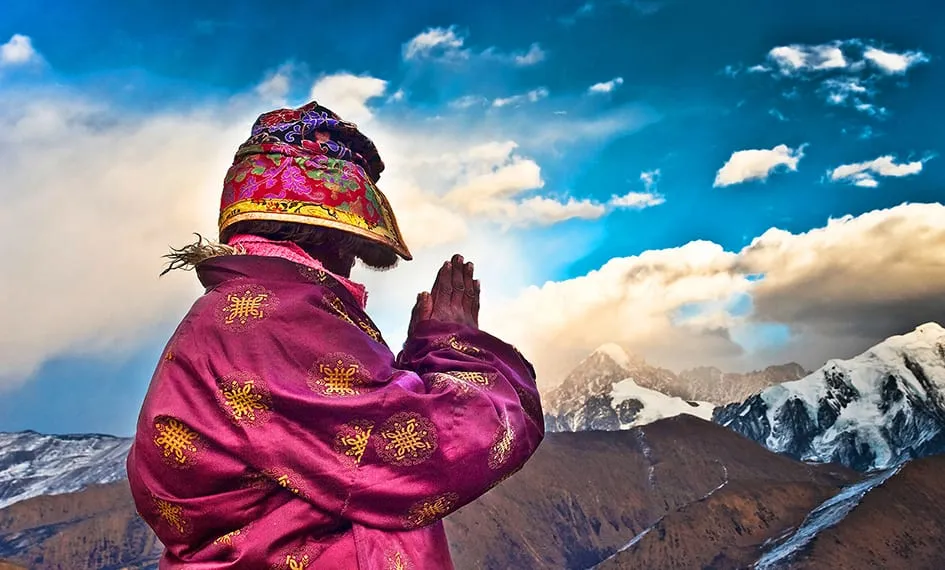
The moment you cross Zeduo Mountain — the Gongga range spread before you, clouds rolling beneath your feet, air so thin you can hear your own heartbeat. There are 13 more passes ahead, but the first — is always the most memorable. It's the moment the 318 stops being a plan and becomes a place, the moment you understand why people drive this road at all.
The passes will blur together by day four, and Lhasa will fade into a comfortable memory, but the first mountain crossing stays sharp forever. That's the gift of a first trip done right: not just the scenery, but the proof that you could do it, slowly and steadily, without breaking yourself to get there. Follow the plan, trust the driver, listen to your body, and your first 318 will leave you with the one thing every traveler actually wants — the quiet certainty that there's a whole wide, high world out there, and you're capable of moving through it.
The road that scared you in the search results will become the road you describe with a laugh and a shake of your head. You'll tell the story of the first pass a dozen times before the plane lands, and you'll already be planning the return before you've unpacked. That's not sentimentality; it's the 318's way of saying you did it right. Your first crossing isn't the end of your Tibet story — it's the opening chapter of a long, warm, sunburnt relationship with the plateau. Welcome to it, and to all the passes still waiting for you. Go slowly, see everything, and come home with more than photos — come home changed, the way everyone who does it right does. The plateau has a way of resetting your sense of scale, and that's a gift you'll carry past the airport.
Craving a worry-free yet free-spirited journey?
Don't want to plan it yourself? Contact our senior trip designer now for a route and quote tailored to you.
Updated: August 2026 Author: RoamFun Senior Travel Consultant Questions? Contact us: vip@roamfun.net

RoamFun Senior Travel Consultant
Travel DesignerProfessional travel consultant, curating the most practical travel guides for you.