Winter Self-Driving Safety Essentials for Hemu & Kanas (Snow Driving + Chains + Emergencies)
Winter is Kanas and Hemu's most dreamlike season — snow-mushroom cabins, frozen blue ice, and water that freezes mid-pour, with only a tenth of the summer crowds. In the morning, cabins sit under thick snow, rounded "snow mushrooms" piled on rooftops; the lake freezes into crystal-clear blue ice that glows dreamily in the sun. It all makes countless travelers long to be here. No jostling crowds, only pure snow-village stillness — the most healing scene of winter Xinjiang.
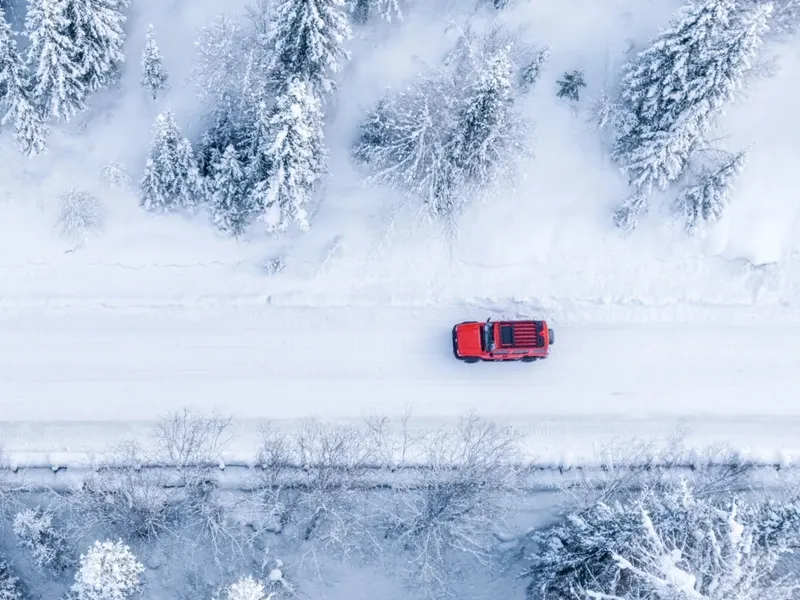
But safety is the top priority for winter self-driving into the mountains. Kanas and Hemu lie in the Altai Mountains, where winters bring heavy snowfall, icy snow-covered roads, and winding, steep mountain passes. A single misstep or insufficient preparation can easily put you in danger. Many first-time drivers underestimate the difficulty of snow driving and overestimate their vehicle's performance in extreme cold, ending up stuck or skidding — turning a good trip into an ordeal.
This guide focuses on hardcore winter driving safety: vehicle preparation, snow-driving techniques, snow-chain use, low-temperature care, and emergency self-rescue, all explained so you can enjoy the blue ice and snow village with confidence and peace of mind. Read this before you go, and you can truly turn this snow-village trip into an unforgettable memory.
🚙 Vehicle Preparation Before Departure (The Most Important Part)
1. You must fit snow tires
- Winter mountain roads are snow-packed and icy; all-season tires lose grip sharply below -10°C, so snow tires are a must, ideally with a spare set of chains
- Check tread depth; replace badly worn tires
2. Use the right oil and washer fluid grades
- Oil thickens in cold; use 0W or 5W low-temperature oil
- Switch to -30°C anti-freeze washer fluid, or it will freeze and not spray
3. Check antifreeze and the battery
- Confirm the antifreeze's freezing point is low enough (below -35°C)
- Batteries drain fast in the cold — test battery health before leaving
4. On-board essentials
- Snow chains, tow rope, spade, jumper cables
- Spare warm clothing, a thermos (hot water), dry food
- Power bank, flashlight, warning triangle
Vehicle preparation for entering the mountains in winter largely decides the trip's success. Snow tires are a must — winter mountain roads are snow-packed and icy, and all-season tires lose grip sharply below -10°C, so keep a spare set of chains too; also check tread depth and replace badly worn tires. Oil and washer fluid must be switched to cold-tolerant grades — 0W or 5W low-temperature oil and -30°C anti-freeze washer fluid avoid hard starts or frozen spray. Antifreeze and battery need checking in advance: the freezing point should be below -35°C, and battery health is worth testing. Finally, pack snow chains, a tow rope, spade, jumper cables, warm clothing, a thermos, and dry food so you are fully equipped for the road.
🛣️ Snow-Driving Techniques (Key Actions)
1. Accelerate, brake, and steer gently
- Snow offers low traction; stomping the gas or slamming the brakes causes loss of control
- When braking, pump the brakes or slow down early to avoid skidding
2. Keep 2–3 times the following distance
- Stopping distance on snow is several times that on dry pavement — keep at least 2–3 times your normal gap
3. Slow before curves and turn gently
- Curves are where skids happen most — slow before entering and avoid jerking the wheel mid-turn
4. Control the throttle uphill, use a low gear downhill
- On ascents, keep steady throttle to avoid slipping; on descents, use a low gear and engine braking to avoid overheated brakes
5. Use fog lights and go slow in poor visibility
- Mountain snowstorms cut visibility — turn on fog lights, reduce speed, and pull over if necessary
The core of snow driving is one word: "steady." Accelerate, brake, and steer gently — snow offers low traction, and stomping the gas or slamming the brakes will make the car lose control; brake by pumping or slowing early. Keep 2–3 times the following distance — stopping distance on snow is several times that on dry pavement, so tailgating easily causes rear-end collisions. Slow before curves and turn gently — curves are skid-prone, so reduce speed before entering and avoid jerking the wheel mid-turn. Keep steady throttle uphill and use a low gear downhill, relying on engine braking to avoid overheated, failing brakes. Use fog lights and go slow in poor visibility, and when mountain snowstorms are severe, pull over and wait. Keep these five rules in mind and you have a basic safety net for snow driving.
⛓️ How to Use Snow Chains
When to fit: When the road is icy or visibly snow-covered, or on sections where local rules require chains (such as mountain passes).
Installation steps:
- Stop on a safe, level spot and engage the parking brake
- Lay the chain flat in front of the drive wheel and back onto it
- Hook and tighten the chain, ensuring it is not loose
- Drive a few meters, then re-check the tension
Note: After fitting chains, do not exceed 40–50 km/h, and remove them once you leave the snowy section.
Snow chains are a life-saver on snowy roads — the key is knowing how to fit, remove, and use them. Fit them when the road is icy or visibly snow-covered, or on sections where local rules require them (such as mountain passes). To install, first stop on a safe, level spot and engage the parking brake, lay the chain flat in front of the drive wheel, back onto it, then hook and tighten so it is not loose, and drive a few meters to re-check the tension. Importantly, do not exceed 40–50 km/h with chains fitted, and remove them promptly once you leave the snowy section to protect both the road and the chains. Master this in advance and you will not be fumbling on the roadside.
🧊 Vehicle Care in Low Temperatures
- Overnight parking: For long outdoor stops, disconnect the battery's negative terminal or use a thermal cover to prevent a no-start the next morning
- Hard starting: Do not crank repeatedly; pause a few seconds between attempts, and use jumper cables if needed
- Frozen windows: Never pour hot water — it can crack the glass; use a de-icer or let the heater warm it slowly
- Fuel: At high altitude and low temperature, choose higher-grade fuel with additives to prevent freezing and gelling
In extreme cold, vehicle care demands extra attention. For overnight parking, if the car will sit outdoors a long time, disconnect the battery's negative terminal or use a thermal cover so it starts the next morning. For hard starting, do not crank repeatedly — pause a few seconds between attempts and use jumper cables if needed. For frozen windows, never pour hot water, which can crack the glass; use a de-icer or let the heater thaw it slowly. For fuel, at high altitude and low temperature choose higher-grade fuel with additives to prevent freezing and gelling. These small details often mark the difference between getting going smoothly and being stuck.
🆘 Emergency Self-Rescue
- Stuck in snow: First use a spade to clear snow around the wheels, add a traction mat or branches, then start gently
- Skidding / loss of control: Ease off the throttle, steer gently to straighten, stay calm, and do not slam the brakes
- Stranded overnight: Keep the engine running intermittently for heat, keep the exhaust clear (against carbon monoxide), and signal with markers and your phone
- Rescue numbers: Save local road-rescue and scenic-area emergency numbers in advance
Even with full preparation, know how to self-rescue. When stuck in snow, use a spade to clear snow around the wheels, add a traction mat or branches, then start gently. When skidding or losing control, ease off the throttle, steer gently to straighten, keep calm, and never slam the brakes. If truly stranded overnight, keep the engine running intermittently for heat while keeping the exhaust clear to prevent carbon monoxide poisoning, and use warning markers and your phone to call for help. Save the local road-rescue and scenic-area emergency numbers before you go — they can save your life.
📅 Must-Check Before Departure
- Real-time road conditions: The day before and the day of, check whether Kanas/Hemu are closed due to heavy snow
- Weather forecast: Avoid entering the mountains in blizzards or high winds
- Vehicle status: Confirm four-wheel drive, snow tires, and chains are ready
- Ample supplies: Mountain supplies are scarce — stock up on fuel, water, and food
Before departing, confirm these items one by one. Real-time road conditions — check the day before and the day of whether Kanas and Hemu are closed by heavy snow. Weather forecast — try to avoid entering the mountains in blizzards or high winds. Vehicle status — confirm four-wheel drive, snow tires, and chains are all ready. Ample supplies — mountain supplies are scarce, so stock up on fuel, water, and food. Only when every item is in place can you head off with confidence.
Winter Hemu and Kanas are worth a dedicated trip, but only with safety first. With thorough preparation, you can turn this snow-village trip into an unforgettable memory rather than a harrowing adventure. Snow driving has no shortcuts — only meticulous preparation and steady handling.
If you are not familiar with snow driving, or simply do not want to worry about snow tires, chains, and road conditions, you can also join a local team with experience leading mountain trips. They have mature safety plans and drivers familiar with snowy roads, letting you fully enjoy Hemu and Kanas' purest winter colors while staying safe.
Craving a stress-free yet free-spirited trip?
Don't want to plan? Contact our senior trip designer now for a personalized route and quote.
Get Your Free Itinerary & Quote
Updated: August 2026 Author: RoamFun Senior Travel Advisor Questions? Contact us: vip@roamfun.net

RoamFun Senior Travel Consultant
Travel DesignerProfessional travel consultant, curating the most practical travel guides for you.