
How to Choose a Xinjiang Handmade Carpet (Hotan Carpet ID + Origins + Prices)
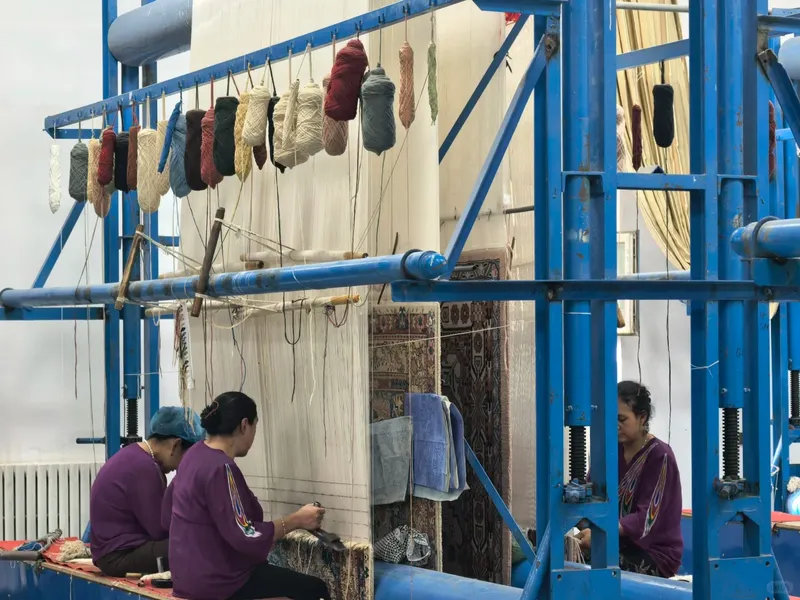
Xinjiang handmade carpets, especially Hotan carpets, are a national intangible cultural heritage — intricately patterned, elegantly colored, and solidly made, making them a high-end souvenir many travelers want to bring home. They are not just a fabric laid on the floor but a vessel of the Uyghur people's centuries of weaving memory and aesthetics. Behind every handmade carpet lies months or more of a weaver's effort. Whether hung on the wall as decoration or spread across the living room to show taste, it is a gift of real substance.
But the carpet market runs deep: the gap between handmade and machine-made, genuine and imitation is enormous, and the uninformed can easily overpay for the wrong thing. Even among items labeled "Hotan carpet," prices can range from a few hundred to tens of thousands of yuan — some true handcrafted masterpieces, others machine-woven imitations or even fakes. Faced with a dazzling array of carpets, many people do not know where to start and end up relying on luck.
This guide covers identifying handmade versus machine-made, the features of major origins, price trends, beginner buying steps, and how to ship one home — so you can see clearly and choose well. Master these key points and, even as a first-time carpet buyer, you can pick a satisfying, value-for-money Hotan carpet from the many options.
🧵 Handmade vs. Machine-Woven Carpets (Core Identification)
This is the most important distinction determining price and value:
| Aspect | Handmade Carpet | Machine-Woven Carpet |
|---|---|---|
| Back | Dense hand-tied knots visible as small bumps | Neat machine weave, no knots |
| Edge | Hand-finished edging, slightly uneven | Machine-finished, regular |
| Pattern on back | Pattern faintly visible with bumps | Flat back, no bumps |
| Density | Tight knots, thick feel | Relatively sparse |
| Price | High (thousands to tens of thousands) | Low (hundreds to a few thousand) |
Simplest method: flip the carpet over — neat knots mean handmade; a smooth, flat back means machine-made.
The difference between handmade and machine-made is the first gate for judging a carpet's value. Handmade carpets are tied knot by knot by weavers, so the back shows dense small knots, the pattern shows through with a bumpy texture, and they feel thick — naturally commanding a high price. Machine-woven carpets are produced by machines with a smooth, flat back and no knots, regular edges, and affordable prices, but they lack the texture and collectible value of handwork. The most intuitive test is to flip the carpet over — neat knots mean handmade; smooth and flat means machine-made. Remember this and you will avoid most cases of machine passing as handmade or substandard goods sold as quality.
📍 Major Origins and Features
- Hotan: Xinjiang's most famous carpet origin, fine wool and beautiful patterns — the heart of "Hotan carpets"
- Kashgar, Kuqa: Also have traditional weaving, each with its own style
- Pattern styles: Centered on traditional motifs such as geometric, floral, and almond (badam) patterns
Origin determines a carpet's style and quality. Hotan is Xinjiang's most famous carpet origin and the heart of the "Hotan carpet" name — refined materials and beautiful patterns. Kashgar, Kuqa, and other places also have long weaving traditions, each with distinctive styles. In terms of patterns, Xinjiang carpets center on geometric, floral, and almond (badam) traditional motifs, with elegant colors and intricate patterns that are highly recognizable. Understanding origins and motifs helps you find a carpet you like and that reflects local craft.
💰 Price Reference (Know the Market)
- Ordinary handmade carpets: A few thousand to tens of thousands of yuan, depending on size and density
- High-density masterpieces: Tens of thousands of yuan or more
- Machine-woven carpets: A few hundred to a few thousand yuan — affordable but with no collectible value
Price differences mainly come from handmade density, wool quality, and pattern complexity. A "few-hundred-yuan handmade Hotan carpet" is almost certainly not truly handmade.
Price is the most confusing part for beginners. Ordinary handmade carpets, depending on size and knot density, usually run from a few thousand to over ten thousand yuan; high-density masterpieces can reach tens of thousands or more; machine-woven carpets generally cost a few hundred to a few thousand yuan, affordable but without collectible value. Price differences mainly stem from handmade density, wool quality, and pattern complexity. Be especially wary: if you encounter a "few-hundred-yuan handmade Hotan carpet," it is almost certainly not genuinely handmade — true hand weaving is time-consuming and costly, so an absurdly low price spells trouble.
🧐 Buying Advice for Beginners
- Clarify the purpose: Use ordinary pieces for decoration or flooring; consider high-end only for collecting or gifting
- Check the back first: Confirm it is hand-knotted — this is the hard criterion
- Look at knot density: The denser, the higher-end
- Feel the material: Wool carpets feel warm and elastic; synthetic fibers are harder
- Buy from proper shops: Go to Hotan carpet specialty stores or reputable bazaars and ask for a receipt
- Have realistic price expectations: Do not chase bargains; expensive is not always genuine, but "super-cheap handmade" is basically a trap
As a beginner, follow these steps to be safe. Clarify the purpose first — ordinary pieces suffice for display and flooring; only consider high-end for collecting or gifting. Then flip the back to confirm hand-knotting, the hard criterion. Next, check knot density — the denser, the higher-end. Feel the material — wool carpets feel warm and elastic, while synthetic fibers are harder. Buy from proper shops — Hotan carpet specialty stores or reputable bazaars — and ask for a purchase receipt. Also set realistic price expectations: do not chase bargains; expensive is not always genuine, but "super-cheap handmade" is basically a trap. Knowing this keeps you safe from being cheated.
📦 How to Bring It Home
- Carpets are heavy and large — ship them, rolled and wrapped in cloth or paper
- Valuable handmade carpets can be declared-value shipped or carried on
- After getting home, lay flat to air, dust regularly, and keep wool carpets out of direct sun
Packaging and transport are key to getting a carpet home. Carpets are heavy and large, so they are generally shipped — roll them and wrap carefully in cloth or paper. For valuable handmade carpets, consider declared-value shipping, or carry them on for extra safety. Once home, lay flat to air and dust regularly; for wool carpets, avoid direct sun to prevent fading. Handle these details well and your carefully chosen Hotan carpet will accompany your home for a long time.
📌 Avoiding Pitfalls
- "Heirloom handmade carpets" from street or itinerant vendors are mostly machine-made or fakes — buy with caution
- Purchasing at "internal workshops" arranged by guides — prices may be inflated
- Always inspect the physical back — photos and verbal promises do not count
Avoiding pitfalls matters just as much. First, street or itinerant vendors calling things "heirloom handmade carpets" are mostly machine-made or fakes — buy with caution. Second, purchasing at the so-called "internal workshops" that guides take you to may come with inflated prices. Third, always inspect the physical back — photos and verbal promises do not count; seeing is believing. Keep these three points in mind and you will sidestep most consumer traps.
A Xinjiang handmade carpet is a substantial, culturally rich gift. Once you master the identification points, you can pick out genuine handcrafted masterpieces from a dazzling array. What lies underfoot is centuries of craft and the distinctive spirit of this land — worth your time and care.
If you would like to plan a Hotan carpet together with drums, dried fruit, and other Xinjiang souvenirs, or need someone to help inspect goods and verify quality, an experienced local guide can accompany you. They know the market and can let you buy with more confidence. Choose a good carpet and bring the handmade beauty of Xinjiang home.
Craving a stress-free yet free-spirited trip?
Don't want to plan? Contact our senior trip designer now for a personalized route and quote.
Get Your Free Itinerary & Quote
Updated: August 2026 Author: RoamFun Senior Travel Advisor Questions? Contact us: vip@roamfun.net

RoamFun Senior Travel Consultant
Travel DesignerProfessional travel consultant, curating the most practical travel guides for you.