
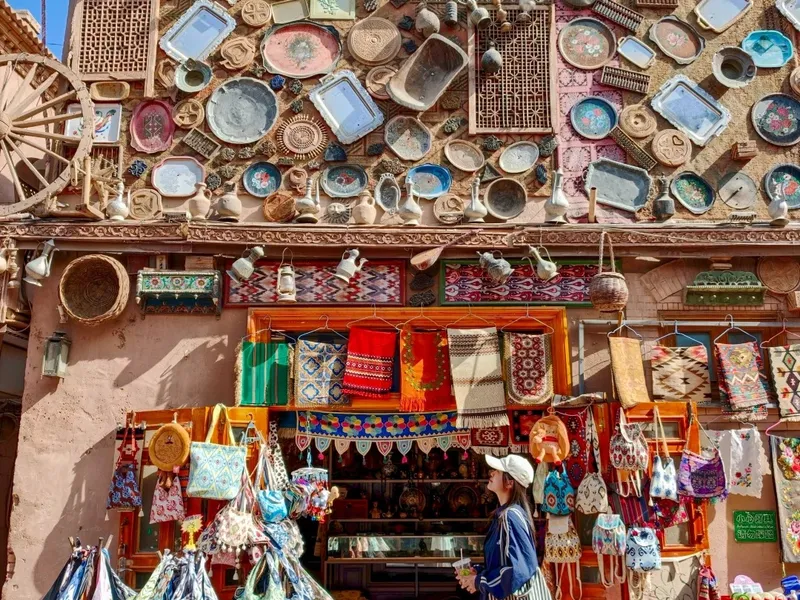
Uyghur Musical Instruments as Souvenirs (Rawap / Dap Drum / Dutar)
Besides dried fruit and jade, Xinjiang offers another culturally rich souvenir — Uyghur ethnic musical instruments. The rawap, dap hand drum, and dutar are beautifully crafted with intricate patterns; they are instruments and artworks alike, adding exotic charm to any home. Walking through the old-town alleys of Kashgar or the Kazanqi folk district of Yining, you hear plucked strings and lively drumbeats everywhere — sounds that are themselves Xinjiang's most vivid calling card.
For many travelers, an instrument recalls Xinjiang more vividly than jade or dried fruit. A handcrafted rawap hung on the wall is not just an ornament but a piece of your journey you can touch. Uyghur instruments are finely made with unique timbres, carrying both decorative and collectible value — a special gift choice. Still, faced with an array of instruments, many people do not know which to pick, how to tell quality, or how to bring one home safely.
This guide introduces the most common Uyghur instruments — the rawap, dap drum, dutar, and ejek — explains their features, how to choose, typical prices, and how to ship them home, helping you pick a satisfying and presentable Xinjiang souvenir.
🎵 Introduction to Common Instruments
1. Rawap
- Traditional Uyghur plucked instrument, with a slender body and curved head
- Bright tone; one of Xinjiang's most iconic instruments
- Often played at meshrep (music-and-dance gatherings)
2. Dap Hand Drum (Dap)
- A round percussion instrument with a skin head and metal rings
- Available in sizes; small ones travel easily, larger ones have a deeper tone
- Simple to play; great for beginners
3. Dutar
- A long-necked plucked instrument with a pear-shaped body and two strings
- Warm, mellow tone; considered one of the "mothers of Uyghur instruments"
4. Ejek
- A bowed-string instrument, brighter-toned than an erhu
- Exquisitely crafted with ornate decoration
5. Tambur, Sataer and others
- Also common traditional instruments, each with its own character
The rawap is the Uyghurs' most iconic plucked instrument, with a slender body and a hook-shaped head, bright and clear in tone, commonly heard at meshrep celebrations. The dap drum is the most accessible choice — a round drum with a skin head and metal rings around the rim; small ones are easy to carry, larger ones have a deeper tone, and it is simple to learn, so beginners can quickly get the hang of it. The dutar has a pear-shaped body, a long neck, and two strings, with a warm, mellow sound and the reputation of the "mother of Uyghur instruments." There are also the bright-toned ejek and the finely crafted tambur and sataer, each with its own charm. Choose according to your taste and budget.
🧐 How to Choose
- Appearance: Handmade instruments have more refined shapes and patterns; check for cracks in the body and an even finish
- Tone: Try playing if you can, listening for a clear, resonant sound
- Material: Quality instruments use local woods like mulberry and apricot, warm to the touch
- Price: Decorative small instruments run from tens to a few hundred CNY; playable instruments range from a few hundred to over a thousand
- Where to buy: Kazanqi folk district, grand bazaars, and specialist instrument shops
When choosing, first look at appearance — handmade instruments tend to have finer shapes and patterns; check for cracks and an even finish. Then judge tone — play it if you can and listen for a clear, resonant sound. Consider material — quality instruments use local woods like mulberry and apricot, warm to the touch. As for price, decorative small instruments run from tens to a few hundred CNY, while genuinely playable instruments start in the hundreds and reach over a thousand. Where to buy concentrates in the Kazanqi folk district, grand bazaars, and specialist instrument shops.
🎁 How to Bring It Home
- Check-in: Larger instruments usually need to be checked — wrap them in soft cloth or foam for shock protection
- Carry-on: Small dap drums and pendant-style instruments can be carried on board
- Moisture and shock: Avoid squeezing and dampness during transport
- High-value instruments: consider declared-value shipping
The key to bringing an instrument home is packaging and transport method. Larger instruments like the rawap and dutar usually need to be checked, so wrap them carefully in soft cloth or foam for shock protection; small dap drums and pendant-style instruments can be carried on board. During transport, protect against moisture and shock, avoiding compression and damp-induced warping. If you bought a more expensive high-end instrument, consider declared-value shipping for an extra layer of protection and peace of mind.
📌 Practical Tips
- Go for handmade: Handmade instruments hold more collectible value; machine-pressed pieces are mainly decorative
- Decorative small instruments are cheap and easy to carry — ideal for gifting
- If you really want to learn to play, buy a proper instrument and ask the shop for a quick lesson
- Mind size and weight, and consider shipping convenience
A few practical tips: first, go for handmade — handmade instruments hold more collectible value, while machine-pressed pieces serve mainly as decoration. Second, decorative small instruments are affordable and easy to carry, making them the best gifts. Third, if you truly want to learn to play, buy a proper instrument and ask the shop to teach you the basics. Fourth, mind the size and weight and think ahead about shipping convenience so you do not buy something you cannot get home.
A Uyghur instrument is a melody from Xinjiang you can take home. Whether as a wall decoration or an instrument to learn and play, it is a unique, story-filled souvenir. Pick one you like and let it remind you of the strings and songs beneath the Tianshan Mountains.
If you would like to plan instruments together with other Xinjiang souvenirs like dried fruit and carpets, or need help arranging the trip, choosing products, or bargaining, an experienced local guide can help — they know the market well and can arrange this "portable taste of Xinjiang" to your satisfaction.
Craving a stress-free yet free-spirited trip?
Don't want to plan? Contact our senior trip designer now for a personalized route and quote.
Get Your Free Itinerary & Quote
Updated: August 2026 Author: RoamFun Senior Travel Advisor Questions? Contact us: vip@roamfun.net

RoamFun Senior Travel Consultant
Travel DesignerProfessional travel consultant, curating the most practical travel guides for you.