
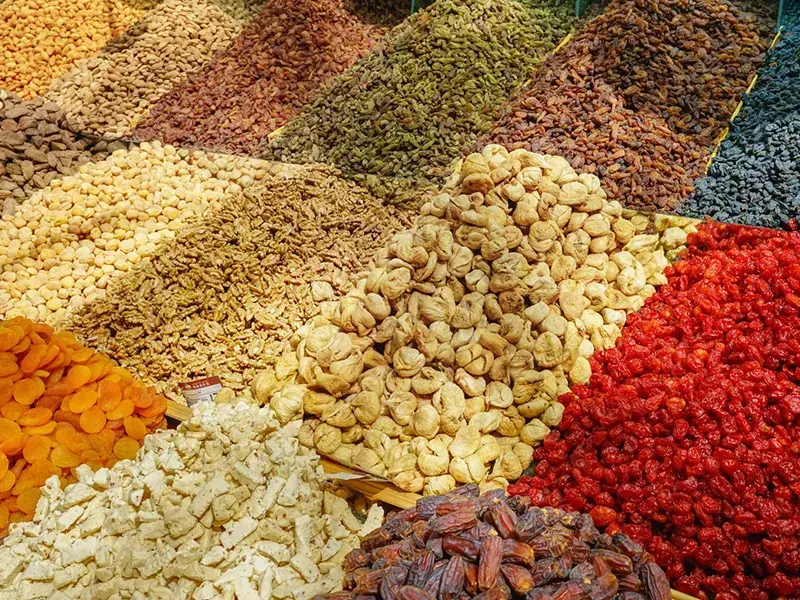
Where to Buy Authentic Xinjiang Dried Fruits and Snacks: A Veteran's Private Bazaar Sourcing and Anti-Scam Guide
Xinjiang's sunshine and glacier meltwater breed incomparable sweetness—making its dried fruits and snacks a must-bring flavor souvenir for every quality-seeking traveler heading home. But facing the dazzling array of specialty shops lining the streets, where can you buy truly origin-direct, non-sulfur-fumigated goods that even locals frequent?
As off-road veterans who lead 2-8 person boutique small groups across Northern and Southern Xinjiang year-round, our biggest dread is seeing travelers get scammed by overpriced "tourist-exclusive products" at scenic-area gates. This guide bypasses the heavily commercialized tourist photo-ops and takes you deep into Urumqi's and various prefectures' authentic bazaars, buying genuine dried fruits and snacks that carry true Western Regions flavor, the local way—ensuring every yuan of your budget goes to ultimate taste.
📍 Overview at a Glance
| Basic Attribute | Details |
|---|---|
| Best Season | Year-round (August-October autumn new-crop hits the market with peak flavor) |
| Suggested Duration | Half a day; recommend centralized purchasing in Urumqi downtown over the last 1-2 days of your trip |
| Per-Person Budget | ¥300 - ¥1,000 (varies by category and quantity; logistics direct-shipping supported) |
| Difficulty | ★☆☆☆☆ (transport is convenient; mainly tests discernment and bargaining communication) |
🗺️ Itinerary Suggestion: Dried-Fruit Sourcing Map and Practical Timeline
To buy high-value Xinjiang goods, follow the locals' daily trail. Here's our strongly recommended sourcing itinerary:
Urumqi: The Locals' Dried-Fruit Base (Beiyuanchun / Hongshan Farmers' Market)
- Morning: Head straight to Beiyuanchun Dried Fruit Wholesale Market or Hongshan Farmers' Market—the procurement base for Urumqi residents. Focus on Aksu 185 paper-shell walnuts, Turpan shade-dried red and black Xiangfei raisins, and firm sweet Ruoqiang grey jujubes.
- Afternoon: Pivot to a nearby local chain supermarket (e.g., Haojiaxiang or Youhao) for vacuum-packed Western Regions snacks—Tianshan yogurt chunks, Tacheng lieba, sea buckthorn juice, and pure camel milk powder—convenient for distributing as gifts to colleagues and friends.
- Evening: Enjoy an authentic spicy lamb trotter or hand-grabbed mutton near the market, then hand your dried-fruit haul to a familiar logistics stall to pack and ship to the mainland.
- Pro Tip: Avoid the weekend-morning restocking rush. Follow "taste before buying, compare three shops." Formal-market vendors are welcoming—you can sample every variety to your heart's content before deciding.
Origin Strike: Turpan and Kashgar's Roadside Treasure Hunt
- Morning: If passing through Turpan in summer-autumn, head directly to the drying houses around the Gaochang Ancient City ruins or the vineyard-edge farmers' homes by Grape Valley for first-hand naturally wind-dried green raisins.
- Afternoon: Wander Kashgar Old City's century-old streets (e.g., the bazaar near the century-old teahouse) for Uyghur uncles freshly boiling and cutting maren tang (nut cake) and additive-free dried figs.
- Pro Tip: Roadside buying maxes out freshness and human-atmosphere points. But if your route ahead still crosses daban passes or pushes into the heartland, buy just a little for snacking en route. Save bulk purchases for the closing day to avoid extra weight and moisture-control burden.
🎒 Pre-Departure Checklist (Bazaar Edition)
- **Documents**: Carry your national ID. Xinjiang's large farmers' markets, supermarkets, and courier shipping all require ID for real-name security checks.
- **Clothing**: Comfortable, dirt-tolerant flat shoes. A dried-fruit wholesale market means walking 10,000-20,000 steps, with logistics carts zipping around—light and easy is key.
- **Medicine**: Digestive enzymes or probiotics. Xinjiang dried fruits are extremely high in sugar—sampling your way around the market easily causes indigestion or "internal heat."
- **Electronics/Tools**: Power bank and wet wipes (essential after peeling paper-shell walnuts or eating sweet preserved fruit). If you're truly worried, bring a small portable electronic scale—though formal large markets rarely short-weight nowadays.
💡 Practical Travel Tips
⚠️ Anti-Scam & Sourcing Warning:
- Beware Overly Bright Colors: Naturally wind-dried dried apricots and raisins tend to be darker, with sun/shade-side color gradients. If you see extremely uniform vivid colors (bright gold or emerald green) and smell pungent sour or chemical odors, they're likely sulfur-fumigated industrial goods—firmly pass.
- Beware the "Nut Cake Assassin": When buying large blocks of maren tang at traditional bazaars, always ask the vendor first whether pricing is by "kilogram" or "gram." Use your hand to indicate the thickness you want, estimate and confirm the total price, and only then let the vendor make the cut.
- On Transportation: Dried-fruit shopping means big, heavy bags. If going solo, take a taxi directly to the market entrance. In our custom routes, the final day typically has a veteran team leader driving a Tank 300 or Toyota Land Cruiser LC76 for dedicated downtown pickup/drop-off. The hardcore off-roader's spacious trunk easily holds all your "spoils"—sparing you the indignity of lugging dozens of jin of specialties onto a bus or waiting for ride-hail.
- On Accommodation & Storage: If buying fresh specialties (e.g., fresh figs, handcrafted fresh milk chunks), refrigerate them in your room's mini-fridge immediately upon return. For shipping, require the merchant to use foam-box cold-chain with ice packs.
📸 Recommended Photo Spots
- Grand Bazaar Dried-Fruit Mountain: 4:00 PM - 6:00 PM, when light softens. Low-angle shots of mountains of jujubes, walnuts, and almonds on vendor stalls, with a smiling Uyghur uncle in the background—rich human warmth.
- Kashgar Old City Artisans: Around 11:30 AM (Xinjiang runs late). Shoot intangible-heritage artisans boiling sugar syrup in large copper pots to make traditional dried-fruit candy. Use a slow shutter on the stirring motion—visually dynamic.
High-Conversion FAQ
Q1: Beyond the well-known jujubes and walnuts, what niche-but-stunning Xinjiang snacks do you recommend? Strongly recommend Aksu or Ili "tree-dried apricots" (diaogan apricots)—apricots naturally wind-dried on the tree before harvest. The flesh is chewy and sweet, and best of all, crack open the thin shell and the kernel inside is fragrant and crisp—two treats in one. Also: handmade slightly-salty-sour yogurt chunks, Luobuma tea, and wind-dried beef—distinctive Western Regions treasures perfect for long road-trip energizing.
Q2: Is there a big price difference between buying at scenic-area specialty shops vs. local wholesale markets? Huge difference. Scenic-area shops typically mark up 30%-50%, and since they cater mostly to one-time tourist transactions, quality control often falls short of the local farmers' markets that serve neighborhood regulars and repeat customers. That's why our team never arranges hidden-fee shopping stops—we take you straight to the real markets where everyday people buy.
Q3: I bought too many specialties to carry on the plane—is shipping convenient? Is postage expensive? Xinjiang's modern logistics are extremely developed. At Beiyuanchun or Hualing Market, virtually every large dried-fruit shop has SF Express or JD Logistics stationed on-site, with professional moisture-proof vacuum packing. Standard dried-fruit first-weight shipping is around a dozen RMB—shipped directly home, fresh and saves you the hassle of carrying and checking luggage.
Your Scenery Is Already on the Way
The best way to go deep into a place is to wander its farmers' bazaar like a local. When you're haggling with a warm vendor before a dazzling dried-fruit stall, tasting the sweetness nurtured by sunlight—what you take home isn't just snacks, it's the warmth and human connection of this vast land.
Travel shouldn't be an exhausting checklist, nor a helpless tumble into consumer traps. If you're after a genuinely off-assembly-line, high-quality off-road journey deep into the Northwest's hidden sanctuaries, contact RoamFun. Our route designers will tailor an exclusive small-group itinerary—taking you to taste the purest flavors and see the wildest landscapes.
Updated: June 2026 Author: RoamFun Senior Travel Consultant Questions? Contact: vip@roamfun.net
Craving a worry-free yet free-spirited journey?
Don't want to plan it yourself? Contact our senior trip designer now for a route and quote tailored to you.

RoamFun Senior Travel Consultant
Travel DesignerProfessional travel consultant, curating the most practical travel guides for you.