Pamir Baisha Lake Guide (Along the Kashgar–Tashkurgan Route)
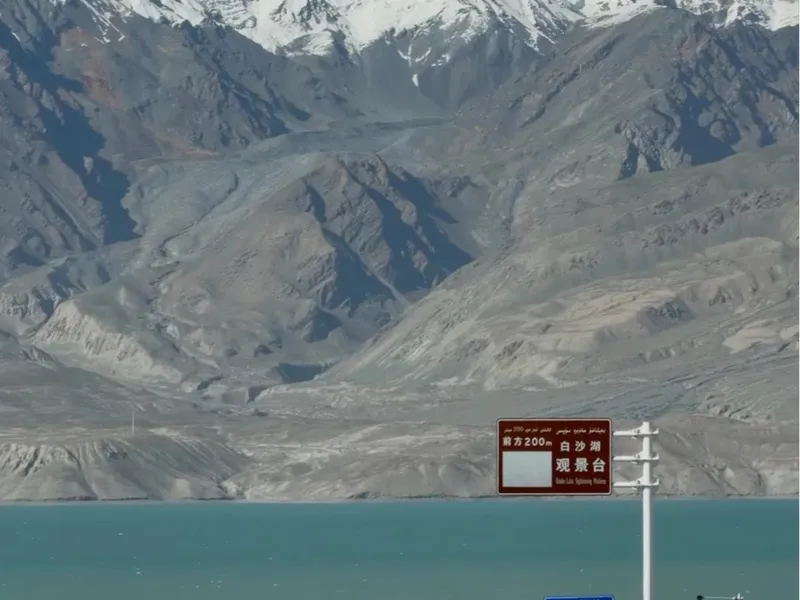
Along the G314 highway from Kashgar to Tashkurgan lies a highland lake that makes every traveler gasp — Baisha Lake. Silver-white sand mountains ring the turquoise-blue water, whose color shifts with the sunlight and drifting clouds, beautiful as a dream. Also known as Baisha Shan Lake, its shore is lined with rolling silvery sand dunes that gleam like snow, contrasting sharply with the jewel-blue water. Few first-time visitors fail to be awed.
This highway is itself part of the "China–Pakistan Friendship Highway," linking several highland sights including Muztagh Ata, Karakul Lake, and Baisha Lake — arguably Xinjiang's most classic highland scenic route. Baisha Lake is the route's "poster child," a must-stop on the way to Muztagh Ata and Tashkurgan. Whether you are self-driving into Tashkurgan to see Muztagh Ata or chartering a car for a Pamir loop, you will pass right by it.
Yet many first-timers either catch it under flat light and photograph a gray, lifeless lake, or rush past without finding the best viewpoint. This guide covers how to get there, the best time to visit, how to choose viewpoints, how to handle the border pass, and how to link Baisha Lake with Muztagh Ata and Karakul Lake — all in one place, so you never miss its most dazzling side.
🏞️ What Is Baisha Lake
- Location: Pamir Plateau, beside G314, between Kashgar and Tashkurgan
- Highlights: Silver-white sand mountains + turquoise lake water, the serene beauty of a highland lake
- Viewing: Observation decks along the shore overlook the water and sand hills
- Altitude: Around 3,300 m
Baisha Lake sits at roughly 3,300 m, a true highland lake. Its name comes from a stretch of fine silver-white sand hills on the shore that glow softly in the sun. The water mirrors the dunes and sky, shifting from deep blue to lake blue to gray-blue as clouds drift by — the same lake looks entirely different from different angles and at different times. This "silver sand + clear water" combination is rare in Xinjiang and is the lake's biggest distinguishing feature.
📷 Best Viewpoints and Timing
Viewpoints:
- Lakeside observation deck: At water level, with the sand hills reflected in layers of detail
- High spots / roadside pull-offs: Overlook the whole lake and dunes for a grand view
- Close to the shore: Capture the texture of the sand against the clear water
Best time:
- Morning / afternoon: The water is bluest and the dunes most defined under oblique light
- Late afternoon: Softer light tints the water warm
- Avoid: Noon (harsh light, gray water) and overcast days (flat colors)
For photographing Baisha Lake, timing matters more than position. At noon, direct sunlight "washes out" the water, leaving it gray and flat; in the morning or afternoon, oblique light makes the water bluest and the dunes most sculpted. Near sunset, the lake and sand hills take on a soft golden glow — yet another mood. For viewpoints, the roadside deck suits panoramas, while walking to the shore captures sand-texture details. If you can, stop again on the return from Tashkurgan toward Kashgar — the light and angle differ, and there are often surprises.
🎫 How to Visit
- Baisha Lake is mainly an en-route viewpoint — park, stop, and photograph
- You can walk near the sand hills and shore to enjoy the lake's serenity
- No dedicated ticket is needed; it is a roadside sightseeing stop (some lots may charge parking)
Suggested stay: 30 minutes to 1 hour — enough for photos and a little quiet time.
Baisha Lake is a classic "en-route" stop with no complex tickets or tours — the key is stopping at the right time. Give yourself at least 30 minutes to an hour: take in the panorama from the higher deck, then walk to the shore for details. The plateau breeze is gentle and the lake is still; sitting by the dunes for a while is itself the most healing part of the trip. Note that parts of the sand hills are loose, so avoid scrambling on them — both for safety and to protect the fragile ecosystem.
🚗 Transport and Tips
- Route: Kashgar → G314 → Baisha Lake → Muztagh Ata / Karakul Lake → Tashkurgan
- Recommendation: Self-drive or charter a car for flexible stops
- Border pass: A border pass is required toward Tashkurgan — arrange it in advance in Kashgar
- High altitude, strong wind: Bring a warm jacket and sunscreen
From Kashgar along G314, Baisha Lake sits roughly midway, after which the road continues to Karakul Lake and Muztagh Ata, finally reaching Tashkurgan. This route can be done in a day or spread over two relaxing days. One key reminder: obtain your border pass in Kashgar before setting off — it is a hard requirement for the Tashkurgan direction, so do not wait until you arrive to figure it out. The plateau is high-altitude with intense UV and big temperature swings; pack a warm jacket, sunscreen, and sunglasses.
📌 Practical Tips
- Intense high-altitude sun and UV — sunglasses and sunscreen are essential
- Strong lakeside wind — secure your hat and stay warm while photographing
- Do not scramble on the sand hills; some areas are loose and ecologically fragile
- When stopping to look, watch for traffic and never block the main road
- The return direction toward Kashgar is also worth a stop — the angle differs
A few small things to remember on the way: first, get your border pass early — it is the precondition for heading toward Tashkurgan. Second, high-altitude photography is easy to overlook warmth; the lakeside wind is strong, so keep your hat secured. Third, when stopping by the roadside, pull over fully and turn on your hazard lights — G314 carries decent traffic, so safety comes first. Keep these in mind and your Baisha Lake trip will go smoothly.
❓ FAQ
Q: Does Baisha Lake require a ticket? A: Generally no ticket is needed; it is an en-route sightseeing stop, though some parking areas may charge.
Q: Can it be done in a day trip? A: Kashgar to Baisha Lake is about 3–4 hours by car; with the onward leg to Tashkurgan, plan for a full day or split across two days.
Q: Can I see Baisha Lake without a border pass? A: A border pass is usually required for the Tashkurgan direction, and Baisha Lake lies on that road, so get your pass in advance.
Baisha Lake's beauty needs no filter — just stop the car and let your heart settle. It is the Pamir Plateau's gift to travelers on the road; do not miss it as you pass. Pick the right time and viewpoint, and you will carry this blue of the highlands home in both camera and memory.
When visiting Baisha Lake, plan it together with Muztagh Ata, Karakul Lake, and Tashkurgan so every stop on this Pamir trip pays off. If self-driving into the plateau, sorting the border pass, and arranging accommodation feels overwhelming, an experienced local team can make it far easier and let you explore deeper.
Craving a stress-free yet free-spirited trip?
Don't want to plan? Contact our senior trip designer now for a personalized route and quote.
Get Your Free Itinerary & Quote
Updated: August 2026 Author: RoamFun Senior Travel Advisor Questions? Contact us: vip@roamfun.net

RoamFun Senior Travel Consultant
Travel DesignerProfessional travel consultant, curating the most practical travel guides for you.