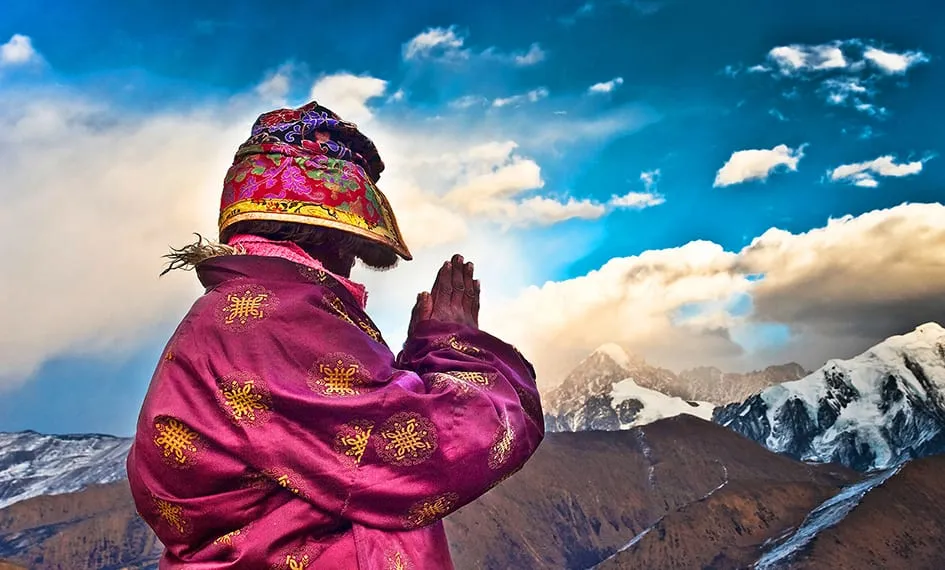
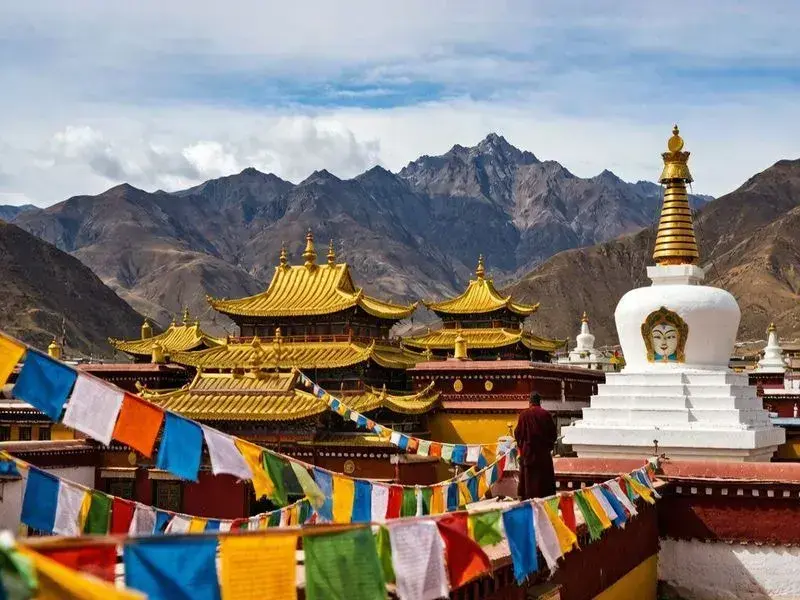
Qinghai Isn't Just Scenery! Step into Kumbum Monastery and Tibetan Villages—Touch the Plateau's Most Devout Soul
90% of people going to Qinghai go for scenery—Emerald Lake, Chaka Salt Lake, Qilian Grassland. Nothing wrong with that—Qinghai's landscapes are worth crossing mountains for.
But if you only bring back hundreds of landscape photos, you've only seen Qinghai's skin, not touched its soul.
Qinghai is multi-ethnic—Tibetan, Hui, Tu, Salar, Mongolian—each leaving unique cultural marks on this land. Today I'll take you on a rarely traveled cultural route to see Qinghai's other side.
🛕 Stop One: Kumbum Monastery—A Living Museum of Faith
Kumbum Monastery is 25km southwest of Xining in Huangzhong District, one of the six great monasteries of the Gelug (Yellow Hat) sect of Tibetan Buddhism. Built to commemorate Gelug founder Je Tsongkhapa, it has 600+ years of history.
The Meaning of the Name
"Kumbum" is the Chinese abbreviation; the full Tibetan name is "Gungben Chamba Ling," meaning "Maitreya Temple of 100,000 Lion-Roar Buddha Images." The name comes from a legend: when Tsongkhapa was born, a bodhi tree grew from the blood of his cut umbilical cord, with 100,000 leaves, each showing a lion-roar Buddha image.
Kumbum's Three Treasures
Butter Sculptures—handcrafted sculptures from yak butter. Monks must work in sub-zero environments (hand temperature melts the butter)—making one flower may require repeatedly dipping hands in ice water. Every Lunar New Year 15th day, Kumbum hosts a butter sculpture exhibition—the entire monastery lit by butter sculptures, so beautiful you doubt it's of this world.
Murals—not on paper, painted directly on monastery walls, beams, and pillars. Pigments all from ground natural minerals (lapis lazuli for blue, cinnabar for red), unfading for centuries. Standing before the murals, the colors stun you speechless.
Appliqué Embroidery (Dui Xiu)—patterns cut from various colored silks, layered on cloth hangings for relief-effect images. From afar: a painting. Up close: every petal, every feather is independent.
Visiting Etiquette
- Clockwise circumambulation: Prayer wheels, stupas, monastery—always clockwise
- Don't step on thresholds, don't step over prayer flags
- No photos inside halls, no hats, no sunglasses
- Don't photograph people doing prostrations—respect their devotion
- Don't point at Buddha statues with a finger—use your whole palm upward
Practical Info:
- Tickets: Peak season 70 yuan (Apr 1-Oct 31), off-season 40 yuan
- Recommended time: Enter at 8:30 AM opening—avoid tour group peak (after 10 AM, packed)
- Guide: Strongly recommend hiring an official guide (100 yuan/session)—architecture alone doesn't reveal the stories
🎨 Stop Two: Regong Art Hometown—Watch Thangka Dance on a Needle Tip
170km southeast of Xining is Tongren City, Huangnan Tibetan Autonomous Prefecture. Here's a name you may not know—Regong.
Regong is the holy land of Chinese thangka art. Thangka is Tibetan Buddhist scroll painting—one exquisite Regong thangka may take a painter 6 months to 2 years. Every square centimeter holds incredible detail—Buddha's facial expression, petal gradient, clothing texture—all painted stroke by stroke with brushes finer than hair.
Hands-On Thangka Studios
Many Tongren thangka studios welcome tourists, most recommended: Longshu Art Academy and Regong Art Museum. You don't just watch—you sit down with a painter, learning to paint a lotus using real mineral pigments and gold powder.
After painting, the artist will bless your work—this is a form of consecration. This small thangka is more meaningful than any souvenir.
Practical Info:
- Address: Tongren, Huangnan Prefecture
- Experience fee: About 100-200 yuan/person (includes pigments, canvas, teaching)
- Recommended time: At least 2-3 hours
⛺ Stop Three: Tianjun Grassland—Stay a Night in a Tibetan Village
West of Qinghai Lake, Tianjun County is a quiet pastoral area in Haixi Prefecture. No scenic gates, no tourist center—just Tibetan herders and their yaks. Some villages now accept homestay guests—you can truly stay in a Tibetan adobe house.
24 Hours in a Tibetan Family
Evening: The host father returns from pasture, herds yaks into the pen. The mother heats water with dried yak dung—don't wrinkle your nose, dried dung is the plateau's best fuel: odorless, powerful, long-lasting.
Dinner: Tsampa, butter tea, wind-dried yak beef. Tsampa is roasted barley flour, kneaded into balls with butter tea. First bite may be unfamiliar, but by the third you understand—this is plateau life's truest flavor.
Night: No streetlights in the village. Open the door into the courtyard—Milky Way overhead. The father lights a bonfire, the family sits in silence, only crackling wood.
Morning: Woken by yak bell sounds. The mother is already milking—she serves you a bowl of yak milk squeezed minutes ago, boiled on the stove. Milk fragrance drifts from courtyard to next door.
Tips for Blending In
- Learn a Tibetan greeting: "Tashi Delek" (auspicious and good)
- Bring candy or small stationery for village children—they'll be thrilled
- Ask the host before entering: "May I come in?"
- Accept butter tea with both hands
- Don't point your feet at the stove—disrespectful in Tibetan culture
🏮 Stop Four: Xining Dongguan Grand Mosque—Understanding Qinghai's Other Half Faith
Qinghai isn't just Tibetan Buddhist territory. Xining's Hui population exceeds 30%—the downtown Dongguan Grand Mosque is one of the northwest's largest mosques.
Every Friday afternoon's Jumu'ah prayer, the entire Dongguan Avenue fills with worshipers. White prayer caps form a river flowing from the mosque doors, overflowing the street. You can't imagine it without seeing it.
Visiting Tips:
- Non-Muslims can't enter the prayer hall, but can visit the courtyard
- Women need long sleeves, long pants, headscarf (free borrow at entrance)
- No loud noise during prayer times
🗺️ Cultural Qinghai 3-Day Route
| Day | Route | Experience |
|---|---|---|
| Day 1 | Xining→Kumbum Monastery→Xining | Tibetan Buddhist art, butter sculptures |
| Day 2 | Xining→Tongren (Regong)→Tianjun | Thangka experience, Tibetan village |
| Day 3 | Tianjun→Qinghai Lake→Xining | Grassland morning light, lakeside prayer flags |
This route has very few tourists, but is the most direct path to understanding Qinghai's soul.
💬 People Who Understood Qinghai
"At Kumbum, saw an old auntie doing prostrations before a prayer wheel—over 100 times. Her forehead was calloused from repeated ground-touching. In that moment, my anxieties suddenly felt insignificant." — Hangzhou, Xiao Liu ⭐⭐⭐⭐⭐
"Stayed a night at Tianjun with a Tibetan auntie. Morning—drank the best milk of my life. Auntie couldn't speak Chinese, but kept smiling. When leaving, she gave me a pack of homemade milk curd—I still haven't finished it." — Guangzhou, Ms. Chen ⭐⭐⭐⭐⭐
🙏 Scenery Fades, But Faith Doesn't
Emerald Lake may turn gray from weather. Chaka's Sky Mirror loses reflections in wind. Rapeseed flowers wither after August.
But Kumbum's butter lamps stay lit. Pasture prayer flags fly forever in wind. Tibetan auntie's butter tea boils every morning.
These are Qinghai's soul.
If you only saw scenery, you saw half of Qinghai. The other half—follow us into monasteries, studios, and herders' homes.
Start Your Qinghai Cultural In-Depth Journey
Updated: June 2026 Author: RoamFun Senior Travel Consultant Questions welcome: vip@roamfun.net
Craving a worry-free yet free-spirited journey?
Don't want to plan it yourself? Contact our senior trip designer now for a route and quote tailored to you.
RoamFun Senior Travel Consultant
Travel DesignerProfessional travel consultant, curating the most practical travel guides for you.