
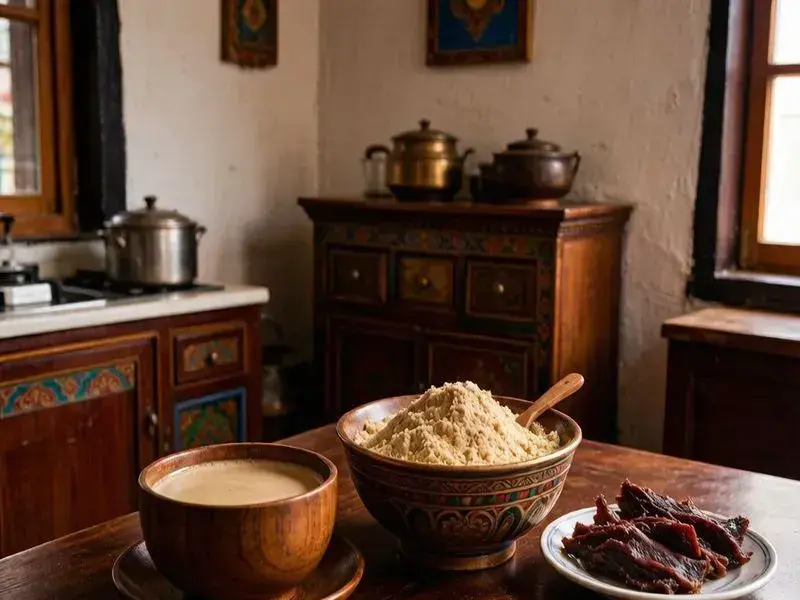
Qinghai Tibetan Cuisine Experience Guide: A True Tibetan Feast on the Plateau
Many people's knowledge of Tibetan cuisine stops at "butter tea." In reality, Tibetan culinary culture has been refined for over a millennium in the harsh environment above 3000m. Every dish hides plateau survival wisdom.
Why doesn't tsampa need cooking? Why does butter tea have salt? Why is yak beef better suited for high altitude than regular beef? This guide takes you into Tibetan restaurants and herder tents, starting from the first bowl of butter tea.
🍵 Butter Tea: Liquid Fuel for Plateau Life
What it is: Butter (extracted from yak milk) churned with brick tea and salt in a wooden churn. The result is a light-brown hot drink with a layer of fat on the surface.
First sip impact: Salty, greasy, tea fragrance mixed with dairy—your tongue may be briefly confused. But by the third bowl you understand: at 4000m, nothing makes you feel "alive again" like a bowl of butter tea. Butter provides high-density calories, theophylline fights plateau fatigue, salt replenishes electrolytes lost through sweating—this is a perfect drink reverse-engineered from physiological needs.
Etiquette:
- Receive tea with both hands
- When half empty, the host refills
- Cover the bowl with your palm when you don't want more
- Don't blow on it to cool—let it cool naturally
Where to drink it most authentically: Butter tea from an iron pot in a Tianjun grassland Tibetan herder's home is 100 times more authentic than any electric-kettle version in Xining's Tibetan restaurants. The difference: herders use freshly extracted yak butter that day.
🥣 Tsampa: One Finger Can Feed a Person
What it is: Roasted barley ground into fine flour—the staple food of Tibetans for millennia.
How to eat: Pour butter tea into a wooden bowl to 2/3 full, add tsampa flour to half, add a small piece of butter. Stir clockwise along the bowl wall with your index finger—flour and tea merge into dough, pinch into a small ball and eat. No chopsticks, no spoon—just your hand—this is how Tibetans have eaten tsampa for millennia.
Why it's survival wisdom: A small bowl of tsampa provides enough calories for a herder to walk all day on the grassland. Barley flour needs no cooking—just add boiling water—in the plateau's fuel-scarce environment, this is an invaluable survival design.
Taste: First bite may feel like raw flour. Second bite: barley's wheat aroma emerges. Third bite: you understand why Tibetans can eat this for a lifetime—simple, efficient, warm.
Experience recommendation: Learn from auntie in a Tianjun grassland herder's home. She'll speak Tibetan you don't understand, but her gestures are clear. When you first successfully pinch a tsampa ball, she'll smile and give a thumbs up—this communication needs no translation.
🥩 Yak Beef: Red Meat More Precious Than Wagyu
Difference from regular beef:
| Yak Beef | Regular Beef | |
|---|---|---|
| Growth altitude | 3000-6000m | <1500m |
| Fat content | Very low (3-5%) | 15-25% |
| Myoglobin | High (darker red) | Low |
| Texture | Firm, chewy | Soft |
| Nutrition | High iron, high protein | Average |
Three ways to eat:
Wind-dried yak beef: Tibetan snack food. Raw yak beef cut into strips, hung outside tents for the plateau's dry cold wind to naturally dehydrate. The result: hard outside, soft inside—tear a small strip and chew slowly—first salty, then multiplied meat aroma slowly released. One strip lasts 10 minutes.
Hand-grabbed yak beef: Plateau hospitality dish. Large chunks of yak beef boiled tender, served with Sichuan pepper salt. Grab and bite directly—eating yak beef requires "using your hands"—knives and forks disrespect this dish.
Yak beef buns: Tibetan buns with thick wrappers, generous filling—minced yak beef with onions and a touch of Sichuan pepper water. Steamed—one bite releases scalding meat juice.
🥛 Yak Yogurt: Sour Enough to Frown, Sweet Enough to Squint
Freshly made yak yogurt from a herder's home belongs to a different species than any supermarket yogurt.
Appearance: Surface set with a 2-3mm golden milk skin. Spoon through—yogurt texture so thick it's like freshly set silken tofu.
Taste: First sip—purely sour—sour enough to instinctively frown. Second sip with sugar—white sugar grains provide sweet crunch on the sour base. Third sip—you've acclimated to the sourness, starting to taste the dairy fragrance—not cow milk's, but yak milk's unique, grassland-grass-scented dairy aroma.
Where to eat: Qilian grassland yurts, Tianjun herder homes. Xining Mo Jia Street's Delu yogurt is the city version—convenient, but not as good as the herder's freshly made bowl.
🔥 Tibetan Blood Sausage and Meat Sausage
Blood and meat sausages made after slaughtering yak are "limited edition" items you can't get in any restaurant.
Blood sausage: Yak blood mixed with barley flour, minced meat, Sichuan pepper, garlic, stuffed into casings and boiled. Cross-section is dark red—dip in garlic-chili vinegar sauce—creamy texture, rich blood flavor but not gamey.
Meat sausage: Pure minced yak beef stuffed in casings, boiled and sliced. Meat flavor concentrated in the casing—one bite releases meat aroma and fat simultaneously.
Where to eat: Only in Tibetan herder homes. Auntie will specially cut the best section for you—not because you're a guest, but because Tibetan hospitality means giving the best to people from afar.
🎯 Tibetan Cuisine Experience Route
| Experience | Location | Recommendation |
|---|---|---|
| Beginner | Xining Tibetan restaurants | "Xueyu Palace," "Shambhala"—good environment, full menu |
| Intermediate | Qilian yurts | Fresh butter tea + yak yogurt |
| Ultimate | Tianjun grassland herder home | Full Tibetan meal + learn tsampa with auntie |
💡 Tibetan Dining Etiquette Quick Notes
- Receive butter tea with both hands
- Don't point feet at the stove
- Don't use chopsticks to point at Buddha or prayer flags
- Don't refuse food the host offers—tasting is polite
- When full, cover the bowl with your palm to signal "enough"
💬 People Who Truly Ate Tibetan Food
"Stayed two nights at Tianjun auntie's home. Morning—drank butter tea she boiled over yak dung fire—the best tea I've ever had. Not because of the tea leaves, but because of that morning, that tent, that auntie who spoke Tibetan but whose smile needed no translation." — Guangzhou, Ms. Chen ⭐⭐⭐⭐⭐
"First time eating tsampa, nearly vomited—too dry. Auntie saw my expression and smiled, pointed at the butter tea for me to add more. Second bowl—got it. Third bowl—could pinch my own. She gave me a bag of barley flour when leaving, but my homemade tsampa never tastes like the grassland version." — Beijing, Mr. Liu ⭐⭐⭐⭐⭐
🏕️ Tibetan Food Isn't a Meal—It's a Way of Life
At 4000m, food's first mission was never "delicious"—it's "keeping you alive." But when you drink that bowl of steaming yak milk freshly squeezed in a herder's tent, you discover—staying alive, on the plateau, can also be beautiful.
Experience a True Tibetan Cuisine Journey
Updated: June 2026 Author: RoamFun Senior Travel Consultant
Craving a worry-free yet free-spirited journey?
Don't want to plan it yourself? Contact our senior trip designer now for a route and quote tailored to you.

RoamFun Senior Travel Consultant
Travel DesignerProfessional travel consultant, curating the most practical travel guides for you.