
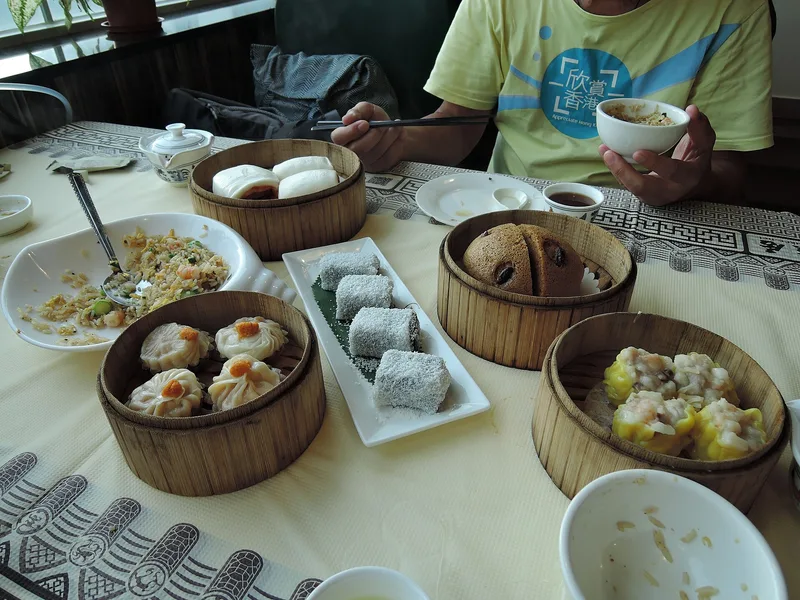
Cantonese Morning Tea in Guangzhou: When to Go, How to Order & What to Eat
If you only have one day in Guangzhou, I put morning tea in the morning slot and rank it above most of the sights. The reason is simple: the best food in Guangzhou isn't next to the attractions, it's in the teahouses. And morning tea has rules. It isn't "a few buns with tea" — you take a number at the door, you're asked what tea you want before you've properly sat down, dishes arrive in steamer baskets one at a time, and you lift the lid to ask for more hot water. Miss all that and you pay too much for a meal you never understood.
I've watched it happen often: queue for an hour, order everything that sounds famous, end up with a table of sticky rice and heavy sauces, then conclude that morning tea is overrated. That isn't morning tea's fault — it's the ordering.
This guide covers when to go, how to order, what the signature dishes are, what it costs, and where it fits in a Guangzhou day.
One warning up front: at popular teahouses on weekends, arrive early or take a number in advance, or you will lose the whole morning standing at the door.
🫖 What morning tea actually is
- The concept: Cantonese tea drinking plus dim sum. It's everyday life in Guangzhou, not a tourist performance
- The form: one pot of tea plus several baskets of dim sum, eaten slowly and talked over
- The pace: slow. Sitting for one or two hours is completely normal
- The price: charged by the basket, graded small / medium / large / premium. Per person it runs from a few dozen to over a hundred yuan
⏰ What time to go
This matters more than which teahouse you pick.
- 07:30–09:00: the local retirees' slot. Easy to get a table, the kitchen at its most consistent
- 09:00–10:30: busiest and the worst for queues — an hour's wait is common at weekends
- After 10:30: the morning session is winding down and some popular items may be sold out
- My advice: before 08:30 on a weekday, before 08:00 at weekends, or take a number on your phone before you set off
Don't schedule morning tea on a day when you have a flight to catch, or as a rushed lunch before a train. It needs time by nature; hurrying it wastes it.
📋 The sequence on your first visit
- Take a number at the door. Many places let you do it online — check before you go
- Choose tea: the first thing you'll be asked is what tea you want. The usual choices are pu'er (cuts grease), chrysanthemum pu'er, tieguanyin or shoumei. Ask the price first — the tea charge is per head and varies by tea
- Look at the table: soy sauce and chilli sauce are usually already out, with chopsticks and bowls set
- Order: tick a paper list or scan a code. Dishes come in baskets, not all at once
- More hot water: lift the lid and rest it on the pot's mouth — staff see it and come to top you up. It's the best-known rule and the easiest one to forget
- Pay: take your slip to the counter, or scan to pay
🥟 The signatures, and how to order on your first visit
The four classics (the "four great items" locals talk about):
- Har gow (crystal shrimp dumpling): the calling card of morning tea. Translucent skin, whole shrimp inside — one bite tells you the standard of the kitchen. Judge a teahouse by its har gow first
- Siu mai (pork or beef dumpling): minced meat with ginger juice and seasoning, steamed. One of the most frequently ordered items in Guangzhou
- Chicken feet in black bean sauce: soft, falling off the bone, deeply savoury. People who like it love it; first-timers sometimes find it strange
- Spare ribs in black bean sauce: tender, and works over rice
Others worth ordering:
- Rice noodle rolls (cheung fun): steamed sheets with shrimp, beef or barbecued pork — the soy sauce is the whole point
- Barbecued pork bun / lava custard bun: one savoury, one sweet; children love them
- Congee: boat congee or "passing the exams" congee, silky and filling
- Turnip cake, water chestnut cake: better pan-fried
- Sticky rice in lotus leaf: large and very filling — think twice if you're only two people
- Clay pot rice: not strictly a dim sum item, but many teahouses serve it at lunch, and the cured-meat version is another Guangzhou signature
A first order for two or three people: one har gow + one siu mai + one rice noodle roll + one chicken feet or spare ribs + one congee + a pot of tea. Don't order ten baskets at once — dim sum arrives in steamers, goes cold, and portions are bigger than they look.
💰 What it costs
- Around ¥60 per head: har gow + rice noodles + chicken feet + plain congee — simple but satisfying
- Around ¥80 per head: add a basket of siu mai or pork buns and the variety improves noticeably
- Over ¥100 per head: established old names or smarter rooms, or seafood dim sum
- Tea charge: billed per person separately, and it varies by tea — ask when you order
My advice: don't order too little to save money. The point of morning tea is tasting several things. Five or six items shared between two or three people beats one set meal each, both in value and in authenticity.
🗺️ Where it fits in a Guangzhou day
- Morning: morning tea (08:00–10:00)
- Late morning: Shamian Island, the Chen Clan Academy, the old Xiguan district — all in Liwan, an easy walk after tea
- Around midday: Shangxiajiu and Yongqingfang, snacking as you walk
- Afternoon: Beijing Road or Zhujiang New Town
- Evening: a Pearl River night cruise, or Tianhe for shopping
Morning tea and old Xiguan are a natural pair — many of the old teahouses are in Liwan, a few minutes' walk from the arcades and old streets. Do it the other way round, breakfasting in Tianhe and then crossing to the old town, and you lose a lot of time on the road.
If you're heading south afterwards, morning tea is also the starting point for a Guangdong winter route: from Guangzhou it's straight on to Shunde and Foshan, which is where the real food is. See Shunde Food Guide and Foshan Ancestral Temple & Lingnan Tiandi.
⚠️ Common mistakes
- Arriving at nine or ten at the weekend and waiting an hour at the door
- Not knowing you need a number, and standing there waiting for someone to seat you
- Not asking the tea price, then finding the tea charge on the bill
- Ordering ten baskets in one go — you can't finish them and they go cold
- Ordering only sweet items and sticky rice, ending up full and never tasting the point
- Not knowing the lid signal, then sitting there waiting for a refill
- Treating it as fast food and leaving in fifteen minutes, wasting the whole thing
A few closing thoughts
What I like about morning tea isn't any single dish. It's the permission to waste time. A pot of tea, a few baskets, the grandparents at the next table talking about their grandson, a server pushing a cart calling out "har gow, siu mai" — and nobody hurrying you. That slowness is the most honest side of Guangzhou, and you won't feel it at any of the sights.
So my advice is fixed: have morning tea at least once in Guangzhou, and give it two hours. Don't compress it into thirty minutes to fit in one more attraction, because then all you get is "a basket of dumplings" rather than morning tea.
Three practical reminders: arrive early or take a number at weekends, ask the tea price, and judge the kitchen by its har gow. Get those right and the meal won't go wrong. And if you want to eat your way along this Guangdong winter route, starting with morning tea in Guangzhou and eating south through Shunde and Foshan is the smoothest order there is.
Craving a worry-free yet free-spirited journey?
Don't want to build the itinerary yourself? Talk to our senior travel designers and get a route and quote built for you.
Get your free route plan and quote
Last updated: October 2026 Author: RoamFun Senior Travel Consultant Questions welcome at: vip@roamfun.net

RoamFun Senior Travel Consultant
Travel DesignerProfessional travel consultant, curating the most practical travel guides for you.