
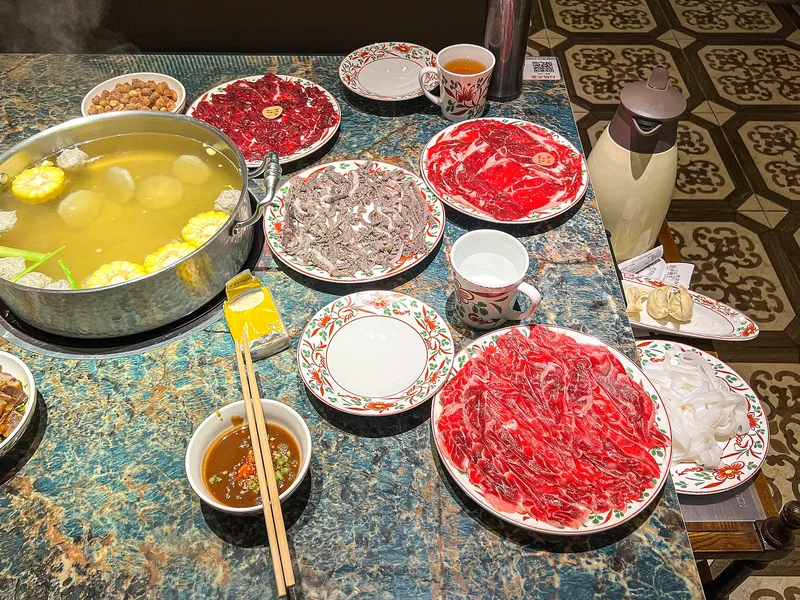
Chaoshan Beef Hot Pot: Which Cut to Order, How Many Seconds & What Sauce
Chaoshan beef hot pot is the meal I'm happiest to build an evening around on this Guangdong route, and also the one where knowing what you're doing changes the result most. Same meat, same pot: someone who understands it gets beef that's tender and springy; someone who doesn't gets something tough and faintly gamey, and concludes it's overrated.
The difference comes down to three things: the cut, the seconds, and the order. Chaoshan beef restaurants divide one animal into a dozen or more named cuts, all in Teochew terms. Many places simply print "how many seconds for this cut" on the plate — that's the answer, in writing. Plenty of visitors never look, tip plate after plate into the pot, and end up with beef soup.
This guide covers which cut comes from where, how many seconds each needs, what order to cook them in, how to judge freshness, and how to mix the sauce.
The key point first: this hot pot is about freshness, not flavouring. A thin, almost bland broth is correct — don't expect the numbing red-oil style.
🥩 Why the broth is so plain
Visitors often find it off-putting at first glance: clear soup, a few pieces of radish and sweetcorn floating, not a chilli in sight.
- The logic: the broth must not compete, so you can taste the beef's own sweetness and tenderness
- Clear beef-bone broth is the norm; some places add galangal and radish
- Don't load it up: tipping a pile of seasoning into the pot erases the whole point of the dish
- The sauce is where the flavour comes from: shacha paste plus Puning bean paste is the classic pairing
Understand that and you won't complain that the hot pot has no taste — the taste is in the meat and the dip, not the soup.
🍖 Cuts: where they come from and how long to cook them
One animal becomes a dozen or more cuts. Here are the common ones (names and cutting vary slightly between restaurants, so follow the seconds printed on the plate):
- Neck kernel: the working muscle from the neck, beautifully marbled, tender with fragrance. About 8–12 seconds
- Sirloin strip: the long muscle along the back, one of the most frequently ordered cuts, lean with a little sinew. About 8–12 seconds
- Rib eye centre: sweeter and more tender than the rib eye edge. About 8 seconds
- Rib eye edge: the outer edge of the rib eye, even mix of meat and sinew, good bite. About 8–12 seconds
- Tenderloin: the leanest, most tender cut from the hind leg. About 8 seconds
- Fatty flank: belly meat with sinew, rich and aromatic. About 10–15 seconds
- Brisket fat (chest fat): the soft fat from the chest, more flavourful the longer you chew it — a favourite among regulars. Needs longer, about 2–3 minutes; undercooked it's rubbery
- Beef tongue: crisp and tender. About 10–15 seconds
- Beef tripe: crunchy. About 10–15 seconds — longer makes it tough
- Shank cuts: meat from the leg with beautiful marbling and a springy bite. About 8–12 seconds
- Beef balls / tendon balls: usually hand-beaten and bouncy. Boil about 5–8 minutes, until they float
One rule to remember: lean cuts are quick, fatty ones slightly longer, chest fat longest.
🔄 The order: lean first, fat last
This is the step most people skip, and it changes everything.
- Round one: the lean, tender cuts first — tenderloin, sirloin strip, rib eye centre, rib eye edge. The broth is clearest now, so you taste the beef itself
- Round two: the sinewy cuts like the shank, which add texture
- Round three: the fatty, aromatic ones last — fatty flank, tongue, chest fat, tripe. By now the broth carries beef fat, which balances any gaminess
- Balls can go in at any point; they need longer
The classic mistake: starting with chest fat and fatty flank, which leaves a slick of oil on the surface and makes everything afterwards cloying.
🥣 The dipping sauce
- Shacha paste (satay-style): the soul of Chaoshan beef hot pot, savoury-sweet with garlic. This is the standard answer
- Puning bean paste: salty and savoury, good with lean cuts. Locals often use it alongside shacha
- Chilli paste / chilli bean sauce: fine if you like heat, but don't let it drown the shacha
- A common mix: shacha as the base, a spoonful of Puning bean paste, chilli if you want it, a squeeze of green tangerine if you like acidity
- Avoid sesame paste, and avoid sesame oil with garlic: that's a northern habit and it will bury the Teochew flavour
🔍 How to judge whether the beef is fresh
This decides whether the meal is worth it. Three checks:
- Colour: fresh beef is bright red with a sheen; be wary of anything dark or brownish
- Marbling: clear texture and natural fat distribution. Injected meat looks pale and wet on the surface
- The plate test: fresh slices stick to the plate even when you turn it over — a genuinely useful folk method
- Texture after cooking: fresh beef cooked 8–15 seconds is tender, springy, neither gamy nor tough. If it's tough however you cook it, it wasn't fresh
Two more rules of thumb: a restaurant that slices to order usually beats one that pre-slices and refrigerates, and busy restaurants turn stock over faster, so the meat is fresher.
🗺️ Where it fits in a Chaoshan trip
- Shantou: the home ground, with beef restaurants packed along the streets and the busiest hours in the evening. Put it on your Shantou evening
- Chaozhou: after a day in the old town, beef hot pot in the evening works just as well. See Chaozhou Old Town Guide
- Splitting two meals: one beef hot pot (dinner) plus one Chaoshan snacks meal (daytime) — rice noodles, rice noodle rolls, braised goose, sweet soups
- Don't eat it twice in a row: however good it is, it becomes too much. Put something else in between
⚠️ Common mistakes
- Ignoring the seconds printed on the plate and boiling a plateful for three minutes
- Getting the order wrong — chest fat and fatty flank first makes everything after it greasy
- Deciding the broth is bland and tipping in a pile of seasoning, which destroys the dish
- Dipping in sesame paste or garlic sesame oil, which sends the flavour somewhere else entirely
- Cooking chest fat for ten seconds, then blaming the meat when it won't chew
- Ordering too many cuts — seven or eight plates for two people, and they all overcook
- Queueing two hours for a famous name when the place full of locals is usually steadier
A few closing thoughts
What I like most about this dish is its precision. One animal broken into a dozen cuts, each with its own seconds and its own texture — that's not mysticism, it's knowledge accumulated over generations. Follow it and the beef is tender; ignore it and the beef is tough. That kind of certainty — "do it right and it will be good" — is rarer in Chinese cooking than people think.
My advice: three to five cuts is plenty the first time — one lean (tenderloin or rib eye centre), one sinewy (shank), one fatty (fatty flank), plus beef balls. Cook them in order, dip in shacha. Once you understand it, you'll add chest fat to the order yourself next time.
One more thing: don't treat it like an ordinary hot pot. It doesn't need a rolling, bubbling broth or complicated seasoning. It needs you to read the few characters printed on the plate and count the seconds. All the skill in this meal lives in those seconds.
Craving a worry-free yet free-spirited journey?
Don't want to build the itinerary yourself? Talk to our senior travel designers and get a route and quote built for you.
Get your free route plan and quote
Last updated: October 2026 Author: RoamFun Senior Travel Consultant Questions welcome at: vip@roamfun.net

RoamFun Senior Travel Consultant
Travel DesignerProfessional travel consultant, curating the most practical travel guides for you.