Go Once, Remember for Life! 7 Days to Understand the Millennium Spirit of the Hexi Corridor
Many people's longing for the great northwest begins with boundless Gobi and magnificent sunsets. But listen, if you come to the Hexi Corridor just for a few influencer check-in photos, you've wasted this long journey.
This 1,000-kilometer narrow corridor holds not only desert, lone smoke, and snow mountains, but also the hoofbeats of Zhang Qian, the youthful passion of Huo Qubing, and the millennium of faith carved by countless unnamed craftsmen in stone caves. Those online commando-style guides push you to rush—photos in Zhangye today, Dunhuang tomorrow, doing nothing but riding and sleeping. They won't tell you that without cultural context, the Hexi Corridor is just a pile of yellow dirt and stones.
Come to the northwest—slow down. Today, as a veteran who's run the northwest for over a decade, I'm not selling influencer hype. I'll lay out a 7-day cultural slow-travel route that truly lets you read the epic spirit of the Hexi Corridor. After this trip, you'll understand "go once, remember for life."
🚙 Veteran's Straight Talk: Which Vehicle Best "Avoids Pitfalls"?
Fans often ask: "The Hexi Corridor is all highways and paved roads now—can I rent a sedan and self-drive to save money and stay free?"
Straight talk: The roads are indeed good, but you underestimate the northwest's "distance" and "scale." Hexi Corridor attractions are 200-300km apart. High-intensity driving 4-5 hours daily for 7 consecutive days—even an iron man would only want to lie down at scenic spots. Who has energy to appreciate Mogao murals and Jiayuguan's weathered walls? Plus, sedans have low ground clearance and small trunks. With the whole family's warm jackets, sun protection, and suitcases stuffed in, the back seat is packed like sardines—elders and children can't stretch at all.
Since this is a spiritual cultural journey, your body must not suffer. Listen to me, go with a comfortable 7-seat business van (like Buick GL8 or Trumpchi M8).
- Space fully liberated: 7-seat vans have massive trunks that easily swallow everyone's 26+ inch suitcases. The "2+2+3" layout means even fully loaded, everyone has independent space—no cramped feeling.
- Long-haul lifesaver: Northwest long drives are unavoidable. The van's second-row independent airline seats recline steeply—leg rest up, and it becomes a mobile first-class cabin. Elders can comfortably nap, greatly reducing backache and motion sickness from long bumpy rides.
- Save energy for scenery: Hand the wheel to a local professional driver who knows every speed camera on the Hexi Corridor, knows where there are clean restrooms, knows where to see unnamed ancient Great Wall ruins. You and your family just sit in the back drinking sanpaotai tea, watching the endless Qilian snow line out the window—saving all your energy for listening to history's voice.
🗺️ Hard-Earned Itinerary—Just Follow Along
This route goes west along the ancient Silk Road without backtracking—from Jincheng Lanzhou deep into desert Dunhuang. Pace is tight early, relaxed later; cultural experience goes shallow to deep.
Day 1: Lanzhou - Wuwei (Leitai Han Tomb / Kumarajiva Temple) - Zhangye
- Itinerary tip: Wuwei is the Hexi Corridor's gateway—don't skip it! Leitai Han Tomb is the exclusive excavation site of the "Galloping Horse Treading on a Flying Swallow"—a must-visit. Some wild guides inside sell fake bronze souvenirs—ignore them, focus on the Han Dynasty tomb chamber structure.
- Road warning: About 500km total. Crossing Wushaoling, road conditions vary—high-altitude areas may have sudden fog or temperature drops. Fortunately, the entire route is high-standard Lianhuo Expressway—smooth in a business van.
- Veteran's advice: Afternoon visit to Kumarajiva Temple to see the millennium-old tongue relic stupa, hear the legendary story of this Western Region monk's lifetime of sutra translation. Evening in Zhangye, go to Ganzhou Market for a steaming bowl of rolled chicken noodles to fill up.
Day 2: Zhangye (Mati Temple Caves - Seven-Color Danxia)
- Itinerary tip: Never go to Seven-Color Danxia at noon! Direct midday sun makes the mountains a bleached white with no layering. Those "spilled palette" shots are all from evening side light.
- Road warning: About 120km total, good road conditions from city to scenic area.
- Veteran's advice: Morning first to Mati Temple at the foot of Qilian Mountain. These caves are carved directly into vertical red cliffs—climbing the steep "Thirty-Three Heavens" stone stairs using hands and feet, the awe rivals Mogao. After 5 PM enter Seven-Color Danxia, go straight to Platform 4, watch sunset set the entire mountain range ablaze.
Day 3: Zhangye - Jiayuguan (Fortress / Great Wall First Pier) - Guazhou
- Itinerary tip: Inside Jiayuguan Fortress there are no shade trees—going at 2-3 PM means pure roasting, skin-peeling sun, directly ruining the historical mood.
- Road warning: About 300km total, all highway. Gobi sections have strong wind, occasional crosswinds—professional drivers handle the wheel steadily.
- Veteran's advice: Enter the fortress after 3:30 PM when light is soft. Climb the wall—looking west at boundless Gobi, looking south at Qilian's white snow, you'll truly understand the loneliness and desolation of "the world's greatest fortress." Stay overnight in Guazhou, and visit the giant Gobi sculpture "Son of the Earth" en route.
Day 4: Guazhou - Dunhuang (Mogao Caves - Mingsha Mountain Crescent Lake)
- Itinerary tip: Mogao Caves is this trip's soul and biggest "ticket trap." Regular tickets (including two digital films and 8 core cave guided tour) are strictly limited daily—must be booked 30 days in advance on the official website with real-name registration! Walk-in emergency tickets only show 4 caves, 2-hour queue for 10 minutes of viewing—terrible experience.
- Road warning: About 120km, excellent road conditions, about 1.5 hours.
- Veteran's advice: Morning at Mogao—in dim caves, wherever the flashlight beam lands, it's millennium-old mural details. That's a true cultural baptism. After 5 PM go to Mingsha Mountain, avoiding the scorching midday sand. Rent shoe covers, climb the high dune, quietly wait for a desert sunset.
Day 5: Dunhuang (Western Route Culture: Yumenguan Pass - Yangguan Pass - Yadan Devil City)
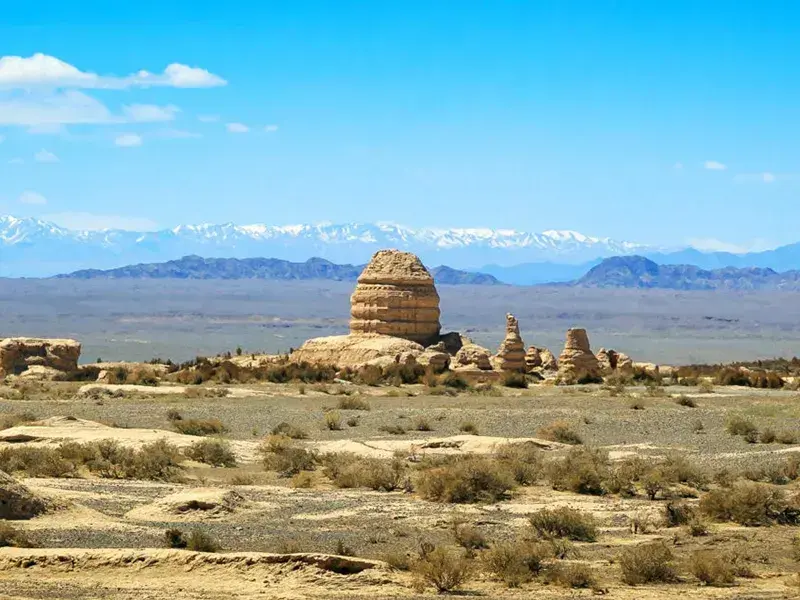
- Itinerary tip: Yumenguan now is just a square dirt mound (Xiaofangpan City)—many feel "just a pile of dirt, not worth it." But if you've read "why should the Qiang flute complain about willows," standing there looking at the wilderness beyond, the feeling is completely different. Don't buy the crudely made jade at the scenic entrance.
- Road warning: About 300km round trip, on provincial roads and Gobi highways—flat but extremely desolate, cell signal intermittent. Stock up on drinking water in the car.
- Veteran's advice: This is a pure historical nostalgia route. First to Yangguan for the "west of Yangguan, no old friends" ceremony, then rush to Yadan Devil City before sunset to watch wind-eroded castles turn blood-red in the setting sun, hear the wind howling across the desert.
Day 6: Dunhuang (Guazhou Yulin Caves - Suoyang City Ruins)
- Itinerary tip: Many think Mogao is enough, but Yulin Caves are the veteran's private treasure. The murals here (especially the Western Xia water-moon Guanyin) are even more exquisite than Mogao's, with very few tourists and no advance booking needed.
- Road warning: About 160km. Reaching Yulin Caves requires exiting the Lianhuo Expressway onto a canyon road—slightly bumpy.
- Veteran's advice: At Yulin Caves, definitely spend on special cave access—it's the true artistic peak. Afterward, visit Suoyang City ruins, which preserve a complete Tang Dynasty city defense system and canals. Standing among broken walls, you can clearly feel the prosperity and decline of the ancient Silk Road.
Day 7: Dunhuang - Lhasa (Flight/Express Train Dispersal)
- Itinerary tip: For those with same-day Lanzhou flights, allow at least 4 hours buffer. Northwest weather changes rapidly—transport easily affected by turbulence or dust storms.
- Road warning: Choose express train or charter car directly via highway back to Lanzhou.
- Veteran's advice: Back in Lanzhou, don't rush to the airport. Find a tea stall by the Yellow River, order sanpaotai, listen to the river's sound, and reflect on this 7-day millennium-spanning Silk Road journey. That's a proper finale.
🎒 Practical List: Bring These to Suffer Less
⚠️ Don't say I didn't warn you: The most fatal mistake on the Hexi Corridor is "underestimating the northwest's dryness and temperature swings." Many bring a suitcase of summer dresses, only to shiver at the foot of Qilian Mountain; or skip deep moisturizing, ending up with daily nosebleeds and cracked lips that make eating impossible.
- Clothing: Must follow the "onion layering method." Short sleeves and sun shirts for daytime, but pack a windproof hard shell or lightweight down jacket. Northwest morning-evening temperature swings often exceed 15 degrees. Shoes must be high-top durable athletic or outdoor shoes—so sand doesn't fill them at Mingsha Mountain.
- Sun protection & moisturizing: SPF50+ hardcore sunscreen, UV sunglasses (Gobi sun is blinding), wide-brim hat. Most critically: lip balm, saline nasal spray, high-moisture face masks. Friends from the south must bring body lotion.
- Medicine: Berberine or zhengqi water (northwest food is heavy oil and spice, plus lamb with ice drinks easily causes stomach issues), motion sickness pills (essential for crossing Wushaoling), cooling oil.
- Electronics: Power bank (long outdoor time drains batteries fast), drone (many northwest ruins look incredibly desolate from above—but note Mogao and Dunhuang airport surroundings are strict no-fly zones).
💡 Heart-to-Heart Truths
About ruins and culture: Hexi Corridor attractions are mostly historical remnants. Before going, I strongly recommend watching two documentaries: "Hexi Corridor" and "Dunhuang." With stories in mind, those dirt walls and murals aren't dead objects—they're living history.
About accommodation pitfalls: July-August peak season, Dunhuang and Zhangye hotels not only double in price but are hard to book. Never blindly book "desert starry sky camping tents"—online photos are photoshopped. Reality is: pervasive wind and sand, communal bathrooms with no hot water, extremely cold nights. Elders and children can't handle it. Stay in quality city hotels.
About northwest dining: Northwest beef and lamb quality is excellent, but flavors are heavy and spicy. After eating lamb, absolutely no ice-cold drinks, ice beer, or watermelon! Lamb fat meeting ice solidifies rapidly in your stomach, causing extremely severe acute gastroenteritis. Countless commando-style travelers have fallen into this trap.
📸 Don't Shoot Blindly—These Spots Are Stunning
- Jiayuguan Fortress "Stone-Striking Swallow Echo" spot: Around 6 PM, sunlight hits the wall's side perfectly. Lower the camera, use telephoto to frame the fortress tower with distant Qilian snow mountains—incredible historical weight and desolation.
- Guazhou Gobi "Boundless" Sculpture: Don't shoot the full view. Walk beneath the white frame structure, use backlight to shoot a person's silhouette among the massive architectural lines—striking collision of modern art and desolate Gobi.
- Yulin Caves Tash River Canyon: After viewing murals, stand on the canyon boardwalk, shoot the red-brown cliffs where Yulin Caves are located with the rushing river below. Elm trees line both banks—a rare sight of vitality in the desert.
💬 What RoamFun Travelers Say
"Came after watching the documentary 'Hexi Corridor' with my child. RoamFun's planning was excellent—no blind rushing, chose the Trumpchi M8 van. My child slept peacefully in the back during long drives. The driver not only knew the roads but told us many local historical stories—so much deeper than just scenery!" — Shenzhen, Teacher Luo ⭐⭐⭐⭐⭐
"Mogao regular tickets were fought for by RoamFun! Yulin Caves' special caves were a revelation. The whole trip was physically and mentally comfortable. The driver's photos of 'Son of the Earth' and 'Boundless' on the Gobi highway blew up my social media!" — Shanghai, Art Director Vicky ⭐⭐⭐⭐⭐
🚙 The Silk Road Isn't Far—We Meet at the End of the Gobi
The Hexi Corridor's charm doesn't exist only within ticketed scenic gates—it flows on that desolate, lonely, yet magnificent Silk Road highway. When you sit in a comfortable car, watching the Gobi stretch endlessly, the Qilian snow peaks faintly visible on the horizon, in that moment you truly feel the weight of time and the smallness of humanity.
Don't waste this rare cultural pilgrimage on ticket scrambling, route checking, and fatigue driving. Professional guides show the truest scenery.
Want a worry-free yet free travel experience?
Don't want to plan? Contact our senior customizers now for your exclusive route and quote.
Updated: June 2026 Author: RoamFun Senior Travel Consultant Questions welcome: vip@roamfun.net
Craving a worry-free yet free-spirited journey?
Don't want to plan it yourself? Contact our senior trip designer now for a route and quote tailored to you.

RoamFun Senior Travel Consultant
Travel DesignerProfessional travel consultant, curating the most practical travel guides for you.